
Great Barrier Reef: a living mosaic along Australia’s coast
Published on 09/24/2026 at 06:51 | Editorial responsibility: Rafael Müller, Editor-in-Chief AD HOC NEWS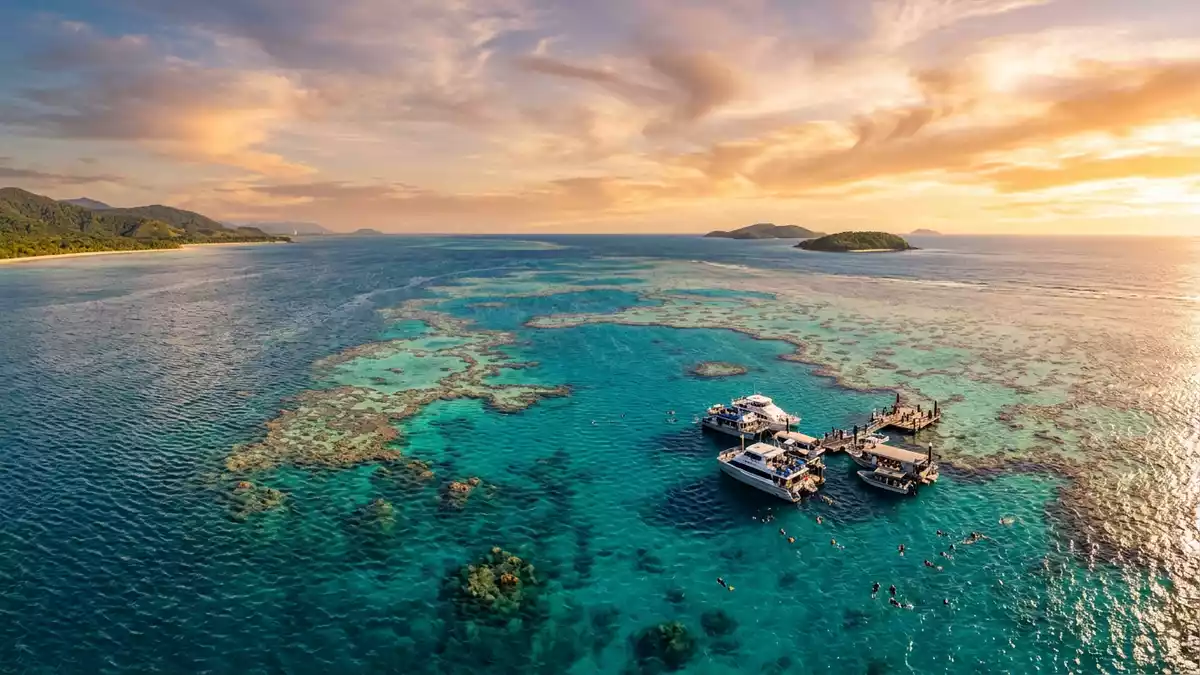
The Great Barrier Reef is not a single wall of coral but a marine landscape of reefs, shoals, islands and cays. Along Queensland’s north-eastern coast, this living mosaic stretches for more than 2,000 km (1,243 miles), with Cairns among its principal mainland gateways.
Its visible drama begins beneath the water: branching corals, reef fish, sandy lagoons and open sea occupy a protected region extending across 348,000 square kilometres. The scale is immense, but the experience is encountered through particular places, from a shallow coral garden to an offshore island.
A reef system rather than a single formation
The name covers a connected marine world of approximately 3,000 coral reefs, continental islands, coral cays and inshore mangrove islands. Coral occupies only part of the wider World Heritage Area, which also includes seagrass beds, beaches, mudflats, lagoons, mangroves and deep ocean water.
The reef’s north-west to south-east alignment follows the Queensland coast. Its offshore extent changes along the coast, creating a sequence of habitats rather than a uniform strip. the reef’s coastal scale is recorded in kilometres, area and breadth.
Coral, colour and a crowded marine habitat
Coral polyps construct the reef from successive generations of limestone skeletons. Hard corals form the framework, while soft corals, sea pens, sponges, anemones and algae occupy its surfaces and crevices.
The animal life includes more than 1,500 fish species, marine turtles, dugongs, sharks, rays, sea snakes, whales and dolphins. The habitat also supports molluscs, crustaceans, worms and seabirds. the reef’s marine species show why the system cannot be reduced to coral alone.
From Cairns to a protected world heritage area
Cairns lies beside the tropical Queensland coast, where mainland roads, boats and aircraft connect with reef sites and island landscapes. The city’s relationship with the reef is geographical: the offshore marine environment begins beyond the coastal plain.
The Great Barrier Reef was inscribed on the UNESCO World Heritage List in 1981. The designation covers an ecosystem, not merely the coral formations, and includes habitats extending from inshore waters towards the outer reef. the 1981 World Heritage inscription records its international status and ecological breadth.
The reef is also part of a long geological story. Individual formations differ in age and shape, while the present ecosystem developed through changing sea levels, coral growth and the movement of coastal environments. Its living character remains visible in the relationship between organisms, water and limestone structure.
Visiting Great Barrier Reef: what travellers from Western Europe should know
- Cairns is a mainland access point on Queensland’s north-eastern coast. Reef excursions travel by boat from the city and nearby coastal marinas.
- Water-based visits involve boat travel, swimming, snorkelling or diving. Reef platforms, beaches and islands have different surfaces and access arrangements.
- The reef lies within a large marine area. Conditions at sea, visibility and water temperature vary between locations and seasons.
- The official language is English and the currency is the Australian dollar.
- Entry requirements depend on your nationality; UK travellers can check the FCDO travel advice at gov.uk/foreign-travel-advice, Irish travellers the Department of Foreign Affairs at ireland.ie.
Searching for Great Barrier Reef on social platforms
These links open searches for Great Barrier Reef on each platform.Frequently asked questions about Great Barrier Reef
Where is the Great Barrier Reef?
It lies in the Coral Sea beside Queensland’s north-eastern coast. Cairns is a major mainland gateway to reef locations.
What can a visit involve?
A visit can include boat travel, snorkelling, diving, swimming or viewing coral and marine life from the surface.
What makes the reef distinctive?
Its distinctive character comes from its vast connected marine setting, with coral reefs, islands, lagoons, mangroves and open ocean habitats.


