
Gugong in Peking: a palace city arranged around courtyards
Published on 09/23/2026 at 08:25 | Editorial responsibility: Rafael Müller, Editor-in-Chief AD HOC NEWS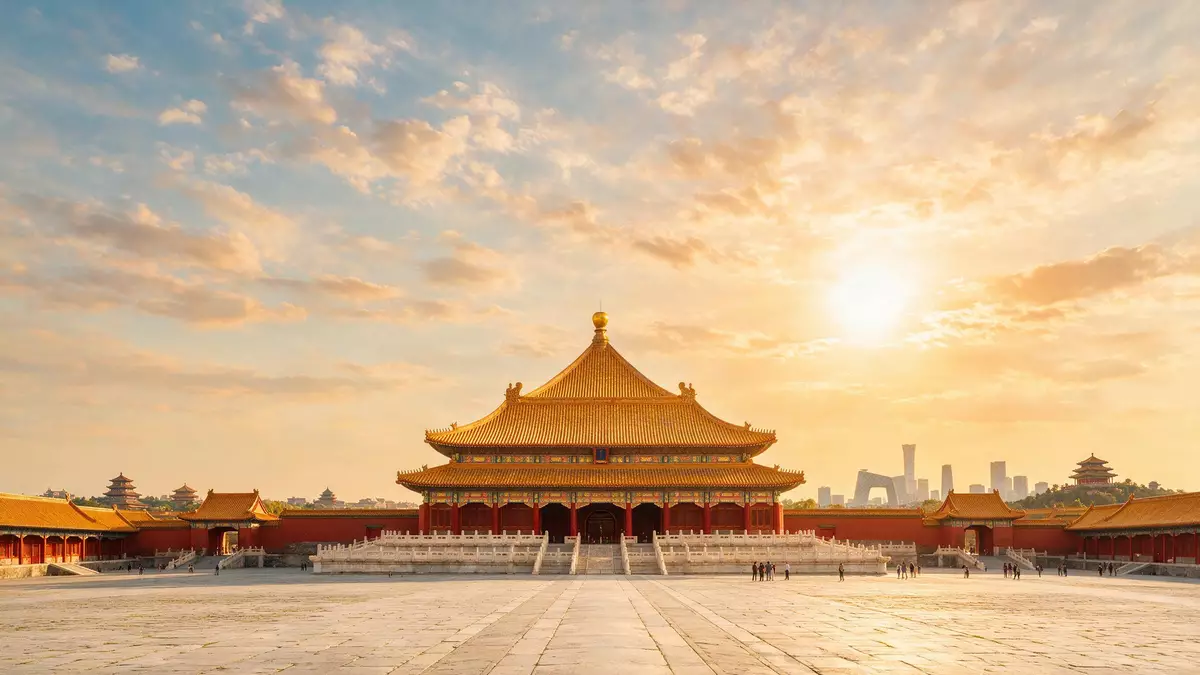
Gugong occupies the centre of Peking as a vast palace complex organised around courtyards, gates and timber halls. Constructed between 1406 and 1420 under the Ming emperor Zhu Di, it became the imperial palace of the Ming and Qing dynasties.
Its former courtly function survives in the arrangement of the buildings, while the Palace Museum preserves imperial art and historical objects within the complex. Red walls, glazed roofs and stone terraces give Gugong a strongly ordered architectural character.
Gugong and the Ming imperial building programme
Construction began in 1406 during the reign of Zhu Di, known as the Yongle Emperor, and the palace complex was completed in 1420. Gugong’s Ming foundation belongs to the period when Peking became the political centre of the dynasty.
The palace served the Ming court before passing into the Qing imperial period. Fourteen Ming emperors and ten Qing emperors were enthroned within the wider history of the complex, which remained connected with imperial government for centuries.
Courtyards, timber halls and imperial order
Gugong is rectangular in plan and covers about 72 hectares. It extends roughly 961 metres from north to south and 753 metres from east to west, enclosed by walls and a moat. The palace dimensions make its scale legible before individual halls come into view.
The complex contains ceremonial halls, residential quarters, gateways, courtyards and gardens. The Hall of Supreme Harmony, the Hall of Central Harmony and the Hall of Preserving Harmony form the principal sequence of the outer court. Their timber structures, painted decoration and glazed ceramic roofs belong to the visual language of Chinese imperial architecture.
From imperial residence to Palace Museum
Gugong housed the imperial court during the Ming and Qing dynasties, with the Qing period ending in 1911. The site is known in Chinese as the Former Palace, and the palace buildings now form the Palace Museum. Gugong as the Palace Museum connects the architecture with collections of imperial objects.
The museum setting brings together paintings, ceramics, furniture, ritual objects and courtly possessions associated with the Ming and Qing eras. The buildings remain the principal subject, but the collections add material detail to the political and domestic history once conducted inside them.
UNESCO inscribed the Imperial Palaces of the Ming and Qing Dynasties in Beijing and Shenyang as a World Heritage property in 1987. Gugong’s World Heritage status recognises the complex as a major surviving centre of Chinese imperial architecture and history.
Visiting Gugong: what travellers from Western Europe should know
- Gugong is in central Peking, within the Dongcheng district. The complex lies along the city’s historic central axis and can be approached through the surrounding urban streets.
- The site involves extensive walking across courtyards, terraces and paved passages. Stone steps occur around the principal halls and gateways.
- The official language is Mandarin Chinese and the currency is the Chinese yuan.
- Jingshan Park lies immediately north of Gugong, while Tiananmen Square is south of the palace complex.
Searching for Gugong on social platforms
These links open searches for Gugong on each platform.
Frequently asked questions about Gugong
Where is Gugong?
Gugong is in central Peking, China, within the Dongcheng district. It occupies the central area of the historic imperial city.
What can visitors expect at Gugong?
Visitors encounter courtyards, ceremonial halls, timber architecture, decorated roofs, museum collections and long paved routes between the principal buildings.
What makes Gugong distinctive?
Its distinctive character comes from the combination of a large rectangular palace plan, Ming and Qing imperial history, red walls, timber halls and a functioning museum setting.


