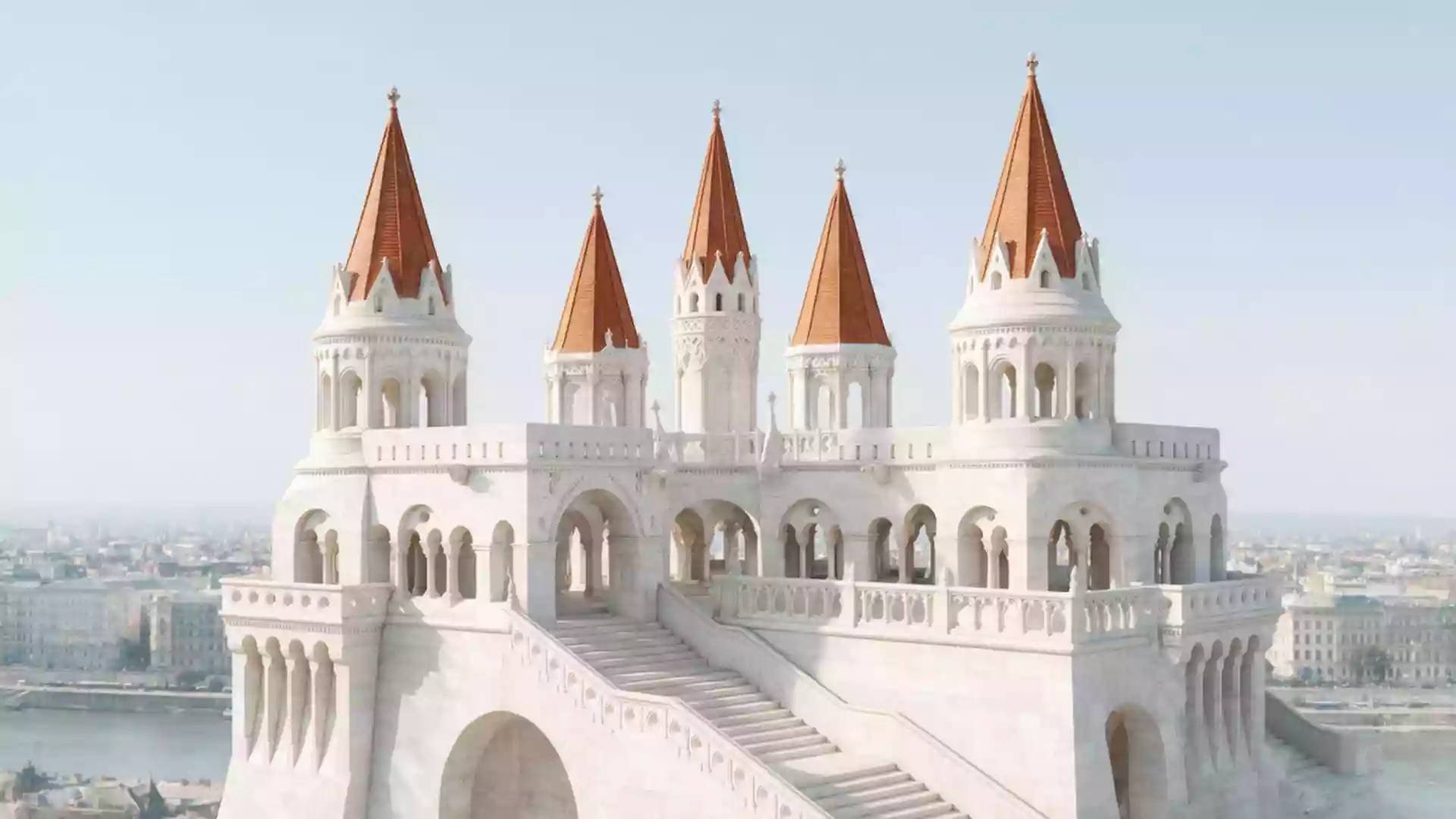
Halaszbastya and Budapest’s neo-Romanesque terrace
Published on 08/16/2026 at 13:21 | Editorial responsibility: Rafael Müller, Editor-in-Chief AD HOC NEWS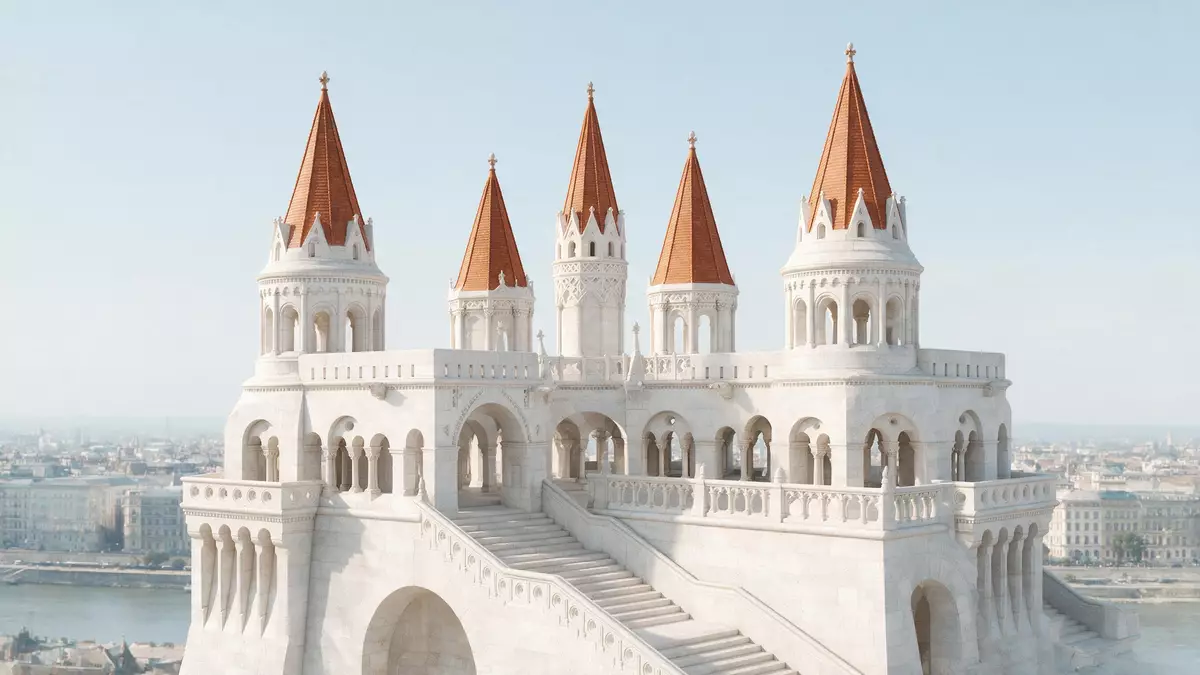
Halaszbastya rises above Budapest as a white Neo-Romanesque terrace by Frigyes Schulek, completed in 1902 and tied to the Buda Castle District. Its arches, towers and stairways make the structure read as both monument and lookout.
Schulek’s white terrace above the Danube
Halaszbastya is set beside Matthias Church on Castle Hill, near the Buda side of the Danube. The relationship between the two buildings is visible in the stone, the heights and the shared ridge line.
The structure was built between 1895 and 1902 and later recognised as part of the Budapest UNESCO World Heritage listing in 1987. Its architect, Frigyes Schulek, also restored Matthias Church, and that connection gives the terrace its formal setting.
Towers, stairs and arcades in Neo-Romanesque stone
The bastion is best read through its towers, arcades and terraces rather than as a military work. The stone surfaces, repetitive arches and stepped levels give it a steady rhythm across the hilltop.
The seven towers are among its most recognisable features, and the terrace edge carries long parapets and stair flights. The ensemble is part castle fantasy and part urban promenade, with the Danube plain opening out beyond the ridge.
A German-language overview and an English-language overview both place the monument in the Buda Castle District and identify Schulek as the architect.
From historic hilltop to city viewpoint
Halaszbastya is a clear example of a structure whose present form sits on a much older hilltop setting. The bastion now belongs to the open urban face of Castle Hill, with Budapest spread out beyond the terrace.
A Hungarian reference and the World Heritage listing summary both confirm the 1987 UNESCO designation for the Buda Castle District.
Visiting Halaszbastya: what travellers from Western Europe should know
- The terrace stands on Castle Hill in the Buda Castle District, beside Matthias Church. It is reached through Budapest’s historic hilltop streets and stairways.
- The site includes stepped levels, parapets and stair flights. The ground rises and falls across the terrace rather than forming a single flat platform.
- The official language is Hungarian and the currency is the Hungarian forint.
- Entry requirements depend on your nationality; UK travellers can check the FCDO travel advice at gov.uk/foreign-travel-advice, Irish travellers the Department of Foreign Affairs at ireland.ie.
Searching for Halaszbastya on social platforms
These links open searches for Halaszbastya on each platform.
Frequently asked questions about Halaszbastya
Where is Halaszbastya?
Halaszbastya stands on Castle Hill in Budapest’s Buda Castle District, beside Matthias Church. The Danube lies below the hill on the Buda side of the city.
What does a visit involve?
The place is a terrace complex with stairs, parapets and viewing levels. Its stone surfaces and elevated position make the layout easy to read as you move through it.
What makes Halaszbastya distinctive?
Its Neo-Romanesque design, seven towers and Frigyes Schulek’s authorship define it. The bastion combines historic reference with an open hilltop promenade.