
Higashi Chaya-gai and Kanazawa's teahouse streets
Published on 09/17/2026 at 19:28 | Editorial responsibility: Rafael Müller, Editor-in-Chief AD HOC NEWS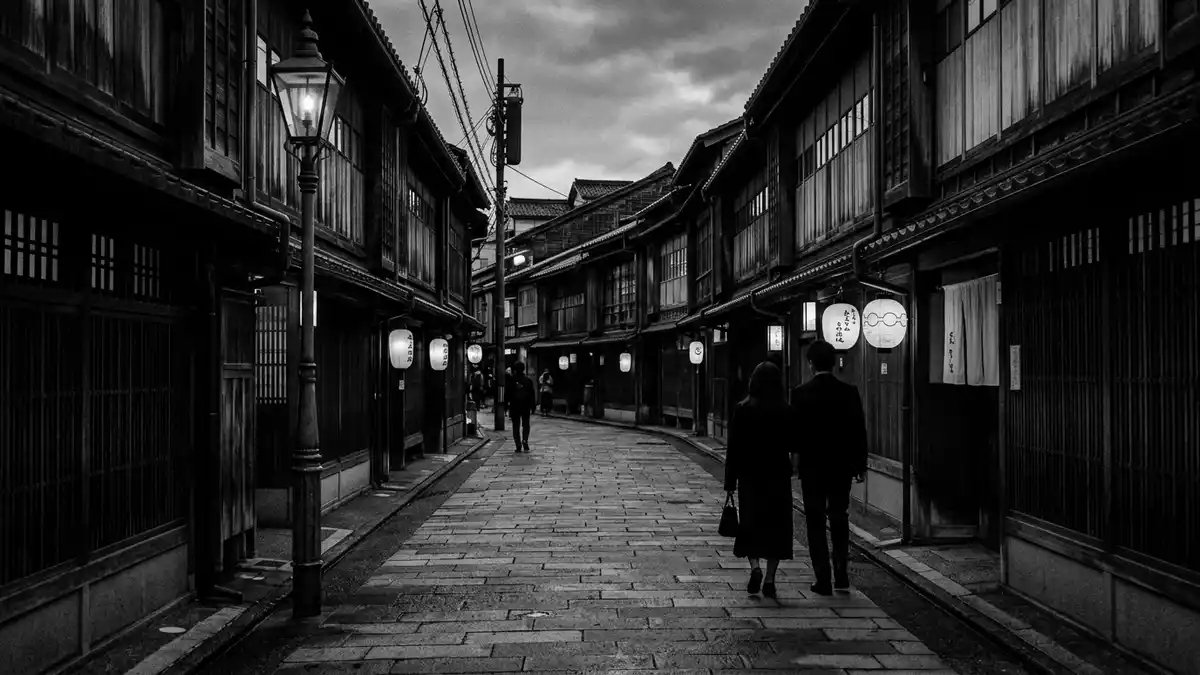
Higashi Chaya-gai in Kanazawa is a teahouse district of wooden facades, narrow lanes and an Edo-period street plan. It sits in Higashiyama, east of the Asano River, and belongs to the city's preserved historic fabric.Edo-period street plan
Kanazawa’s east-bank teahouse quarter
The quarter took shape in 1820 under the Kaga domain, when Kanazawa’s geisha entertainment was concentrated into authorised districts. That date gives Higashi Chaya-gai its historical frame: late Edo-period urban culture expressed through timber, latticework and compact streets.took shape in 1820
Higashi Chaya-gai is closely associated with geisha performance, tea houses and merchant patronage. Its street scene remains legible as a former entertainment quarter rather than a generic old town, with two-storey wooden buildings giving the area a restrained urban rhythm.geisha performance
Wood, lattice and preserved streetscape
The district is known for wooden machiya townhouses, cobbled lanes and kimusuko lattice screens. These elements create a coherent streetscape that belongs to Kanazawa's wider tradition of carefully protected townscapes.wooden machiya townhouses
Higashi Chaya-gai has official protection as an Important Preservation District for Groups of Traditional Buildings. That status reflects the value of its surviving layout and architecture, including a concentration of historic teahouse buildings that remain central to its identity.Important Preservation District
Buildings with a second life
Several teahouses in the quarter have taken on new roles as museums, shops and cafés. The change of use is visible in the streetscape: the old district remains intact, yet its interiors and front rooms serve contemporary functions.museums, shops and cafés
Among the best-known historic houses is Shima, a teahouse opened in 1820 and preserved as a cultural property. It provides a direct link to the quarter's early nineteenth-century setting, with tatami rooms and household objects still part of the building's character.Shima, a teahouse
Visiting Higashi Chaya-gai: what travellers from Western Europe should know
- The district lies in Higashiyama, Kanazawa, and the Kanazawa Loop Bus reaches the area from Kanazawa Station. Hashibach? is the usual stop name in guidance for the quarter.
- The streets include cobbles and narrow lanes, and the buildings are closely spaced. The quarter is compact, so the streets themselves form the main route through it.
- The area is in Japan, where the official language is Japanese and the currency is the Japanese yen.
- Entry requirements depend on your nationality; UK travellers can check the FCDO travel advice at gov.uk/foreign-travel-advice, Irish travellers the Department of Foreign Affairs at ireland.ie.
Searching for Higashi Chaya-gai on social platforms
These links open searches for Higashi Chaya-gai on each platform.
Frequently asked questions about Higashi Chaya-gai
Where is Higashi Chaya-gai?
It is in the Higashiyama area of Kanazawa, on the east bank of the Asano River. The district sits in Ishikawa Prefecture in Japan.
What does a visit involve?
The quarter is made for walking, with compact lanes, wooden fronts and preserved teahouses. The buildings now include museums, cafés and shops alongside the historic streetscape.
What makes Higashi Chaya-gai distinctive?
Its identity comes from the combination of 1820 origins, geisha culture and preserved wooden architecture. The district keeps that history visible in the street itself.


