
Higashi Chaya-gai in Kanazawa: an Edo-period teahouse quarter
Published on 09/05/2026 at 19:56 | Editorial responsibility: Rafael Müller, Editor-in-Chief AD HOC NEWS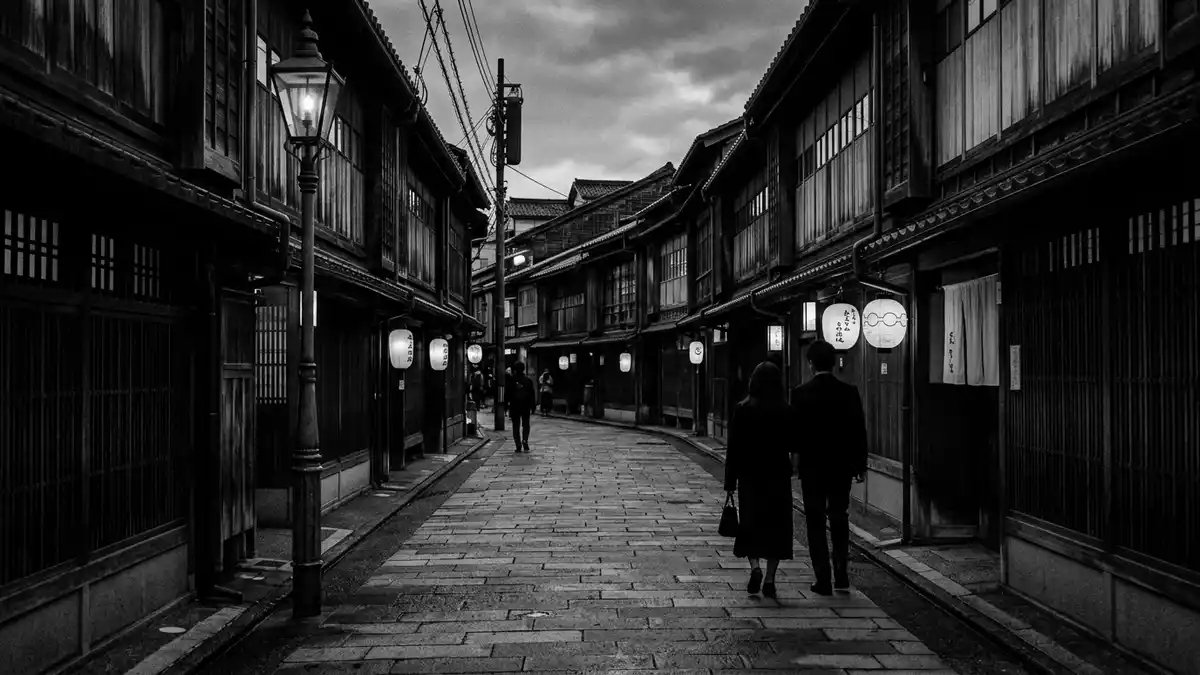
Higashi Chaya-gai in Kanazawa is a historic teahouse district laid out in 1820 during the late Edo period, with streets lined by traditional wooden townhouses that once hosted geisha entertainment for merchants and samurai elites.Higashi Chaya-gai sits in the Higashiyama area of Kanazawa City in Ishikawa Prefecture, on the eastern side of the Asano River.Higashiyama in Kanazawa
Teahouse streets from the late Edo period
The name Higashi Chaya-gai literally means “Eastern Teahouse District” and reflects its role as one of Kanazawa’s licensed entertainment quarters, where chaya teahouses provided rooms for geisha performances in the upper storeys.Eastern Teahouse District The district was formally established in 1820 under the Maeda clan of the Kaga domain, consolidating teahouse activity into eastern, western and riverside quarters.designation in 1820
Higashi Chaya-gai is the largest of Kanazawa’s three preserved chaya districts, alongside Nishi Chayagai and Kazuemachi, and its streetscape has been protected as a national Important Preservation District for Groups of Traditional Buildings since 2001.the largest of three districts Within the lanes, former ochaya teahouses such as Shima and Kaikaro survive as tangible examples of the architecture associated with Edo-period geisha quarters, with reception rooms and tearooms arranged away from the street.historical ochaya buildings
Machiya facades, lattices and narrow plots
The visual character of Higashi Chaya-gai is defined by two-storey wooden machiya townhouses, whose ground floors present dense timber lattices to the lane while interiors extend deep into narrow plots.machiya townhouses Many facades retain their original kimusuko lattice screens, dark cedar boarding and clay tile roofs, creating a continuous rhythm of wooden fronts along the stone-paved streets.kimusuko lattice fronts
Within some former chaya buildings now open to visitors, interiors show tatami-floored parlours, tearooms and staircases linking public reception spaces to more private entertainment rooms above.rooms of historic geisha houses Along the main street and side lanes, shopfronts in converted machiya sell tea, confectionery and crafts, while smaller alleys reveal quieter residential facades behind the commercial row.
Geisha heritage and riverside setting
Geisha culture remains part of Higashi Chaya-gai’s identity, with performance venues and preserved teahouses giving insight into the music, dance and hospitality once reserved for wealthy guests.geisha entertainment district The district’s lanes lie east of Kanazawa Castle and garden areas, with the Asano River marking a boundary between the teahouse quarter and other parts of the old city.eastern bank of the Asano River
At night, the wooden facades and lattices gain a different character as light from interiors filters onto the paving, while the relative narrowness of the streets keeps the scale intimate despite the district’s role as a recognised preservation area. Higashi Chaya-gai’s combination of Edo-period town planning, machiya construction and surviving teahouse interiors makes it a compact place to understand how entertainment districts fitted into the castle town of Kanazawa in the nineteenth century.
Visiting Higashi Chaya-gai: what travellers from Western Europe should know
- Higashi Chaya-gai is in the Higashiyama area east of Kanazawa Station, reached by local buses such as the Kanazawa Loop Bus to Hashibacho or Hashiba-ch?, followed by a short walk.
- The district’s streets are gently sloping and paved, with narrow lanes between wooden townhouses; some historic teahouses have staircases linking ground and upper floors.
- Higashi Chaya-gai lies near the Asano River, and visits here can be combined with nearby sites in Kanazawa such as Kenrokuen Garden and Kanazawa Castle Park.
- The official language is Japanese and the currency is the yen.
Searching for Higashi Chaya-gai on social platforms
These links open searches for Higashi Chaya-gai on each platform.
Frequently asked questions about Higashi Chaya-gai
Where is Higashi Chaya-gai located in Kanazawa?
Higashi Chaya-gai is in the Higashiyama area of Kanazawa City in Ishikawa Prefecture, east of Kanazawa Station and close to the Asano River.
What can visitors expect when walking through Higashi Chaya-gai?
Visitors encounter paved lanes lined with two-storey wooden machiya, dense timber lattices and historic teahouses such as Shima and Kaikaro that illustrate Edo-period geisha quarters.
What makes Higashi Chaya-gai distinctive among Kanazawa’s historic districts?
It is the largest of Kanazawa’s preserved chaya quarters, designated as a national Important Preservation District for Groups of Traditional Buildings and retaining a concentrated ensemble of wooden teahouse architecture.


