
Higashi Chaya-gai: Kanazawa’s preserved teahouse streets
Published on 09/18/2026 at 21:34 | Editorial responsibility: Rafael Müller, Editor-in-Chief AD HOC NEWS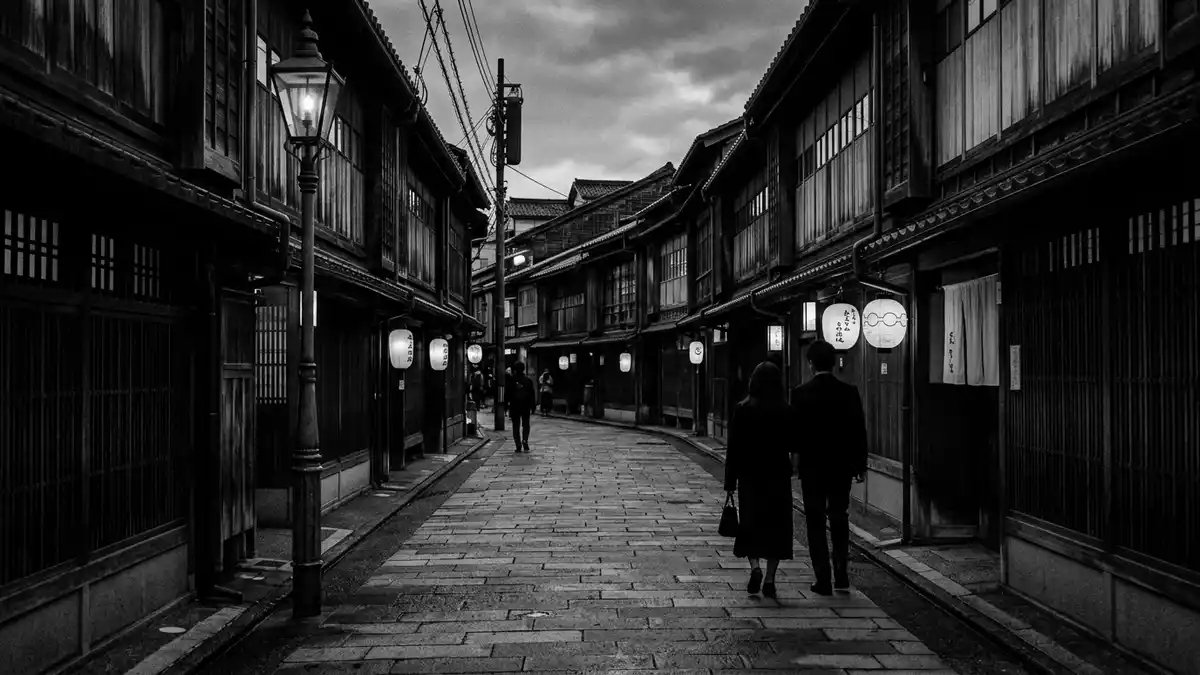
Higashi Chaya-gai in Kanazawa is a historic teahouse quarter where rows of wooden townhouses line narrow lanes on the eastern side of the Asano River, preserving an Edo-period streetscape within a modern city.
Edo-period entertainment quarter on the Asano River
Higashi Chaya-gai occupies part of the Higashiyama area of Kanazawa, in Ishikawa Prefecture on the Sea of Japan coast, and is closely associated with the river that bends around its edge.Higashi Chaya District is located in the Higashiyama area The district was formally established in 1820 during the late Edo period, when the Kaga domain concentrated licensed entertainment into designated chaya, or teahouse, areas.A classic geisha neighbourhood from the Edo era Alongside Nishi Chaya-gai and Kazuemachi, Higashi Chaya-gai formed one of three recognised geisha quarters in Kanazawa, and it grew into the largest of them.three main chaya districts in Kanazawa
The layout of the quarter dates from its founding as a regulated entertainment district, with lanes running between the river and the slopes of Higashiyama behind.The layout of Higashi Chaya District was carefully planned at its founding Historically, geisha performed music and dance in ochaya teahouses here for merchants and samurai from the surrounding domain, in rooms screened from the street. The Edo-period plan survives as a compact grid of streets that brings visitors past facades and side alleys rather than broad squares, giving the area a small-scale urban character.
Wooden teahouses and Kanazawa latticework
Architecturally, Higashi Chaya-gai is defined by two-storey wooden teahouses built in a distinct Kanazawa style, with timber fronts and tiled roofs facing directly onto the lanes.two-story wooden teahouses built in the distinctive Kanazawa style Upper floors are screened by latticework known as kimusuko, a fine timber grid that filters views from the street and gives the facades a rhythmic pattern.distinctive lattice windows (kimusuko) Many buildings are machiya townhouses, with commercial front rooms and living spaces stretching back from the street, so the apparent narrowness of the facades conceals long plots running towards the hillside.
The concentration of historic structures is high, with a large group of teahouse buildings remaining within the designated area.its streetscape of two-story teahouse buildings Higashi Chaya-gai has been recognised under Japanese law as an Important Preservation District for Groups of Traditional Buildings, a status that reflects both the intact Edo-period plan and the survival of original timber construction.designated as an Important Preservation District The designation reinforces the continuity of materials and detailing, so the walk through the quarter is a sequence of wooden facades rather than an alternation of old and new. Inside some teahouses, tatami rooms, lacquered fittings and decorative elements linked to geisha performance have been kept, and several houses operate as museums or cafés that retain their internal layout while opening it to visitors.
From geisha quarter to mixed cultural streets
While Higashi Chaya-gai began as an entertainment quarter linked to geisha and ochaya teahouses, its buildings have taken on a broader range of uses over time. Renovated machiya now house cafés, shops and restaurants alongside teahouses that maintain traditional arts, so the same timber structures serve different daytime and evening roles.geisha tea houses served as places of entertainment for the wealthy The character of the district remains tied to its Edo-period fabric, but the activities inside many buildings include crafts such as gold leaf work and contemporary retail.
The preservation status has helped keep the street scale intimate, with teahouses facing directly onto lanes rather than being set back behind forecourts, and with minimal visual intrusion from large modern structures.designated an Important Preservation District for Groups of Historic Buildings Together with Nishi Chaya-gai and Kazuemachi, Higashi Chaya-gai forms a trio of chaya districts that illustrate how Kanazawa’s entertainment quarters were organised in the Edo period, but Higashi Chaya-gai is the largest and contains the densest ensemble of timber teahouses.Higashi Chaya-gai is the largest of the chaya districts The combination of historical function, preserved architecture and adaptation to cultural uses makes the district a compact study of Kanazawa’s urban history in built form.
Visiting Higashi Chaya-gai: what travellers from Western Europe should know
- Higashi Chaya-gai lies in the Higashiyama area of Kanazawa, on the eastern bank of the Asano River; buses from JR Kanazawa Station stop at Hashiba-ch?, from where the district is reached on foot.
- The lanes are narrow and paved, with many buildings fronting directly onto the street; exploring the quarter involves walking along gently sloping streets and stepping into traditional townhouses.
- Higashi Chaya-gai sits near other central Kanazawa sights, with Nishi Chaya-gai and Kazuemachi forming additional historic teahouse areas in the same city.
- Japanese is the official language and the currency is the yen.
- Entry requirements depend on your nationality; UK travellers can check the FCDO travel advice at gov.uk/foreign-travel-advice, Irish travellers the Department of Foreign Affairs at ireland.ie.
Searching for Higashi Chaya-gai on social platforms
These links open searches for Higashi Chaya-gai on each platform.
Frequently asked questions about Higashi Chaya-gai
Where is Higashi Chaya-gai located in Kanazawa?
Higashi Chaya-gai is in the Higashiyama area of Kanazawa, on the eastern bank of the Asano River in Ishikawa Prefecture, on Japan’s Sea of Japan coast.
What can visitors expect when walking through Higashi Chaya-gai?
Visitors walk along narrow lanes lined with two-storey wooden teahouses, many with latticework screens and machiya layouts, some operating as teahouses, shops, cafés and small museums.
What makes Higashi Chaya-gai distinctive among Kanazawa’s historic districts?
Higashi Chaya-gai is the largest of Kanazawa’s three historic chaya districts, recognised as an Important Preservation District for Groups of Traditional Buildings and notable for its dense ensemble of timber teahouses.


