
Higashi Chaya-gai: wooden teahouse streets on Kanazawa’s Asano River
Published on 09/19/2026 at 11:16 | Editorial responsibility: Rafael Müller, Editor-in-Chief AD HOC NEWS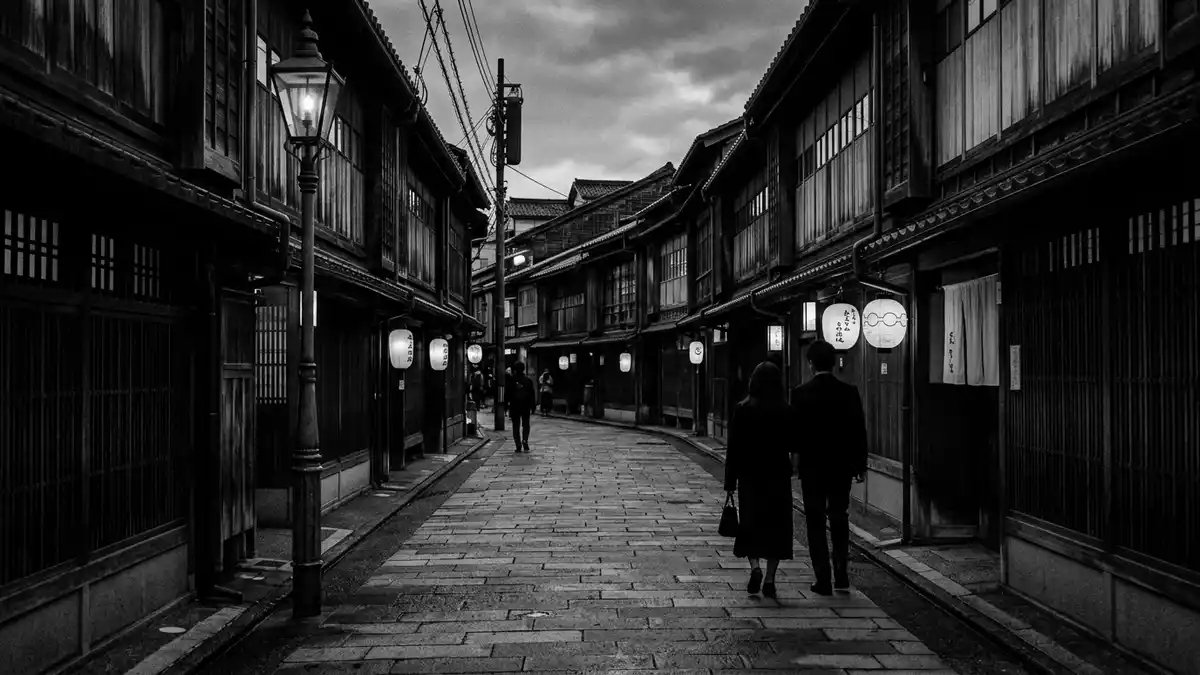
Higashi Chaya-gai in Kanazawa is a historic teahouse quarter where wooden townhouses line narrow lanes on the eastern bank of the Asano River, preserving an Edo-period streetscape within a modern Japanese city. Established in 1820 during the late Edo period as a designated entertainment district, it remains Kanazawa’s largest chaya-gai and a compact window into the townscape of nineteenth-century Japan.
Teahouses and wooden facades in Higashiyama
Higashi Chaya-gai occupies part of the Higashiyama area of Kanazawa, in Ishikawa Prefecture on the Sea of Japan coast, and lies on the east side of the Asano River opposite the older town centre.Higashiyama area of Kanazawa The name Higashi Chaya-gai literally means “Eastern Teahouse District”, reflecting its position across the water from Kanazawa’s castle town.Eastern Teahouse District The district developed as one of three chaya neighbourhoods in the city, alongside Nishi Chaya-gai and Kazuemachi, each with its own cluster of entertainment streets and wooden houses.three chaya neighbourhoods
Walking into Higashi Chaya-gai, the defining impression is the continuous front of two-storey wooden machiya-style houses that form dense street walls along the main lanes. Many buildings retain timber lattice screens on the ground floor, deeper eaves and tiled roofs, creating a rhythm of vertical and horizontal lines that is characteristic of late Edo-period urban architecture.late Edo-period urban architecture Behind the street fronts lie narrow alleys and side passages, where smaller houses, workshops and courtyards extend the district into a compact urban fabric that still reflects its nineteenth-century layout.
Geisha district roots in the Edo period
Higashi Chaya-gai is traditionally dated to 1820, when the Kaga Domain under the Maeda clan reorganised Kanazawa’s entertainment quarters into designated chaya districts during the late Edo period.policy of Maeda Narinaga in 1820 The district formed part of a broader pattern in which geisha entertainment was concentrated away from the castle precincts yet kept within reach of the merchant and samurai classes who lived in the expanding town.origins in 1820 during the late Edo period Within this framework, Higashi Chaya-gai grew into Kanazawa’s largest chaya-gai, with lanes of teahouses where guests were received in rooms screened from the street.
Inside the traditional teahouses, geisha known locally as geiko performed music, dance and conversation in tatami rooms that were separated from the bustle outside.largest and best-preserved geisha district The architecture supported this role through discreet entrances, staircases leading to upper floors and carefully proportioned interiors that balanced reception spaces with service areas. As social and cultural practices changed through the Meiji era and beyond, many buildings in Higashi Chaya-gai retained these structural characteristics even when individual households and uses shifted, helping to preserve the streetscape as an example of late Edo-period geisha quarters in a regional Japanese city.
Preserved streetscape and contemporary life
The core of Higashi Chaya-gai forms a compact historic area of lanes and townhouses that has been recognised as an Important Cultural Property and as Kanazawa’s best-preserved geisha district.Important Cultural Property of Japan Within this area, restoration programmes have focused on maintaining timber facades, tiled roofs and original room layouts, so that a walk through the quarter gives a coherent sense of nineteenth-century urban form. The paving of main lanes and the scale of buildings emphasise the human-sized character of the district, contrasting streets of modest width with houses that rise only a few storeys.
Contemporary life in Higashi Chaya-gai now includes cafés, small shops and cultural venues occupying former teahouses, alongside properties that continue more traditional functions. Craft workshops, including gold leaf studios, operate from some of the wooden houses, linking Kanazawa’s reputation for decorative arts with the historic environment of the chaya-gai.gold leaf workshops and wooden teahouses The combination of preserved architecture, long streets of machiya and active small-scale businesses makes Higashi Chaya-gai a rare example of an Edo-period geisha district that still forms part of the everyday city fabric.
Visiting Higashi Chaya-gai: what travellers from Western Europe should know
- Higashi Chaya-gai lies in the Higashiyama district on the eastern bank of the Asano River in Kanazawa, Ishikawa Prefecture, and can be reached from JR Kanazawa Station by local buses that stop at Hashibacho.
- The historic area consists of narrow paved lanes lined with wooden townhouses, so visiting involves walking on gently sloping streets and navigating occasional steps at building entrances.
- The official language is Japanese and the currency is the yen.
- Entry requirements depend on your nationality; UK travellers can check the FCDO travel advice at gov.uk/foreign-travel-advice, Irish travellers the Department of Foreign Affairs at ireland.ie.
Searching for Higashi Chaya-gai on social platforms
These links open searches for Higashi Chaya-gai on each platform.
Frequently asked questions about Higashi Chaya-gai
Where is Higashi Chaya-gai located within Kanazawa?
Higashi Chaya-gai is in the Higashiyama area of Kanazawa, on the eastern bank of the Asano River in Ishikawa Prefecture in central Japan.
What can visitors expect when walking through Higashi Chaya-gai?
Visitors encounter paved lanes lined with two-storey wooden townhouses, timber lattice facades and restored teahouses that together evoke an Edo-period geisha quarter.
What makes Higashi Chaya-gai distinctive among Kanazawa’s historic districts?
It is Kanazawa’s largest chaya-gai, founded in 1820, combining a preserved nineteenth-century streetscape with ongoing small-scale cultural and craft activity.


