

Houmt Souk and the layered streets of Djerba
Published on 08/21/2026 at 08:22 | Editorial responsibility: Rafael Müller, Editor-in-Chief AD HOC NEWS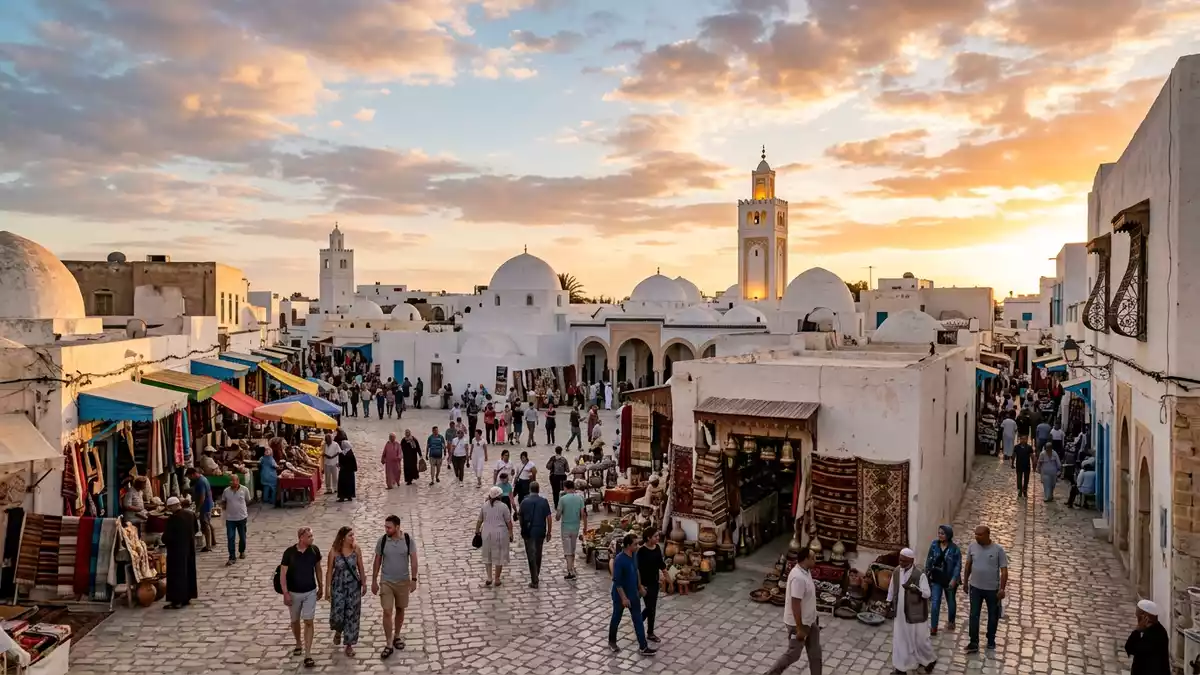
Houmt Souk is the main town of Djerba, and its streets carry a strong trace of the island’s long trading life. The town developed on the site of ancient Gerba or Girba, and Borj El K'bir still anchors the waterfront.
Houmt Souk between market streets and fort walls
The name Houmt Souk means “market neighbourhood”, and that is still the clearest way to read the town. The old centre brings together covered lanes, market halls, and the harbour edge, while the fort gives the town a harder outline.
Houmt Souk is the commune and main town of Djerba, and it has long served as the island’s administrative centre. The town is also linked with Trebonianus Gallus and Volusianus, whose names are attached to the ancient settlement tradition on the island.
Houmt Souk and the island’s older layers
The strongest historical layer is Roman. Houmt Souk developed on the site of Gerba or Girba, and the town’s memory is tied to the island’s Roman past, later Islamic periods, and Ottoman rule.
Houmt Souk is linked there with the Roman city of Gerba or Girba, and with the broader arc of Djerba’s history. Borj el-Kebir fortress is tied to the late medieval and early modern history of the island, and it remains one of the town’s key landmarks.
Houmt Souk’s harbour, souks and mosque fronts
The town is shaped by its harbour, its souks, and its religious buildings. White walls, blue doors, arcades, and narrow streets create a dense centre with a distinctly Djerban look.
covered souks and fondouks line the centre, while the mosque fronts add another layer to the streetscape. The town also includes the Borj El K'bir fort, a waterfront structure associated with the sixteenth century and the Ottoman presence on the island.
Visiting Houmt Souk: what travellers from Western Europe should know
- The town lies on Djerba, on the island’s northern side. Houmt Souk is reached by road across the island and is the main town for harbour and market activity.
- The centre combines narrow streets, arcades and covered market space. The fortified waterfront edge adds a firmer, stone-built contrast to the softer street fabric.
- English is not an official language here. The official language is Arabic and the currency is the Tunisian dinar.
- Houmt Souk is tied to both trade and fishing. Harbour life, market stalls and older communal buildings remain part of its visible character.
Searching for Houmt Souk on social platforms
These links open searches for Houmt Souk on each platform.
Frequently asked questions about Houmt Souk
Where is Houmt Souk?
Houmt Souk is the main town of Djerba, an island off the Tunisian coast. It sits on the island’s northern side and serves as its principal urban centre.
What does a visit feel like?
The place combines a working market town with a fort, harbour views and older streets. The most distinctive parts are the souks, the waterfront and the dense street pattern around the centre.
What makes Houmt Souk distinctive?
Its identity comes from the mix of market culture, island history and fortified architecture. The town’s Roman, medieval and Ottoman layers are visible in the places it preserves.


