
Ile de Goree and the architecture of memory
Published on 09/23/2026 at 20:07 | Editorial responsibility: Rafael Müller, Editor-in-Chief AD HOC NEWS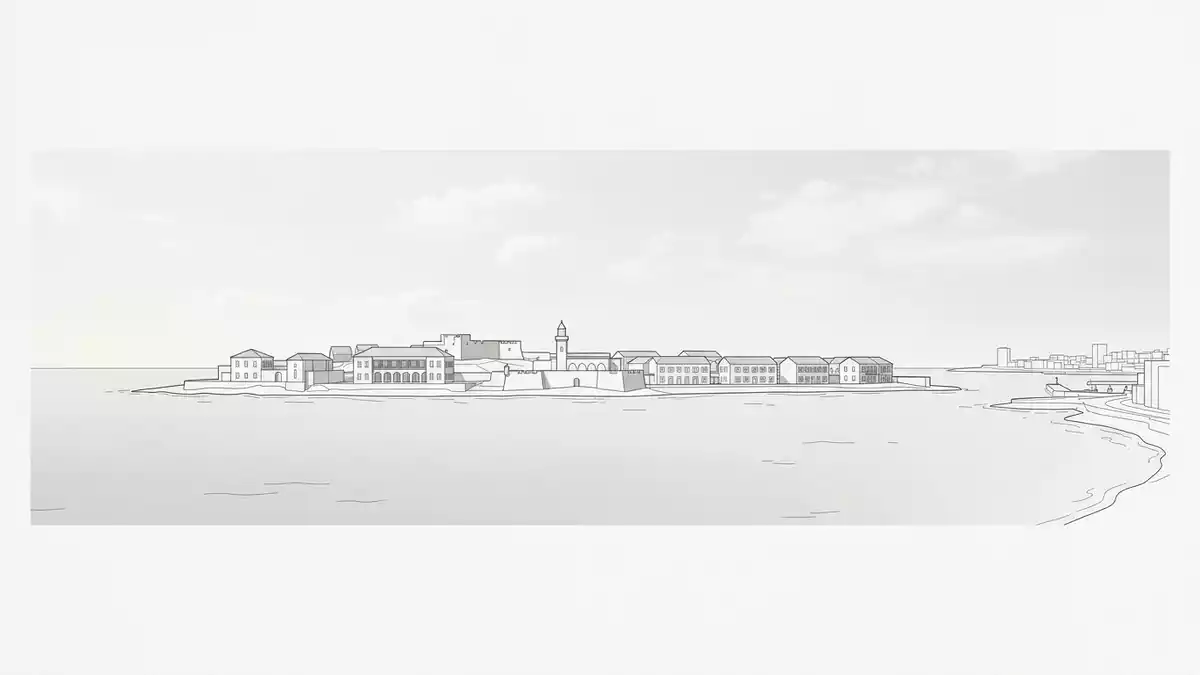
Ile de Goree is a small Atlantic island opposite Dakar, where fortifications, courtyards and museums share a compact historic landscape. Its streets preserve the contrast between elegant merchants’ houses and the confined quarters associated with the Atlantic slave trade.
Ile de Goree: an island shaped by contrasting buildings
The island lies off Senegal’s coast, opposite Dakar, and covers 28 hectares. Its rocky ground carries a town of narrow streets, squares, houses and defensive remains, with the Atlantic surrounding the historic settlement.
Portuguese, Dutch, English and French rule left different layers in the built environment. Fortified points and military structures occupy the island’s higher ground, while colonial houses contain courtyards, balconies and rooms arranged around domestic life. The result is an architectural contrast that remains legible across a short walk through the town. Ile de Goree became a UNESCO World Heritage site in 1978.
From European outpost to a place of remembrance
Portuguese sailors reached Gorée in 1444, and European powers subsequently occupied the island. From the sixteenth to the nineteenth century, it formed part of Atlantic trading networks connected with the forced deportation of Africans to the Americas.
The chronology includes French control from 1817 until Senegal’s independence in 1960. The island’s public meaning is inseparable from slavery, yet its surviving streets also record military occupation, commerce and colonial administration. Forts, former government buildings and domestic architecture stand alongside memorial spaces, creating a historic district rather than a single monument.
The House of Slaves and the Door of No Return
The Maison des Esclaves, or House of Slaves, is the island’s central memorial building. Constructed in 1786, it contains rooms and passages associated with the confinement and sale of enslaved people.
The building became a museum in 1962. Its Door of No Return opens towards the sea and forms part of the memorial language of the site. The museum is connected with the work of Senegalese historian Boubacar Joseph Ndiaye, whose name remains linked to its interpretation. The House of Slaves date is recorded as 1786, while Fort d’Estrées belongs to the nineteenth-century military landscape.
Other museums and historic structures broaden the visit beyond one building. The Castle, the fortifications on the rocky plateau, the former governor’s residence and the island’s squares connect personal memory with the wider history of Atlantic empire. Ile de Goree is therefore encountered through buildings, streets and the sea-facing edge together.
Visiting Ile de Goree: what travellers from Western Europe should know
- Ile de Goree lies opposite Dakar in Senegal. The island is reached by ferry from Dakar’s harbour.
- The historic town is compact, but its surface includes stone streets, steps, uneven ground and elevated fortified areas.
- The official language is French and the currency is the West African CFA franc.
- The island’s museums, forts, squares and colonial houses form a connected historic district.
Searching for Ile de Goree on social platforms
These links open searches for Ile de Goree on each platform.
Frequently asked questions about Ile de Goree
Where is Ile de Goree?
Ile de Goree is an island off Senegal’s coast, opposite Dakar. It belongs to the city of Dakar and is reached across the Atlantic from the mainland harbour.
What can visitors expect on the island?
Visitors encounter museums, forts, colonial houses, squares and narrow streets. The House of Slaves provides the central memorial focus.
What makes Ile de Goree distinctive?
Its distinctive character comes from the direct contrast between defensive structures, elegant colonial houses and spaces linked to the Atlantic slave trade. The island’s World Heritage status dates from 1978.


