
Intramuros and the walls of old Manila
Published on 08/29/2026 at 22:50 | Editorial responsibility: Rafael Müller, Editor-in-Chief AD HOC NEWS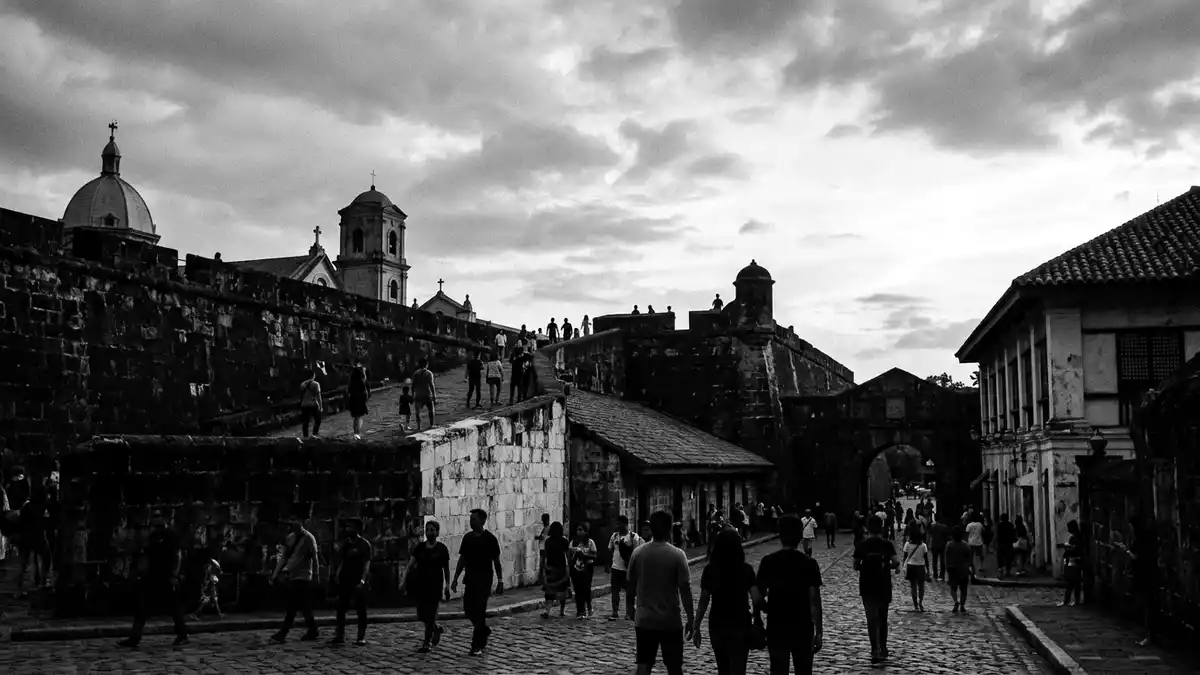
Intramuros is Manila’s walled historic district, known since the late nineteenth century by that name. Its stone walls, churches and fortifications make the old colonial core visible in one compact urban landscape, and the district’s history reaches back to 1571.
Intramuros and the Spanish colonial city
The district grew under Spanish rule as the administrative and religious centre of colonial Manila. A UNESCO tentative-list entry describes the Historic Center of Manila as an irregular pentagon, and Britannica notes the surviving enclosure and monuments inside it. Historic Center of Manila walled district
Intramuros still gathers Manila Cathedral, San Agustin Church and Fort Santiago within a small area. Those landmarks place church, fortress and civic history side by side, with stone work and later restoration giving the district its layered appearance.
Stone walls, gates and churches
The walls remain the most striking feature, with bastions and gateways breaking the long lines of masonry. Fort Santiago sits at the northern end, while San Agustin Church represents the colonial religious heritage most clearly. preserved fortifications Intramuros, Manila
San Agustin Church is the oldest stone church in the Philippines and a UNESCO World Heritage Site. It anchors the district’s ecclesiastical history, while the surrounding streets keep the tight urban grain of the old walled city.
From fortress quarter to heritage district
Intramuros was the seat of Spanish colonial power in the Philippines for more than three centuries. The district’s present fabric combines surviving colonial structures with reconstructed elements, so the place reads as both an archive and a city quarter. political and religious life Battle of Manila
José Rizal is closely associated with Fort Santiago, where a shrine marks his final hours before execution in 1896. That connection adds a national historical layer to a district already defined by Spanish urban planning and religious monuments.
Visiting Intramuros: what travellers from Western Europe should know
- Intramuros lies in central Manila, near the Pasig River. Fort Santiago, Manila Cathedral and San Agustin Church all sit within the walled district.
- The streets are narrow in places and the walls give the area a strong sense of enclosure. Fort Santiago includes stone ramparts and interior courtyards.
- The district is a major historical layer of Manila, with Spanish colonial architecture alongside later rebuilding. The streets, churches and fortifications form the core of what survives from the old city.
- The official language is Filipino and English is widely used; the currency is the Philippine peso.
- Entry requirements depend on your nationality; UK travellers can check the FCDO travel advice at gov.uk/foreign-travel-advice, Irish travellers the Department of Foreign Affairs at ireland.ie.
Searching for Intramuros on social platforms
These links open searches for Intramuros on each platform.
Frequently asked questions about Intramuros
Where is Intramuros?
Intramuros is in Manila, on the south side of the Pasig River. It is the old walled core of the city.
What does a visit involve?
The district combines churches, fortifications and narrow streets inside a compact historic area. Fort Santiago and San Agustin Church are among the best-known landmarks within it.
What makes Intramuros distinctive?
Its defining feature is the surviving colonial enclosure and the concentration of major historic sites within it. Spanish-era stone work, religious buildings and national history meet in one district.


