
Isla Contoy, where sand gives way to mangrove and reef
Published on 09/23/2026 at 07:25 | Editorial responsibility: Rafael Müller, Editor-in-Chief AD HOC NEWS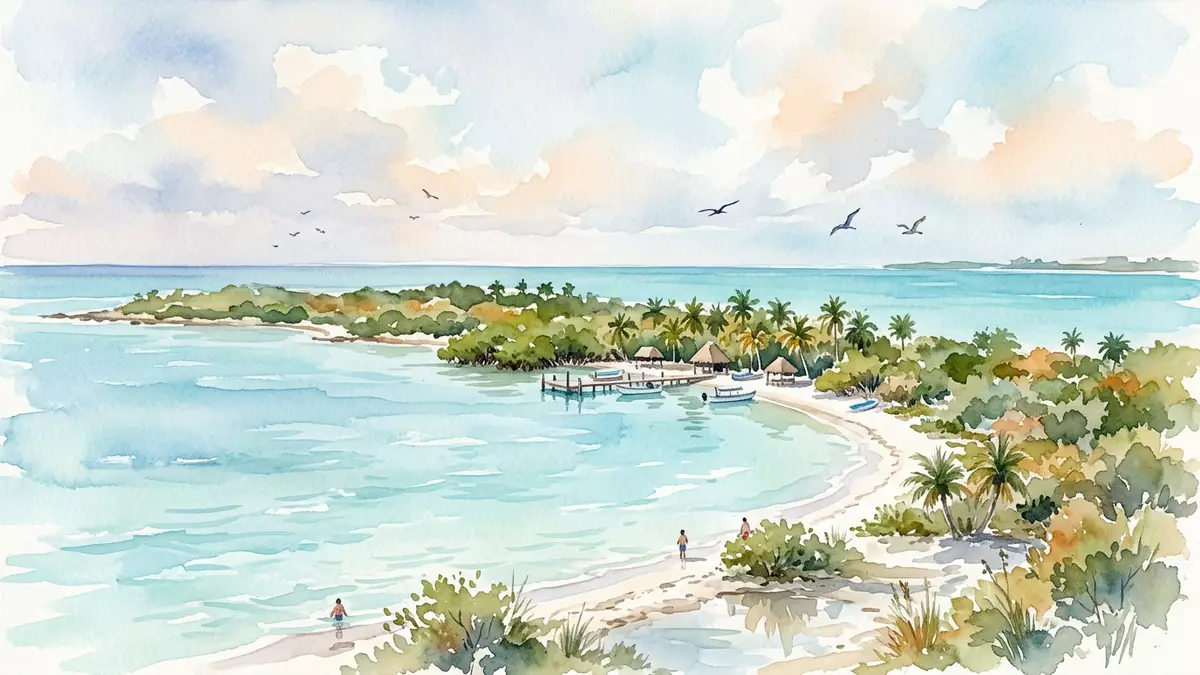
Isla Contoy is a narrow island in Quintana Roo, where beaches, mangroves, lagoons and shallow Caribbean waters form one connected protected landscape. The island’s low profile leaves sand and vegetation as its main visible features, while seabirds occupy the coastal margins and mangrove interior.
Protected since 1961 and declared Parque Nacional Isla Contoy on 2 February 1998, the island belongs to the municipality of Isla Mujeres. Its national park extends across land and surrounding sea, making the transition from beach to wetland and reef the defining feature of the place.
Isla Contoy’s landscape runs from dunes to reef
The island lies off the north-eastern tip of Mexico’s Yucatán Peninsula, between the Gulf of Mexico and the Caribbean Sea. It is part of the northern section of the Mesoamerican Barrier Reef system, with marine habitats extending beyond the visible shoreline.
Coastal dunes, low forest, coconut palms and mangroves shape the terrestrial landscape. Black, red, white and button mangroves grow around lagoons and sheltered water, while seagrass beds and coral reefs occupy the surrounding marine zone. The protected area covers 5,126 hectares, including the island and a much larger expanse of sea, as recorded in the Ramsar wetland record.
Birds, turtles and a protected Caribbean ecosystem
Isla Contoy is also known as Isla de los Pájaros, or Island of the Birds. Its mangroves and shoreline provide nesting and resting habitat for brown pelicans, magnificent frigatebirds and double-crested cormorants.
The wider bird community includes resident, migratory and visiting species. A Mexican conservation description records 79 migratory species, 50 resident species, seven non-breeding visitors and three species that arrive to reproduce in summer. These figures describe a seasonal ecological pattern rather than a display confined to a single viewpoint.
Sea turtles use the beaches and surrounding waters. Green, loggerhead, hawksbill and leatherback turtles are associated with the island’s marine environment, while the reefs and seagrass beds support fish and other coastal life. The national park’s species list includes the hawksbill turtle and elkhorn coral alongside mangrove trees and palms.
The island’s protected status began in 1961, when it became a natural refuge for flora and fauna. The national park designation followed in 1998, and international wetland recognition arrived on 27 November 2003. The national park decree includes both Isla Contoy and the marine area around it.
From a low island to an international wetland
Isla Contoy’s history is closely tied to the waters around northern Quintana Roo. Fishing, navigation and the movement of boats belong to the island’s human setting, while the land itself remains defined by dunes, wetlands and low vegetation.
The Ramsar designation places Isla Contoy within an international network of wetlands. Its listed habitats include coastal dunes, mangroves, lagoons, low forest, coconut palms, seagrass beds and coral reefs. The designation date is 27 November 2003, with the site recorded under the name Parque Nacional Isla Contoy.
Administration belongs to Mexico’s National Commission of Natural Protected Areas, known as CONANP. The park is therefore more than a beach destination: its boundaries include the ecological relationships between land, lagoon and sea. A walk across the island can move through these different environments within a compact space.
The island’s physical form remains easy to read. Sand beaches face open water, mangrove stands gather around lagoons, and the marine park continues below the surface. Isla Contoy’s character comes from this sequence of habitats, not from a single monument or built landmark.
Visiting Isla Contoy: what travellers from Western Europe should know
- Isla Contoy lies north of Isla Mujeres and is reached by boat from Puerto Juárez, Punta Sam or Isla Mujeres.
- The island is low and sandy, with coastal vegetation, mangrove areas and lagoon habitats. Walks take place across exposed shoreline and natural terrain.
- The official language is Spanish and the currency is the Mexican peso.
- Entry requirements depend on your nationality; UK travellers can check the FCDO travel advice at gov.uk/foreign-travel-advice, Irish travellers the Department of Foreign Affairs at ireland.ie.
Searching for Isla Contoy on social platforms
These links open searches for Isla Contoy on each platform.
Frequently asked questions about Isla Contoy
Where is Isla Contoy?
Isla Contoy lies in Quintana Roo, north of Isla Mujeres, at the northern end of Mexico’s Caribbean island system.
What is Isla Contoy like?
It is a low sandy island with beaches, dunes, mangroves, lagoons, low forest and surrounding marine habitats.
What makes Isla Contoy distinctive?
Its national park protects land and sea together, including nesting habitat for seabirds and beaches used by sea turtles.


