
Islas del Rosario, Cartagena’s coral archipelago
Published on 08/14/2026 at 14:49 | Editorial responsibility: Rafael Müller, Editor-in-Chief AD HOC NEWS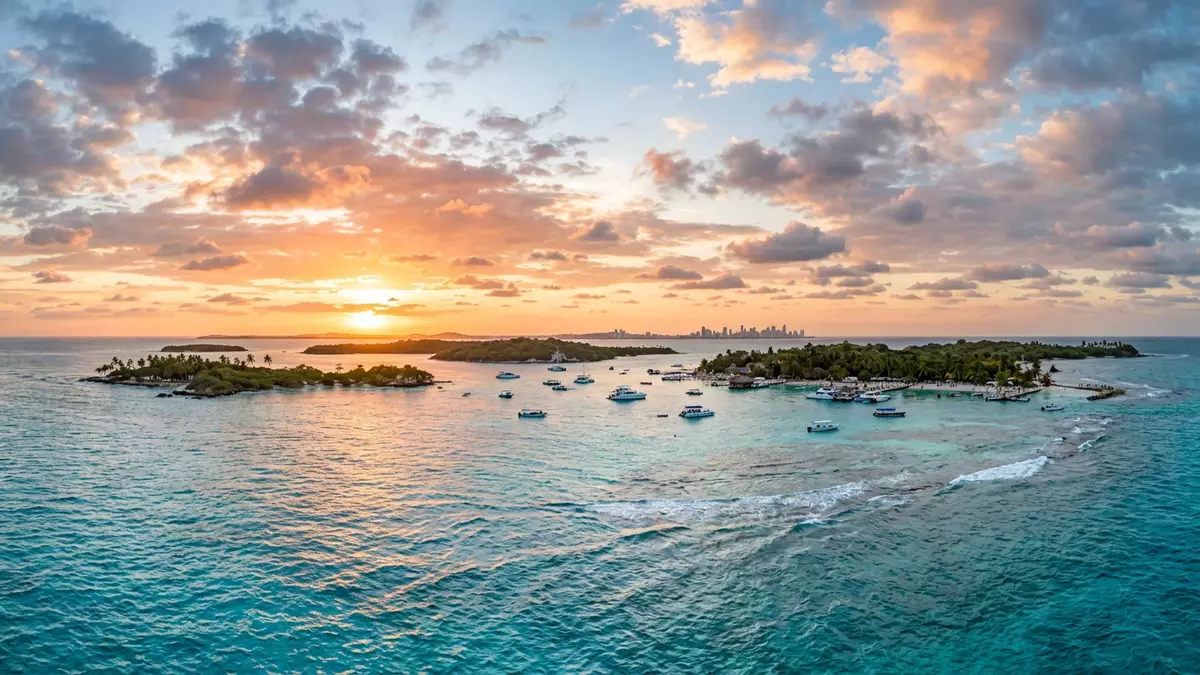
Off the Caribbean coast of Colombia, Islas del Rosario forms a low-lying coral archipelago south-west of Cartagena, enclosed by shallow reefs, mangroves and clear turquoise water. The islands belong to the municipal area of Cartagena in the department of Bolívar and sit within a designated national natural park that protects one of the most significant coral systems on this stretch of coast.
A coral archipelago shaped by reef and sea
Islas del Rosario, also known formally as the Archipiélago de Nuestra Señora del Rosario, is an archipelago of coral islands in the Colombian Caribbean Sea off Cartagena de Indias.archipelago of coral islands The group occupies a marine area that extends over tens of thousands of hectares from the shallow submarine platform off the Barú peninsula across the reefs around the Rosario and San Bernardo archipelagos. Within this area lie islands such as Isla Grande, Isla del Rosario, Tesoro, Caribarú and smaller islets scattered across the reef platform.Isla Grande, Marina, Tesoro and others
The archipelago lies to the south-west of Cartagena, off the western side of the Barú peninsula and the bay of Barbacoas, forming part of the insular zone of Cartagena de Indias.part of the insular zone of Cartagena de Indias The islands are low and coral based, with sandy shores where the reef meets the sea and shallow lagoons in the interior of larger islands such as Isla Grande and Isla del Rosario.two largest islands have inland lagoons Around them, the sea shows marked colour gradients, shifting from pale aquamarine over sand to deeper blue over coral structures and seagrass beds.
A national natural park protecting coral ecosystems
The marine and insular area encompassing Islas del Rosario forms part of the Parque Nacional Natural Corales del Rosario y San Bernardo, one of Colombia’s network of national natural parks.one of 46 national parks of Colombia The park was established in the late twentieth century to safeguard coral reefs, associated seagrass meadows and mangrove stands, together with the diverse marine fauna that depends on them.protect one of the most important coral reefs of the Colombian Caribbean Within its boundaries, the protected area extends from the highest tide line on the islands down across the reef slopes to a defined depth contour, covering both the terrestrial patches and the surrounding submarine platform.
The park area around Islas del Rosario and the neighbouring San Bernardo archipelago reaches a scale of around 120,000 hectares when measured as a combined marine and insular zone, making it a substantial protected seascape on the Caribbean coast.archipelago occupies a surface of 120,000 hectares The coral communities include formations such as branching elkhorn coral, massive brain coral and other hard coral structures that create habitat for reef fishes and invertebrates.elkhorn and brain coral formations Along the edges of some islands, mangroves take root in the shallow water, extending their roots into the clear sea and offering further shelter to marine life.
Life, water and travel across the Rosario Islands
On the larger islands of Islas del Rosario, such as Isla Grande, small settlements and accommodation sit back from sandy shorelines, interspersed with coastal vegetation and patches of forest.two largest islands have some tourist facilities Inland lagoons surrounded by low vegetation form a contrast with the open sea, while jetties and simple piers connect these islands to maritime routes from Cartagena. Smaller islets, some with only a single building, rise just above sea level and are ringed by narrow strips of sand.
The surrounding waters of Islas del Rosario are used for activities such as snorkelling and scuba diving, taking advantage of the clarity of the Caribbean Sea and the proximity of coral reefs.offer coral reef scuba diving and snorkelling Boat routes connect the islands with Cartagena’s waterfront, often departing from piers near the historic centre such as the Muelle de la Bodeguita, crossing open water to reach different points within the archipelago.boat trips depart from Muelle de la Bodeguita Over the reefs and sandbanks, shallow areas near the islands provide settings for swimming, while deeper channels carry the small craft that link the separate islands and reef patches.
Visiting Islas del Rosario: what travellers from Western Europe should know
- Islas del Rosario lies in the Caribbean Sea south-west of Cartagena de Indias, off the Barú peninsula, and is reached by maritime transport from Cartagena’s waterfront piers.
- The terrain on the islands is low and coral based, with sandy beaches, shallow lagoons and mangrove-fringed shorelines, and access to many points involves walking over sand and simple jetties.
- The archipelago is in Colombia, where the official language is Spanish and the currency is the Colombian peso.
- Entry requirements depend on your nationality; UK travellers can check the FCDO travel advice at gov.uk/foreign-travel-advice, Irish travellers the Department of Foreign Affairs at ireland.ie.
Searching for Islas del Rosario on social platforms
These links open searches for Islas del Rosario on each platform.
Frequently asked questions about Islas del Rosario
Where is Islas del Rosario in relation to Cartagena?
Islas del Rosario lies off the Caribbean coast south-west of Cartagena de Indias, near the Barú peninsula and the bay of Barbacoas, within the city’s insular zone.
What kind of landscape and seascape can visitors expect?
The archipelago consists of low coral islands with sandy beaches, mangrove-fringed shores, inland lagoons on larger islands and surrounding shallow reefs in clear Caribbean water.
What makes Islas del Rosario distinctive among Colombia’s coastal areas?
Islas del Rosario forms part of a national natural park that protects extensive coral reef systems, seagrass meadows and mangroves, combining marine conservation with accessible island landscapes near Cartagena.


