
Itsukushima Jinja and the sea-bound shrine of Miyajima
Published on 08/25/2026 at 18:58 | Editorial responsibility: Rafael Müller, Editor-in-Chief AD HOC NEWS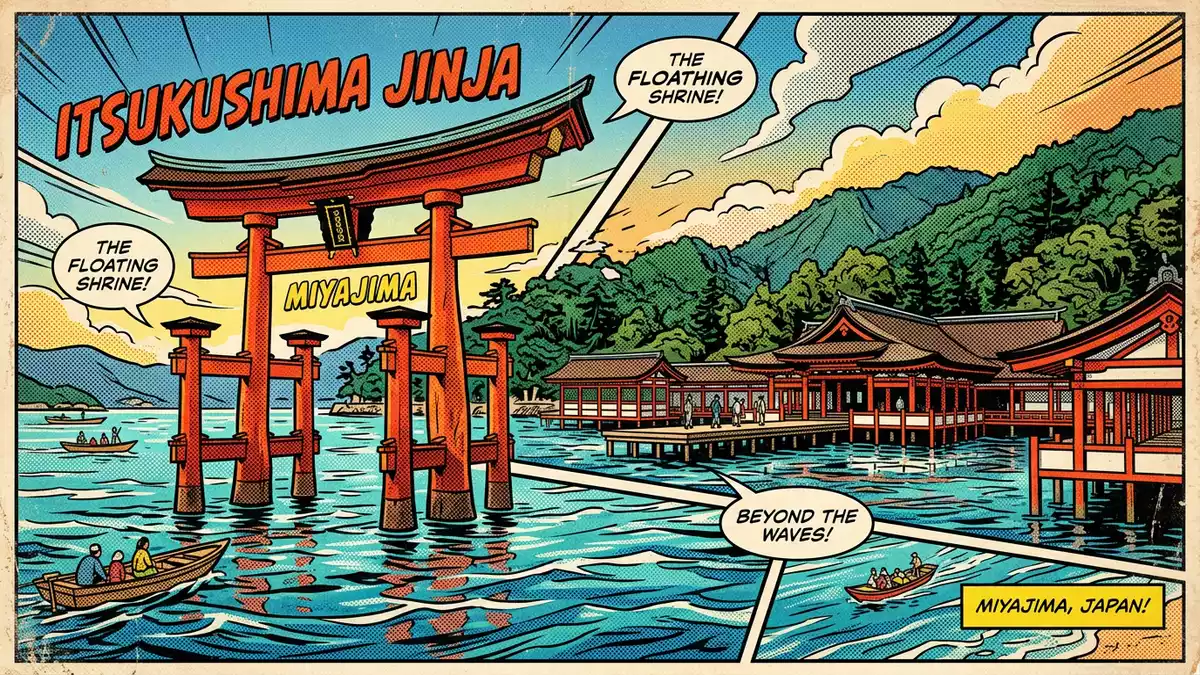
Itsukushima Jinja on Miyajima is a Shinto shrine set on the island’s edge, with vermilion buildings facing the sea and Mt. Misen behind them. Its listed landscape forms part of the shrine’s identity, and the complex was inscribed as a UNESCO World Heritage Site in 1996UNESCO World Heritage Site.
The shrine between sea and mountain
The shrine’s setting is its strongest visual feature. The sea lies in front, the forested slope rises behind, and the bright wooden structures sit between the two, creating a clear contrast of colour and form.
The World Heritage property covers 431.2 hectares and includes the island’s shrine buildings as well as surrounding landscape elements431.2 hectares. The composition links built structures and shoreline in a way that gives the place its recognisable outline.
Taira no Kiyomori and the twelfth century
The shrine’s present form is associated with the twelfth century and with Taira no Kiyomori, who rebuilt it in 1168. The official shrine history also places the shrine’s origins in 593, under Empress Suiko, which places the site within a long religious traditionTaira no Kiyomori.
That history matters because the main visual grammar of the shrine belongs to a courtly architectural world. The rebuilt complex followed shinden-zukuri, the style associated with aristocratic residences of the Heian period, and the present buildings preserve that character in their arrangement and raised wooden formsshinden-zukuri.
A shrine complex with layered structures
The UNESCO property includes seventeen buildings and three other structures, among them the main shrine complex and the auxiliary Marodo-jinja complexseventeen buildings. The group also includes the famous Otorii gate, which stands apart in the water and acts as a clear visual marker for the shrine.
Elsewhere on the island, the surrounding wooded slopes and the sea remain part of the setting rather than a backdrop in the casual sense. The shrine belongs to a larger sacred landscape, and the composition works because the buildings, shoreline and hills are read togethersacred landscape.
Visiting Itsukushima Jinja: what travellers from Western Europe should know
- The shrine is on Miyajima, off the coast of Hiroshima Prefecture in Japan. Ferries link the island with the mainland, and Miyajimaguchi is the usual departure point.
- The terrain is flat around the waterfront shrine precincts, but the wider island rises towards Mt. Misen. The contrast between shore and wooded slope is part of the site’s setting.
- The complex contains wooden shrine buildings, gates and ancillary structures set close to the water. The red lacquer and timber surfaces make the layout easy to read from several points along the shore.
- The official language is Japanese and the currency is the yen.
- Entry requirements depend on your nationality; UK travellers can check the FCDO travel advice at gov.uk/foreign-travel-advice, Irish travellers the Department of Foreign Affairs at ireland.ie.
Searching for Itsukushima Jinja on social platforms
These links open searches for Itsukushima Jinja on each platform.
Frequently asked questions about Itsukushima Jinja
Where is Itsukushima Jinja?
Itsukushima Jinja stands on Miyajima, an island in Hiroshima Prefecture, Japan. The shrine faces the Seto Inland Sea and sits below the wooded slopes of Mt. Misen.
What does a visit involve?
The shrine complex is a wooden waterfront ensemble with gates, halls and auxiliary buildings arranged close to the sea. The wider island setting adds hills, shoreline and a clear sense of enclosure.
What makes Itsukushima Jinja distinctive?
The shrine is known for the relation between its buildings, the water and the mountain backdrop. Its 1996 World Heritage listing and its association with Taira no Kiyomori add historical weight to the setting.


