
Jigoku Meguri and Beppu’s seven coloured hot springs
Published on 09/24/2026 at 05:20 | Editorial responsibility: Rafael Müller, Editor-in-Chief AD HOC NEWS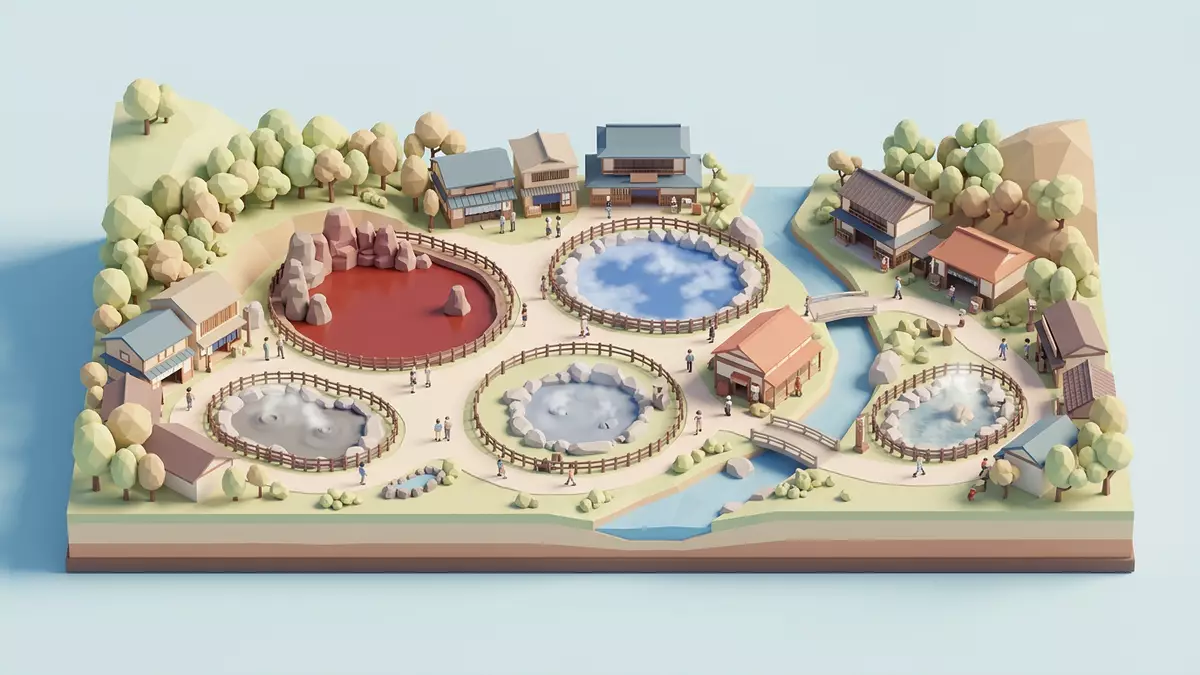
Jigoku Meguri is a circuit of Beppu’s remarkable hot-spring ponds, where cobalt-blue water, red mineral mud, white pools and erupting steam appear across two districts. The seven sites are natural hot springs rather than bathing pools, and their colours and textures give Beppu’s volcanic landscape a distinctive visual vocabulary.
The springs lie in Kannawa and Shibaseki, within Beppu on Kyushu’s eastern coast. Their name comes from the Japanese word for hell, a reference to the fumes, boiling water and hot mud recorded in the region for more than 1,000 years.
Jigoku Meguri begins with colour
Umi Jigoku is the clearest introduction to the circuit. Its water is cobalt blue, with steam rising above a landscaped Japanese garden. The pool reaches 98°C, while its colour contrasts with the ordinary image of a hot spring. Umi Jigoku is a nationally designated place of scenic beauty, a status it shares with Chinoike Jigoku, Tatsumaki Jigoku and Shiraike Jigoku.
Shiraike Jigoku presents a different surface. Its hot water appears milky white or bluish, set within a Japanese-style garden. The site also includes a tropical-fish display associated with the spring’s heat. The contrast between the pale pool, dark vegetation and timber buildings gives this stop a composed architectural setting. four scenic designations belong to the circuit.
Chinoike Jigoku changes the palette again. Its pond is red, a colour associated with iron oxide in the hot mud and spring water. The site’s name means Blood Pond Hell, and red mud has been used locally for ointment, pigment and dye. The pond’s surface, steam and surrounding buildings form one of the circuit’s strongest visual contrasts.
Seven springs, seven different surfaces
Jigoku Meguri is not a single pool but a group of named sites. Five lie in the Kannawa Onsen area: Umi Jigoku, Oniishibozu Jigoku, Kamado Jigoku, Oniyama Jigoku and Shiraike Jigoku. Chinoike Jigoku and Tatsumaki Jigoku are in the Shibaseki area.
Oniishibozu Jigoku contains grey boiling mud. Bubbles rise through the surface in rounded forms, giving the site its name, which refers to the shaved head of a Buddhist monk. Kamado Jigoku gathers several kinds of hot-spring scenery in one place, including blue and orange water, steam and mud. Its name is linked with Kamado Hachimangu Shrine and rice cooked with spring heat.
Oniyama Jigoku is also known as Crocodile Hell. Hot-spring heat is associated with the facility’s crocodile enclosures, adding living animals to a route otherwise dominated by water, rock, mud and vapour. The result is an unusual combination of zoological display and geothermal landscape.
Tatsumaki Jigoku is the circuit’s geyser site. Hot water and steam rise from underground in an eruption, creating a moving counterpart to the still surfaces of Umi, Shiraike and Chinoike. Its geological character has also received formal recognition as a natural monument of Beppu and a national scenic spot.
The history of Jigoku Meguri reaches into Japan’s Nara-period records. Chinoike Jigoku appears under the name Akaonsen in the Bungo no Kuni Fudoki, compiled in 733. the 733 historical record places the springs within a long tradition of describing Beppu’s geothermal zone.
From feared ground to a sightseeing circuit
The Kannawa and Kamegawa areas were associated with fumes, hot mud and boiling water for centuries. The word jigoku preserved the image of dangerous ground, while the springs’ colours and eruptions created a landscape distinct from ordinary bathing facilities.
Organised sightseeing developed in the twentieth century. Aburaya Kumahachi, a Beppu tourism promoter, is associated with the development of the Jigoku Tour and with a sightseeing bus service introduced in 1928. The circuit transformed separate geothermal sites into a named cultural route through Beppu.
Jigoku Meguri also connects natural phenomena with local food culture. Hot-spring steam is used for jigoku-mushi cooking, while individual sites offer foods associated with spring heat, including eggs and steamed sweets. These details extend the experience beyond viewing ponds, without changing the central character of the route: water, mud, steam and mineral colour.
The circuit’s strongest quality remains its variety. Umi Jigoku is blue, Chinoike Jigoku is red, Shiraike Jigoku is pale, Oniishibozu Jigoku is grey and Tatsumaki Jigoku is defined by movement. The seven sites turn geothermal activity into a sequence of visible forms across Beppu.
Visiting Jigoku Meguri: what travellers from Western Europe should know
- Jigoku Meguri is divided between the Kannawa Onsen area and the Shibaseki Onsen area in Beppu, Oita Prefecture. Five sites are grouped in Kannawa, while Chinoike and Tatsumaki are in Shibaseki.
- The route includes hot water, boiling mud, steam and a geyser. These are viewing sites, and the ponds are not ordinary bathing pools.
- Kannawa’s Ideyuzaka connects with the surrounding hot-spring town, where steam-cooked food and public bathing culture form part of the local setting.
- The official language is Japanese and the currency is the Japanese yen.
- Entry requirements depend on your nationality; UK travellers can check the FCDO travel advice at gov.uk/foreign-travel-advice, Irish travellers the Department of Foreign Affairs at ireland.ie.
Searching for Jigoku Meguri on social platforms
These links open searches for Jigoku Meguri on each platform.
Frequently asked questions about Jigoku Meguri
Where is Jigoku Meguri?
Jigoku Meguri is in Beppu, Oita Prefecture, on Kyushu in southern Japan. Its seven sites are divided between Kannawa and Shibaseki.
What can visitors expect?
The circuit presents coloured hot springs, boiling mud, rising steam and a geyser. Named sites also include gardens, foot baths, food associated with spring heat and a crocodile display.
What makes Jigoku Meguri distinctive?
Its identity comes from variety: blue, red, white and grey geothermal surfaces appear within one named route. The springs also connect natural phenomena with Beppu’s long history of hot-spring culture.


