
Jigoku Meguri and Beppu’s seven geothermal landscapes
Published on 09/22/2026 at 10:14 | Editorial responsibility: Rafael Müller, Editor-in-Chief AD HOC NEWS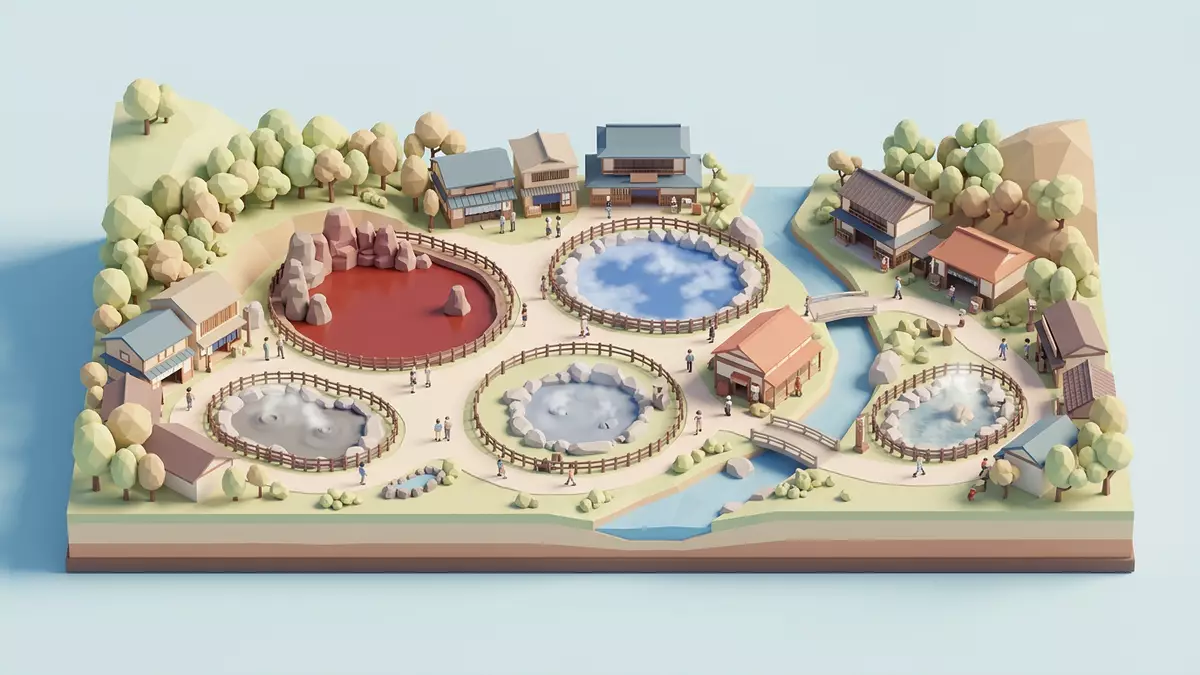
Jigoku Meguri is a circuit of geothermal sites in Beppu, Japan, where boiling water, steam, gas and mud appear in contrasting forms. The seven sites lie in the Kannawa and Kamegawa areas, creating a landscape shaped by hot springs rather than bathing pools.
Seven hot springs, seven different faces
Jigoku Meguri brings together Umi Jigoku, Oniishi Bozu Jigoku, Kamado Jigoku, Oniyama Jigoku, Shiraike Jigoku, Chinoike Jigoku and Tatsumaki Jigoku. Five sites are associated with Kannawa, while two are in Shibaseki, giving the circuit a geographical as well as geological character.
Umi Jigoku has cobalt-blue water and reaches a depth of 200 metres. Its colour contrasts with Chinoike Jigoku, whose water and clay appear blood red. Tatsumaki Jigoku is a geyser site, while Oniishi Bozu Jigoku is recognised by rounded bubbles rising through grey mud. Seven geothermal sites describe the range of scenes found across the circuit.
Steam, mud and the name jigoku
The Japanese word jigoku means hell. Beppu’s scalding pools have been associated with that word since the Heian period, from 794 to 1185, although the exact origin of the naming is not recorded.
Beppu’s volcanic history adds an older geological backdrop. Mount Tsurumi experienced a major eruption in 867, releasing hot gases and causing deaths. Buddhist imagery also shaped the language surrounding places with hot gases, boiling water and mud. The term connects the visible landscape with the Buddhist idea of burning hell without turning the sites into religious monuments. The Heian-period name places Jigoku Meguri within a long history of Japanese descriptions of extreme geothermal ground.
From natural hazards to a sightseeing circuit
The pools are viewed rather than used for bathing because their temperatures can approach boiling point. Their visible features include iron-oxide-rich steam, bubbling mud, gas emissions and water in several colours.
Jigoku Meguri also preserves a connection with food culture. Jigoku mushi is a traditional cooking method that uses hot-spring steam, with roots in the Edo period from 1603 to 1867. Eggs and puddings can be prepared with geothermal heat, while the sites themselves remain the main focus of the circuit.
Four locations hold Japan’s designation as Places of Scenic Beauty: Umi Jigoku, Chinoike Jigoku, Tatsumaki Jigoku and Shiraike Jigoku. Oniyama Jigoku has another distinctive feature, with an alligator enclosure associated with its steaming environment. The Jigoku landscape records the relationship between fumes, hot mud and hot water in the Kannawa and Kamegawa area.
Visiting Jigoku Meguri: what travellers from Western Europe should know
- Jigoku Meguri lies in Beppu, in ?ita Prefecture on Kyushu. From JR Beppu Station, Kamenoi buses serve Kannawa and Umi-Jigoku-mae.
- The Kannawa sites are connected by walking routes between Umi Jigoku and Shiraike Jigoku. The two Shibaseki sites form a separate part of the circuit.
- The pools contain boiling water, hot mud and escaping steam. The sites are viewing areas, not bathing places.
- The official language is Japanese and the currency is the Japanese yen.
Searching for Jigoku Meguri on social platforms
These links open searches for Jigoku Meguri on each platform.Frequently asked questions about Jigoku Meguri
Where is Jigoku Meguri?
Jigoku Meguri is in Beppu, Japan, across the Kannawa and Kamegawa areas of ?ita Prefecture on Kyushu.
What can visitors expect to see?
The circuit contains steaming pools, bubbling mud, gas emissions, coloured water and a geyser. The sites are viewed from designated areas rather than used for bathing.
What makes Jigoku Meguri distinctive?
Its seven sites present different geothermal features within one circuit. Their names, colours and textures connect Beppu’s volcanic landscape with the Japanese word jigoku, meaning hell.


