
Jigoku Meguri: Beppu’s theatrical hot spring hells
Published on 08/16/2026 at 14:28 | Editorial responsibility: Rafael Müller, Editor-in-Chief AD HOC NEWS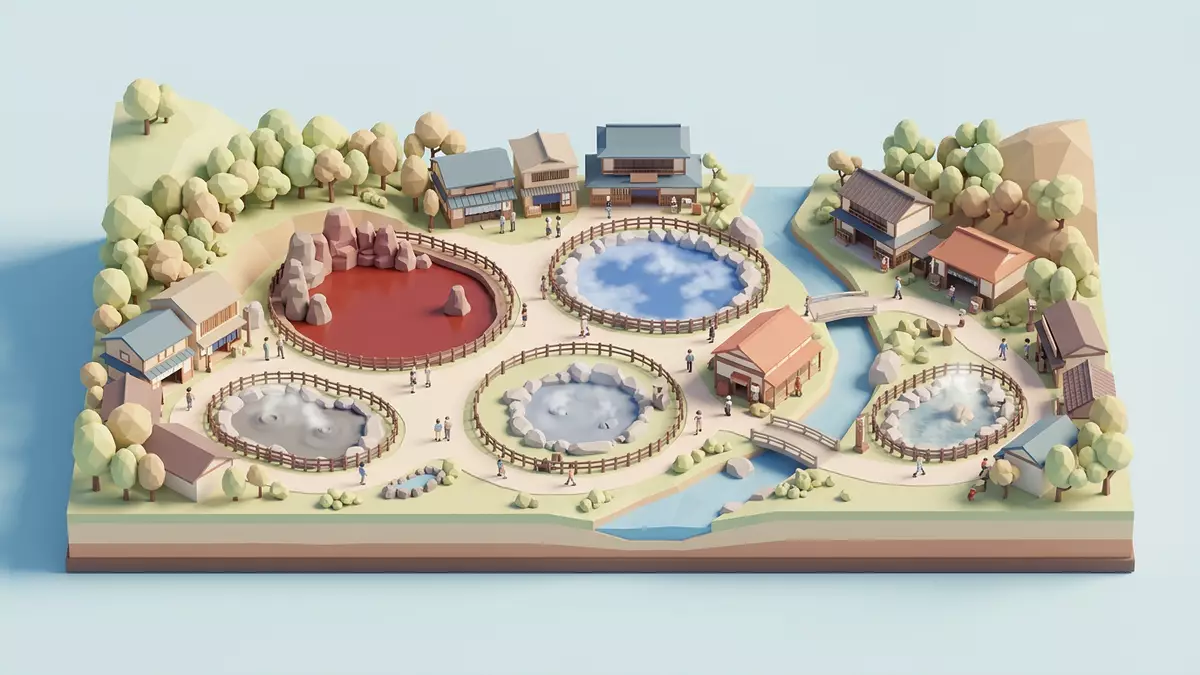
Jigoku Meguri in Beppu is a circuit of vividly coloured, scalding hot springs presented as a series of “hells”, where water and steam are for viewing rather than bathing. Set in Oita Prefecture on Kyushu, the route gathers several dramatic geothermal pools into a compact tour that shows how onsen culture can become spectacle as well as daily life.
Boiling springs made for looking, not soaking
The core of Jigoku Meguri is a group of geothermal hot springs whose temperatures and mineral content make them unsuitable for bathing, so paths and viewing platforms frame them as natural displays instead. The route is commonly described as a circuit of seven hells, divided between the Kannawa and Shibaseki areas of Beppu, and laid out so travellers can walk from one dramatic scene to the next along streets and garden paths.Kannawa Onsen Area and Shibaseki Onsen Area The springs themselves have individual names, including Umi Jigoku, Chinoike Jigoku, Tatsumaki Jigoku, Shiraike Jigoku, Oniishi Bozu Jigoku, Oniyama Jigoku and Kamado Jigoku, and the circuit linking them is promoted locally as the Beppu Jigoku Tour.Beppu Jigoku Association listing
Each hell has its own character, shaped by the minerals in the water and the way it meets the surface. Umi Jigoku is associated with an intense blue pool edged by planting and steam vents, while Chinoike Jigoku is known for water coloured by iron-rich mud that gives the impression of a reddish pond.Chinoike Jigoku and Umi Jigoku descriptions Tatsumaki Jigoku centres on a geyser that erupts at intervals, and Oniishi Bozu Jigoku is marked by bubbling grey mud pools compared to a monk’s shaved head.Onsen hells descriptions Together they form a string of compact sites where active geothermal forces are visible at close range.
A hot spring town shaped by onsen culture
Beppu is one of Japan’s most prominent onsen cities, with numerous bathing facilities drawing on the same volcanic energy that feeds Jigoku Meguri. The hells sit within wider neighbourhoods of guesthouses, bathhouses and local streets, and the circuit is promoted as a signature attraction of Beppu alongside its more conventional soaking pools.signature attraction of Beppu Travellers following the Jigoku Meguri route encounter not only the individual hell sites but also the everyday fabric of an onsen district, from residential lanes to small shops selling snacks and souvenirs linked to the springs.
The hell circuit itself is structured as an organised tour, with the Beppu Jigoku Association coordinating the seven named sites across Kannawa and Kamegawa in Beppu City.association and locations Some travel guides group the hells slightly differently, referring to seven official hells and mentioning an eighth, Yama Jigoku, which is not always included in combined tickets.seven officially recognised hells What remains consistent is that the Jigoku Meguri name refers to a themed circuit rather than a single spring, and that the individual sites are small enough to be visited in sequence on the same day.
Steam, colour and everyday detail along the circuit
Part of the appeal of Jigoku Meguri lies in the variety of effects produced by similar geothermal forces. At Kamado Jigoku, several pools present differing colours and textures, with statues and food stalls reflecting the site’s local identity as a place where steam is used in cooking.Kamado Jigoku description Oniyama Jigoku is noted for strong steam rising from its pond and a neighbouring area used for breeding crocodiles, while Shiraike Jigoku places a pale-coloured pond among landscaped gardens and a small aquarium building.variety of hells
The route between the hells moves through streets and low-rise districts rather than remote terrain, and most sites have paved approaches and constructed viewing areas rather than rough paths. Travellers encounter steam drifting from drains and vents beyond the formal hell entrances, a reminder that the geothermal system extends beneath the wider neighbourhood and not just the ticketed sites. Because the hells are arranged in two clusters, five around Kannawa and two near Shibaseki, the circuit has a rhythm of concentrated viewing areas followed by short transfers through ordinary parts of Beppu.distribution of the seven hells
Visiting Jigoku Meguri: what travellers from Western Europe should know
- Jigoku Meguri is in Beppu City in Oita Prefecture on Kyushu, with the hell sites grouped mainly around the Kannawa and Shibaseki districts of the town.
- Approaches to the hells are along urban streets and short paved paths, with constructed viewing areas around the pools and mud springs rather than long hikes over rough ground.
- From JR Beppu Station, buses run towards Kannawa and stops such as Umijigoku-mae, linking the main railway arrival point with the cluster of hell sites in the onsen district.
- The official language is Japanese and the currency is the yen; signage at the hells often includes transliterated names and some information in other languages.
- Entry requirements depend on your nationality; UK travellers can check the FCDO travel advice at gov.uk/foreign-travel-advice, Irish travellers the Department of Foreign Affairs at ireland.ie.
Searching for Jigoku Meguri on social platforms
These links open searches for Jigoku Meguri on each platform.
Frequently asked questions about Jigoku Meguri
Where is Jigoku Meguri located?
Jigoku Meguri is a circuit of geothermal hot spring sites in Beppu City in Oita Prefecture on Kyushu, mainly around the Kannawa and Shibaseki districts.
What can visitors expect on a visit?
Visitors walk between several compact sites featuring boiling pools, mud springs, steam vents and landscaped surroundings, viewing the geothermal features from built paths and platforms rather than bathing in them.
What makes Jigoku Meguri distinctive among hot spring areas?
Instead of focusing on bathing, Jigoku Meguri presents intensely coloured, extremely hot springs as a themed circuit of “hells”, linking multiple named sites so geothermal activity becomes a structured spectacle.


