
Jiufen Laojie and the stepped streets of a former gold town
Published on 09/23/2026 at 22:12 | Editorial responsibility: Rafael Müller, Editor-in-Chief AD HOC NEWS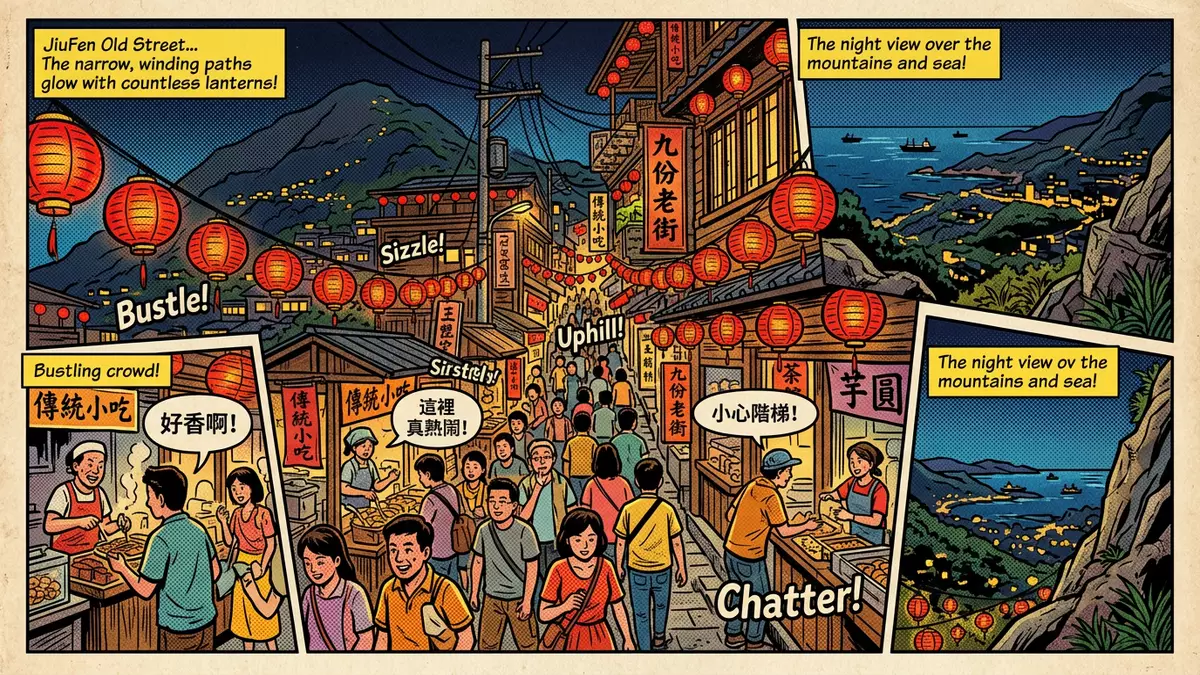
Jiufen Laojie is a hillside market street in Ruifang District, Neu-Taipeh, Taiwan. Its defining feature is a dense sequence of stairways, narrow lanes and shopfronts rising through a former gold-mining town.
The street combines food stalls, tea houses, small shops and older buildings within a steep mountain settlement. Stone steps and tiled roofs carry the visible character of Jiufen’s mining era.
Jiufen Laojie on the slopes above Ruifang
Jiufen Laojie lies in the hills of northeastern Taiwan, above the coast and within New Taipei City. The street is associated with Jishan Street and forms the commercial centre of Jiufen’s built-up hillside district.
The setting is defined by elevation and compressed space. Buildings follow the slope, while stairways connect sections of the market lane. Shopfronts open directly onto pedestrian routes, creating a street scene made from steps, signs, covered passages and rooflines.
Jiufen’s name is traditionally explained through the phrase “nine portions”, linked to a settlement associated with nine households and the division of delivered supplies. This account belongs to the cultural history of the town, while the street’s physical form reflects its position on a steep hillside.
From gold mining to a preserved commercial street
Gold discoveries in the surrounding hills brought major change during the late nineteenth century. The story of Jiufen begins in the 1890s gold rush, when prospecting and mining expanded the settlement.
Under Japanese rule from 1895 to 1945, Jiufen developed as an important mining centre. Workers, merchants and families filled the hillside town, and roads, tunnels and housing formed part of the industrial landscape.
Mining declined after the Second World War, and the town’s commercial life changed with it. The 1989 film A City of Sadness, directed by Hou Hsiao-hsien, brought Jiufen’s streets into a wider cultural view and connected the place with Taiwan’s cinema history.
The lanes retain traces of several periods at once. Japanese-era forms appear beside later shopfronts, while stone paving, timber details, tiled roofs and covered balconies sit within the irregular hillside plan.
Stairways, tea houses and lantern-lit lanes
The most recognisable spaces around Jiufen Laojie are the stair-lined lanes. Their surfaces rise and turn between buildings, with small landings, side passages and entrances opening at different levels.
Food is part of the street’s identity. Shops sell Taiwanese snacks, sweets, tea and other local specialities, while tea houses occupy buildings with views towards the hills and coast. The commercial activity remains closely tied to the architecture of the lane.
Lanterns, signs and covered facades add colour to the stone streets. At close range, the scene is made from practical elements: steps, drainage channels, roof eaves, shop windows and narrow gaps between buildings.
Jiufen Laojie also belongs to a larger cultural landscape. Nearby Jinguashi shares the area’s mining history, while the Ruifang hills connect the street with former tunnels, industrial remains and mountain settlements.
The result is not a single monument but an inhabited historic district. Its character lies in the combination of a steep route, compact buildings and commercial uses that occupy the same hillside spaces associated with mining.
Visiting Jiufen Laojie: what travellers from Western Europe should know
- Jiufen Laojie is in Ruifang District, Neu-Taipeh, northeast of Taipei. Buses connect the district with Taipei, and trains reach Ruifang Station before the onward bus journey into the hills.
- The street is pedestrian and stair-based. Comfortable walking requires repeated climbs, uneven paving and close attention to changing levels between lanes.
- The surrounding hills include former mining areas and coastal viewpoints. Jinguashi is a named nearby district with related mining heritage.
- The official language is Mandarin Chinese and the currency is the New Taiwan dollar.
- Entry requirements depend on your nationality; UK travellers can check the FCDO travel advice at gov.uk/foreign-travel-advice, Irish travellers the Department of Foreign Affairs at ireland.ie.
Searching for Jiufen Laojie on social platforms
These links open searches for Jiufen Laojie on each platform.Frequently asked questions about Jiufen Laojie
Where is Jiufen Laojie?
Jiufen Laojie is in Ruifang District, Neu-Taipeh, in the hills of northeastern Taiwan. It is associated with Jishan Street and the historic commercial centre of Jiufen.
What can visitors expect there?
The street contains stairways, narrow lanes, food stalls, tea houses, small shops and buildings arranged across a steep hillside. Walking involves repeated changes in level.
What makes Jiufen Laojie distinctive?
Its identity comes from the visible relationship between a former gold-mining settlement and a dense stepped market street. Japanese-era architectural details share the hillside with later commercial buildings.


