
Karnak in Luxor: a city of temples carved in stone
Published on 09/17/2026 at 14:17 | Editorial responsibility: Rafael Müller, Editor-in-Chief AD HOC NEWS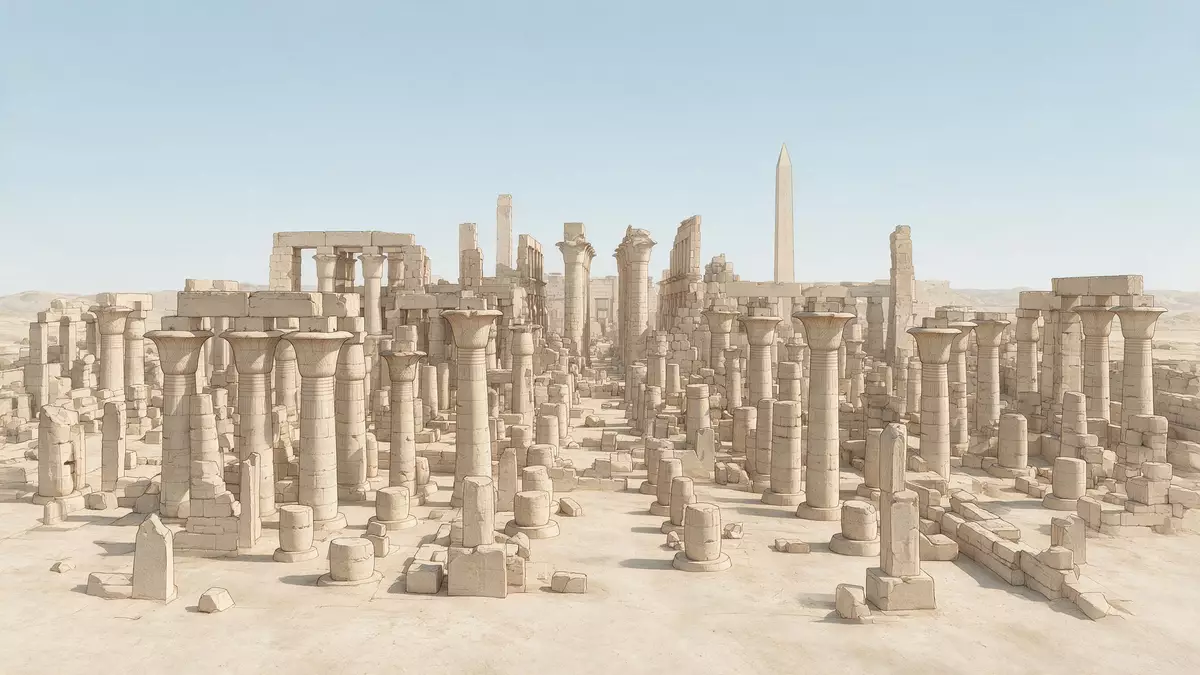
Karnak in Luxor is an immense temple complex to the god Amun, where stone pylons, courts and columned halls chart more than a millennium of ancient Egyptian building on the east bank of the Nile. The site grew under successive rulers from the Middle Kingdom into the Ptolemaic period, turning a single sanctuary into a city of temples within massive walls.
A temple city shaped over dynasties
Karnak lies on the eastern bank of the Nile opposite the west-bank necropolis, within the modern city of Luxor in southern Egypt. Ancient Egyptians knew the area as Ipet-isu, “the most select of places”, reflecting its role as the principal cult centre for Amun and the wider Theban Triad of Amun, Mut and Khonsu.the most select of places From the Middle Kingdom onwards, pharaohs concentrated religious, political and administrative power here, leaving a dense cluster of shrines, gateways and processional routes.
Royal construction at Karnak is traditionally dated to the Middle Kingdom, with early building works linked to Senusret I of the twelfth dynasty in the twentieth century BC.Senusret I Over the following centuries, pharaohs of the New Kingdom, including Hatshepsut, Thutmose III, Seti I and Ramesses II, added chapels, obelisks, pylons and ceremonial halls, extending the main axis and thickening the side courts.New Kingdom pharaohs The complex continued to receive additions through the Late Period and into the Ptolemaic and Roman eras, layering styles and inscriptions from different episodes of Egyptian history into one continuous architectural fabric.
The Precinct of Amun-Re and the Great Hypostyle Hall
The largest part of Karnak is the Precinct of Amun-Re, enclosed within substantial walls and occupying around 25 ha (62 acres) of ground.Precinct of Amun-Re Inside this area stand the principal temple to Amun, a series of subsidiary chapels, festival structures and storerooms, together with a sacred lake used in ritual practice. A sequence of pylons marks the main east–west processional axis, creating a spine of monumental gateways that lead visitors through open courts into progressively more enclosed and restricted spaces.
One of the most striking structures along this axis is the Great Hypostyle Hall, begun under Seti I in the thirteenth century BC and completed by his son Ramesses II.Great Hypostyle Hall The hall is filled with stone columns arranged in tightly spaced rows, supporting massive architraves and drawing the eye upward to carved reliefs and traces of colour. Light filters down between the towering shafts, revealing scenes of offering and triumph carved across the surfaces. Moving through this forest of supports gives a strong sense of scale, as human figures appear small beside the carved images of kings and deities that rise high above the floor.
Processional routes, side precincts and living stone
Karnak is not a single building but a collection of precincts and temples that expanded over centuries as pharaohs sought to associate themselves with Amun. In addition to the main Amun enclosure, there are separate temple areas dedicated to the goddess Mut and the moon god Khonsu, each with its own walls, courts and gateways.Mut and Khonsu Obelisks, massive statues and smaller chapels stand along the axes and in side spaces, many inscribed with the names and achievements of rulers from different dynasties.
A processional way once linked Karnak with Luxor Temple to the south, running for about 2.4 km (1.5 miles) along the east bank.processional route This avenue is lined with stone sphinxes bearing rams’ heads, symbolising Amun and marking the ceremonial path between the two major temple complexes. Within Karnak itself, different construction phases can be read in the way blocks and inscriptions overlap: Middle Kingdom foundations lie beneath New Kingdom expansions, while later Ptolemaic gateways stand in front of earlier structures. The result is a layered environment where almost every wall and column carries carved text, giving the stone surfaces a dense record of religious and political life across many centuries.
Visiting Karnak: what travellers from Western Europe should know
- Karnak stands on the eastern bank of the Nile within Luxor, in the region known as Upper Egypt. It is reached from the city’s streets by road across built-up neighbourhoods on the east side of the river.
- The temple complex covers a broad, largely level area with extensive stone paving, wide courts and corridors between walls and columns. Exploring the main precinct involves walking on hard surfaces and climbing low steps at gateways.
- The site lies in a hot desert environment close to the Nile, with little shade away from built structures. Visits involve exposure to strong sunlight while crossing open courts and processional avenues.
- Luxor sits near other major ancient sites, including Luxor Temple to the south along the former processional route and the Theban necropolis on the opposite, west bank of the Nile.
- The official language is Arabic and the currency is the Egyptian pound. Entry requirements depend on your nationality; UK travellers can check the FCDO travel advice at gov.uk/foreign-travel-advice, Irish travellers the Department of Foreign Affairs at ireland.ie.
Searching for Karnak on social platforms
These links open searches for Karnak on each platform.
Frequently asked questions about Karnak
Where is Karnak and what kind of place is it?
Karnak is a vast ancient Egyptian temple complex on the eastern bank of the Nile in Luxor, southern Egypt, centred on the main sanctuary of Amun.
What should visitors expect when exploring Karnak?
Visitors encounter expansive stone courts, columned halls, obelisks and gateways arranged along processional routes, with extensive walking on paved surfaces and through roofed interiors.
What makes Karnak distinctive among Egyptian temple sites?
Karnak is characterised by its scale, long building history from the Middle Kingdom into the Ptolemaic era, and the dense concentration of temples, precincts and monumental features within a single enclosed complex.


