
Kasbah des Oudaias: Rabat’s blue-and-white citadel
Published on 09/22/2026 at 17:43 | Editorial responsibility: Rafael Müller, Editor-in-Chief AD HOC NEWS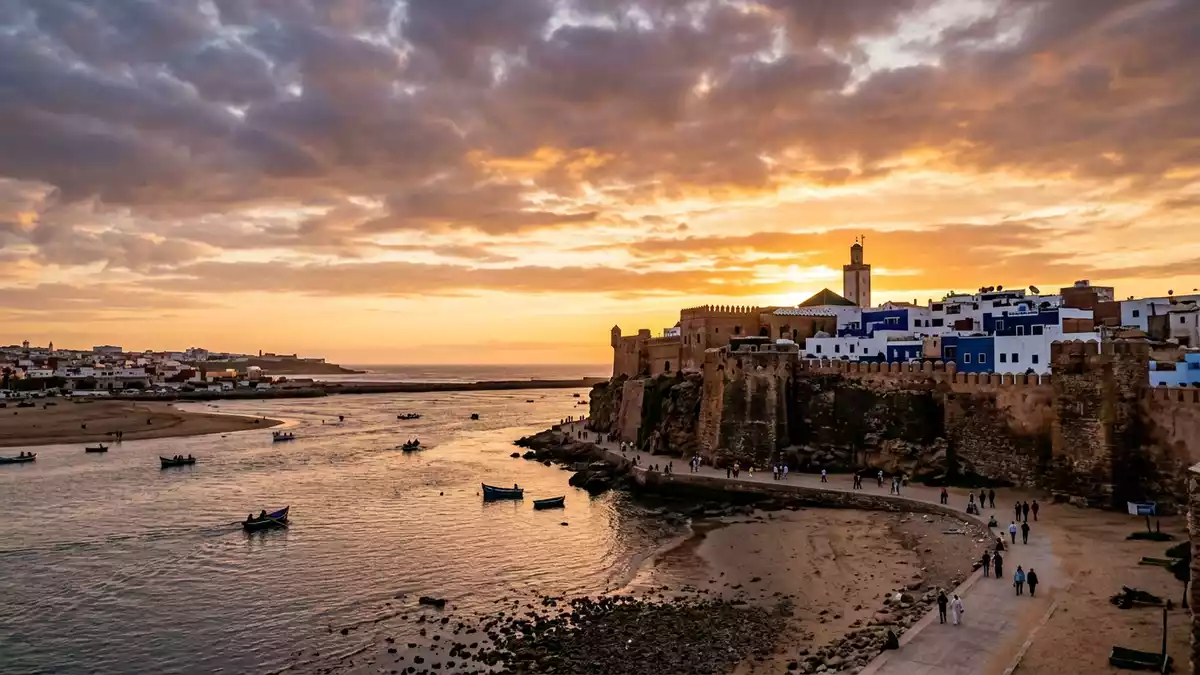
Kasbah des Oudaias occupies a rocky headland above the mouth of the Bou Regreg in Rabat. Its visible character comes from the meeting of heavy Almohad fortifications, blue-and-white residential lanes and the open Atlantic beyond.
Blue-and-white lanes within Almohad walls
The kasbah is a fortified quarter rather than a single monument. Thick walls enclose houses, narrow passages, courtyards, gardens and small civic spaces, while the outer edge faces the river mouth, the ocean and Salé across the Bou Regreg.
Whitewashed façades carry blue details around doors, windows and upper walls. The colour scheme belongs to the lived character of the quarter, where domestic architecture sits directly beside medieval defensive masonry. The streets are compact, turning between walls and opening towards viewpoints over the estuary.
Abd al-Mu'min and the twelfth-century citadel
The principal kasbah took shape under the Almohad caliph Abd al-Mu'min in the twelfth century. The enclosure included a palace and a mosque, and its position above the river mouth formed part of Rabat’s early fortified urban landscape.
The Almohad period remains visible in the ramparts and in Bab Oudaia, the monumental gateway at the entrance to the quarter. Bab Oudaia gateway combines a deep entrance with carved stone decoration and carefully framed architectural details.
The site’s history reaches beyond one dynasty. A fortified outpost existed in the area before the Almohad citadel, while the quarter’s later identity includes Alaouite buildings and the arrival of Moriscos from Andalusia in the seventeenth century.
Palace, mosque and the Bou Regreg estuary
Within the enclosure, the Jama’ al-’Atiqa, or Old Mosque, belongs to the early history of the kasbah. Its presence keeps religious architecture alongside the walls, gateway and domestic lanes.
The Andalusian Garden adds planted space within the fortified quarter. Its paths, trees and water channels form a different architectural register from the outer ramparts, yet remain part of the same historic enclosure.
The headland links several views in a compact setting. Looking north-west brings the Bou Regreg estuary and Salé into view; looking seaward opens towards the Atlantic. The medina of Rabat begins beside the kasbah, connecting the citadel with the older urban fabric.
Kasbah des Oudaias forms part of Rabat, Modern Capital and Historic City, a UNESCO World Heritage property inscribed in 2012. The designation includes the historic quarter within a wider cityscape of monuments, traditional urban fabric and planned districts. the Bou Regreg promontory is identified as the setting where the historic citadel faces the estuary and ocean.
The result is a place read through layers: Almohad walls, a later residential quarter, Andalusian influences, an Alaouite palace tradition and Rabat’s broader history as Morocco’s capital. The blue-and-white lanes remain the most immediate visual thread, set against the ochre and stone tones of the fortifications.
Visiting Kasbah des Oudaias: what travellers from Western Europe should know
- Kasbah des Oudaias stands on Rabat’s northern waterfront at the Bou Regreg mouth, beside the medina and opposite Salé. It is reached through Rabat’s city streets on foot, by taxi or by local public transport.
- The quarter occupies a rocky headland with sloping lanes, steps and uneven paving. Comfortable walking footwear suits the changes in level and the narrow passages.
- The Atlantic and Bou Regreg meet beside the outer walls, while the Andalusian Garden and Bab Oudaia lie within the historic enclosure.
- The official language is Arabic and the currency is the Moroccan dirham.
- Entry requirements depend on your nationality; UK travellers can check the FCDO travel advice at gov.uk/foreign-travel-advice, Irish travellers the Department of Foreign Affairs at ireland.ie.
Searching for Kasbah des Oudaias on social platforms
These links open searches for Kasbah des Oudaias on each platform.Frequently asked questions about Kasbah des Oudaias
Where is Kasbah des Oudaias?
It stands on a headland at the mouth of the Bou Regreg in Rabat, beside the medina and opposite Salé.
What can visitors see there?
The quarter contains Almohad walls, Bab Oudaia, blue-and-white lanes, the Old Mosque, residential houses and the Andalusian Garden.
What makes the kasbah distinctive?
Its compact historic quarter combines a twelfth-century Almohad citadel with blue-and-white streets above the Bou Regreg estuary.


