
Kato Mili windmills above Little Venice on Mykonos
Published on 09/18/2026 at 07:29 | Editorial responsibility: Rafael Müller, Editor-in-Chief AD HOC NEWS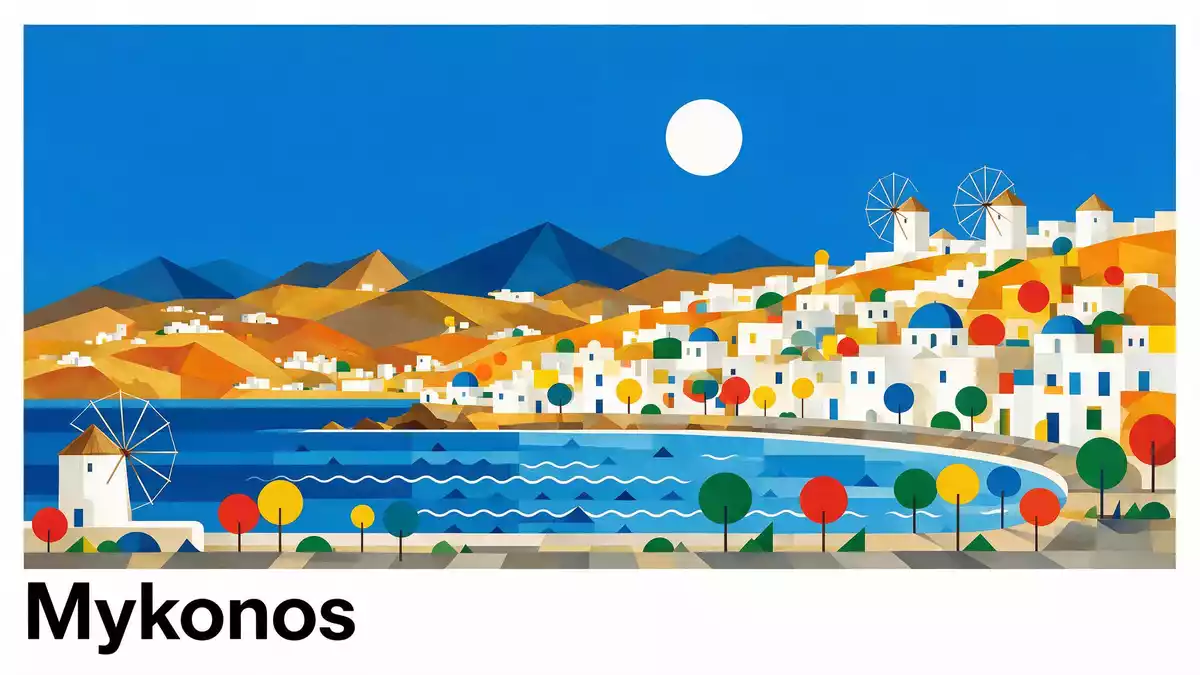
On the south-west side of Mykonos Town, Kato Mili is the name given to the whitewashed windmills that stand on the low hill above the waterfront quarter known as Little Venice on the island of Mykonos in Greece. The cluster belongs to a wider landscape of traditional windmills that were built on Mykonos from the sixteenth century onwards for grinding grain, and several of these mills survive across the island as landmarks of the sailing era in the Aegean.
White cylinders on the ridge above Little Venice
The defining impression of Kato Mili is the line of cylindrical windmill bodies set along the ridge, their white plastered walls rising from a stony hill that overlooks the harbour and the waterfront houses of Little Venice beneath. In this Kato Mili group several traditional mills are preserved, forming a row between the harbour area of Alefkandra and the Neochori neighbourhood on the southern edge of Chora, the name locals use for Mykonos Town.located in the area of Kato MiliFrom the hill the view opens across the bay, taking in the sea, the harbour and the town’s clustered white houses that step back from the water.
The windmills themselves follow the traditional form of island mills, with thick masonry walls and simple caps that once carried the sails used to harness the wind. Several similar mills stand elsewhere around Mykonos, but at Kato Mili they are concentrated in a straight sequence along the ridge between Little Venice and the harbour, which means they read as a single landmark when seen from the waterfront quarter below.row of white cylindrical millsTheir white surfaces catch the light against the blue of sea and sky, and the small rise they occupy forms a natural viewing platform towards the townscape and the broader Aegean.
Grain mills of the sailing age in the Aegean
The windmills of Mykonos belong to the island’s history as a stop on Aegean shipping routes, when wind power was used both to move vessels and to grind grain brought in by sea. Historical accounts describe more than two dozen mills operating on Mykonos during the height of their use, with the Kato Mili complex forming one of the most important clusters for flour production on the island.over 25 windmills on MykonosThe mills at Kato Mili took advantage of the exposure of the hill to the prevailing Aegean winds, and their position beside the harbour linked them closely to maritime trade in grain.
Dating evidence points to construction beginning in the sixteenth century, during a period when Venetian influence was strong in the Cyclades and windmills were introduced or expanded as part of the grain economy in this part of the Mediterranean.built in the 16th centuryThrough the seventeenth to nineteenth centuries these mills formed a productive complex, and although industrial milling later replaced traditional wind-driven grinding, the structures themselves remained on the ridge. The wider group of preserved mills on Mykonos is now recognised as a historical site that documents this phase of island life and its reliance on wind and sea.
Kato Mili in the wider setting of Mykonos Town
Kato Mili sits just beyond the waterfront taverns and houses of Little Venice, a quarter where buildings stand close to the water and look across to the ridge of mills. The small hill where the windmills stand lies between Alefkandra and Neochori, at the southern edge of the denser streets of Chora, which means that the area around the mills is both part of the town and a slightly raised vantage point above it.between the Alefkandra and Neochori lanesFrom the ridge travellers can see the harbour curve, the arrangement of lanes behind Little Venice and the broader setting of Mykonos against the Aegean Sea.
The windmills are integrated into walks through Mykonos Town, because the route up from the harbour and Little Venice reaches the ridge and then continues into the streets of Chora. Several other sights, including churches such as Panagia Paraportiani and shopping streets like Matoyianni, lie within walking distance of Kato Mili, and the mills form one of the points where the town, sea and sky are visible together.close to Little Venice, Matoyianni Street, Panagia ParaportianiThe combination of whitewashed mill structures on the hill and the compact waterfront quarter below gives this part of Mykonos its distinctive silhouette.
Visiting Kato Mili: what travellers from Western Europe should know
- Kato Mili stands on a small hill just south-west of the historic harbour of Mykonos Town, above the quarter known as Little Venice and between the areas of Alefkandra and Neochori. The site is reached on foot from the waterfront streets of Chora.
- The terrain around the windmills consists of a short uphill approach over paved streets and paths, followed by rougher ground around the mills themselves, with stone surfaces and low steps on the ridge.
- The island of Mykonos lies in Greece, where the official language is Greek and the currency is the euro.
Searching for Kato Mili on social platforms
These links open searches for Kato Mili on each platform.
Frequently asked questions about Kato Mili
Where is Kato Mili located on Mykonos?
Kato Mili is a cluster of traditional windmills on a low hill between the harbour area of Alefkandra and the Neochori neighbourhood, above Little Venice in Mykonos Town.
What should travellers expect when visiting Kato Mili?
Travellers encounter several whitewashed cylindrical windmills set along a ridge above the waterfront quarter, reached by a short uphill walk from the harbour through the streets of Chora.
What makes Kato Mili distinctive among the windmills of Mykonos?
Kato Mili is distinctive because several preserved mills stand together in a straight row on one ridge, forming a single landmark above Little Venice and framing views across the harbour and town.


