
Kazanski Kreml, where Tatar and Russian architecture meet
Published on 08/12/2026 at 14:19 | Editorial responsibility: Rafael Müller, Editor-in-Chief AD HOC NEWS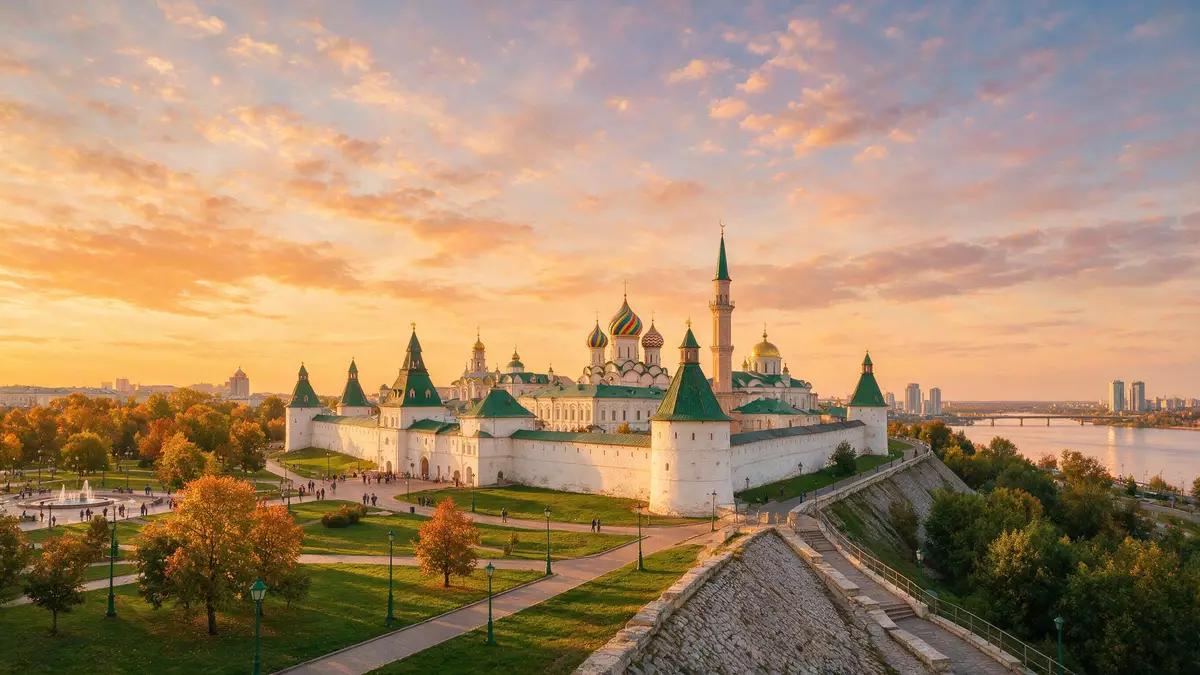
Kazanski Kreml in Kasan is a fortified hilltop ensemble overlooking the confluence of the Volga and Kazanka rivers, where Tatar and Russian architecture meet in one historic seat of power. It is recognised as the Historic and Architectural Complex of the Kazan Kremlin and has been inscribed on the UNESCO World Heritage List since 2000, reflecting its role as a surviving Tatar citadel and administrative centre.
A citadel shaped by centuries of power
The origins of Kazanski Kreml reach back to early fortified settlements linked with Volga Bulgaria and the Golden Horde, long before Kasan became the capital of the Republic of Tatarstan inside Russia.Its military and commercial role developed between the tenth and thirteenth centuries as the site evolved from an unfortified settlement into a stone fortress on the northern boundary of Volga Bulgaria.
From the second half of the thirteenth century Kazanski Kreml became the centre of a Kazan principality within the Golden Horde, and later the governmental and military base of the Kazan Khanate, which existed as an independent polity from 1438 until 1552.After the fall of Kazan to Russia in 1552 the fortress was converted into the administrative and military centre of the annexed Middle Volga region, a function it carried into the Russian Empire and, later, the Tatar Autonomous Republic.
Rebuilding the Kremlin under Ivan the Terrible
Much of the earlier wooden fortifications of Kazanski Kreml were damaged in the capture of Kasan in 1552, and rebuilding followed under Tsar Ivan IV, known in English as Ivan the Terrible.Between 1556 and 1562 the walls and towers were reconstructed in stone and brick by Pskov masters Postnik Yakovlev and Ivan Shiryay on the tsar’s decree, giving the citadel its enduring outline as a Kremlin.
The complex that visitors encounter on the hill today reflects work from the sixteenth to nineteenth centuries, integrating traces of earlier structures from the tenth to sixteenth centuries within a continuous defensive line.UNESCO describes the Kazan Kremlin as the only surviving Tatar fortress in Russia and notes its group of historic buildings from the sixteenth to nineteenth centuries, with these layers of construction visible in curtain walls, towers and religious buildings.
Where mosque and cathedral share a hilltop
One of the most striking aspects of Kazanski Kreml is the way it brings Islamic and Orthodox Christian architecture together within the same fortified perimeter, mirroring the cultural history of Tatarstan.Sources describe the Kremlin as a rare example of the interlacing of Christian and Muslim culture, and this synthesis is legible in the skyline as minarets rise near cupolas and bell towers.
The ensemble includes mosques linked with Tatar traditions and churches associated with Russian Orthodoxy, alongside secular buildings that house museums and governmental offices. Within the fortified outline lies the presidential residence of the Republic of Tatarstan, continuing the long-standing role of Kazanski Kreml as a centre of state power.The World Heritage inscription emphasises both its function as an important place of pilgrimage and its status as an administrative complex, adding an official layer to what visitors see on the ground.
Visiting Kazanski Kreml: what travellers from Western Europe should know
- Kazanski Kreml stands on a hill above the Volga and Kazanka rivers in Kasan, capital of the Republic of Tatarstan in Russia; the complex is reached by city streets that climb to the fortress gates.
- Within the fortified perimeter the terrain includes sloping approaches and internal courtyards, with stretches of cobbled or paved ground and staircases in towers and walls.
- The Kremlin houses governmental buildings and museum spaces, so visitors encounter both ceremonial architecture and exhibition interiors in close proximity.
- The official language is Russian and the currency is the rouble.
- Entry requirements depend on your nationality; UK travellers can check the FCDO travel advice at gov.uk/foreign-travel-advice, Irish travellers the Department of Foreign Affairs at ireland.ie.
Searching for Kazanski Kreml on social platforms
These links open searches for Kazanski Kreml on each platform.
Frequently asked questions about Kazanski Kreml
Where is Kazanski Kreml located?
Kazanski Kreml stands on a hill above the Volga and Kazanka rivers in Kasan, capital of the Republic of Tatarstan within Russia.
What can visitors expect inside the Kremlin?
Visitors encounter fortification walls, towers, mosques, churches and museum spaces, together with governmental buildings that continue the Kremlin’s long administrative role.
What makes Kazanski Kreml distinctive among Russian citadels?
It is recognised as a surviving Tatar fortress and brings Islamic and Orthodox Christian architecture together on one fortified hilltop, reflecting the layered history of Tatarstan.


