
Keukenhof in Lisse: a historic landscape shaped by spring flowers
Published on 09/17/2026 at 16:21 | Editorial responsibility: Rafael Müller, Editor-in-Chief AD HOC NEWS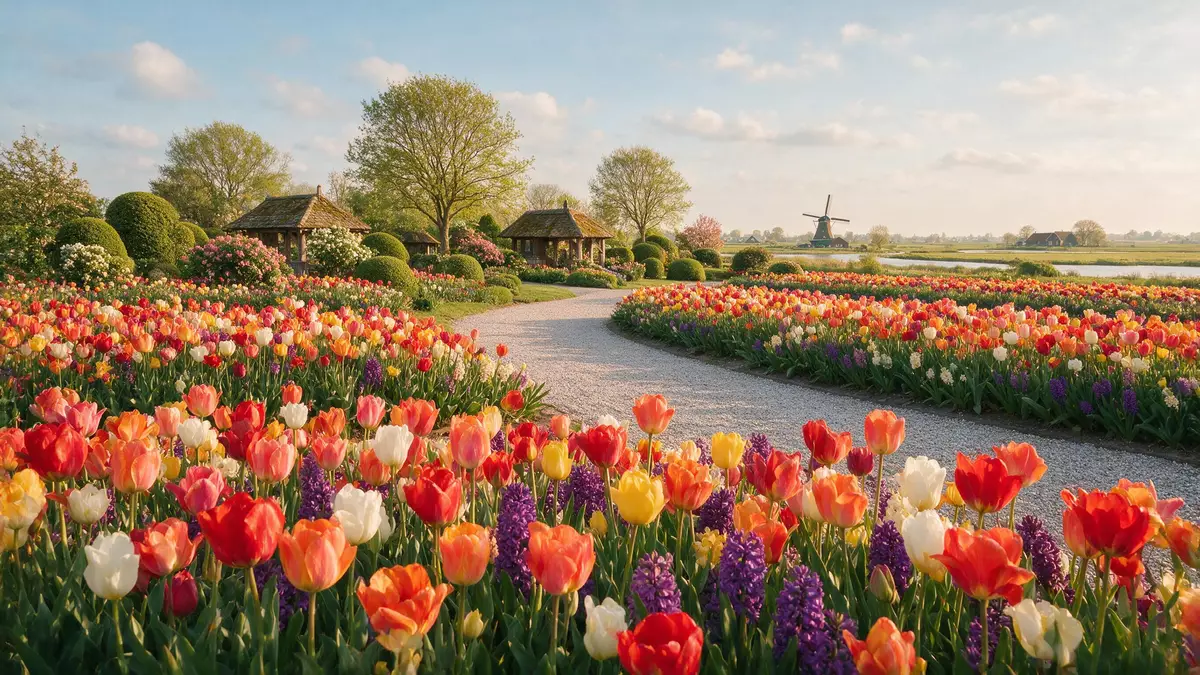
Keukenhof near Lisse in the Netherlands is a spring flower garden laid out across historic castle parkland, where sweeping lawns and water frame dense beds of bulbs in bloom. The estate’s story reaches back to the fifteenth century, yet the public flower park dates from 1950, giving visitors a layered landscape that combines centuries of history with a concentrated season of colour.
From “kitchen garden” to castle estate
The name Keukenhof comes from the Dutch words for kitchen and garden, a reminder that this land once supplied herbs, fruit and vegetables to the kitchen of Teylingen Castle in the fifteenth century.Countess Jacqueline of Bavaria used the surrounding dunes and fields as hunting grounds and as a place to gather produce, anchoring the early history of the estate in her lifetime between 1401 and 1436.unspoilt nature used for hunting The term “Keukenduyn” survives in descriptions of this period, linking the landscape directly to its practical role.
In the seventeenth century a manor house was built on the estate and developed into what is now known as Keukenhof Castle, transforming the former kitchen garden and hunting grounds into a setting for a country residence.Kasteel Keukenhof was built in 1641 Later owners combined neighbouring properties into a single estate, and by the nineteenth century Baron and Baroness Van Pallandt were in charge of the grounds surrounding the castle.owners of the property and the castle Their tenure set the stage for the landscape design that still shapes the garden today.
Nineteenth-century landscape design underneath the flowers
In 1857 Baron and Baroness Van Pallandt engaged landscape architect Jan David Zocher and his son Louis Paul Zocher to redesign the park around Keukenhof Castle.English landscape garden was designed in 1857 The Zochers were already known for their work on Amsterdam’s Vondelpark, and they brought the same English landscape style to Lisse: broad lawns, curving watercourses and informal groups of mature trees arranged to frame long views.designed by the Zocher firm Modern planting schemes sit on top of this nineteenth-century layout, so a walk through Keukenhof combines flower beds with parkland structure.
Keukenhof’s grounds cover about 32 hectares (79 acres) of garden within a larger castle estate, giving the spring displays room to unfold along paths, over small bridges and beside stretches of water.area of 32 hectares Around seven million flower bulbs are planted in patterns and drifts each year, creating layers of colour that move from low groundcover to taller tulips and flowering shrubs.7 million bulbs showcasing over 1,600 varieties The English-style park beneath remains visible in the open lines of the lawns and the way water and woodland frame the flower beds.
The twentieth-century flower park and its tulips
The idea of Keukenhof as a public spring flower park dates to 1949, when a group of Dutch bulb growers and exporters chose the castle gardens as an open-air showcase for their trade.initiative was taken by 10 bulb growers/exporters The first season open to visitors followed in 1950, and the formula of concentrated spring exhibitions on a historic estate has remained central to the park’s identity.garden opened to the public in 1950 Keukenhof thus stands at the meeting point of horticultural industry and landscape heritage in the Duin- en Bollenstreek, the dune and bulb region south-west of Haarlem.
Tulips form a major part of the planting, joined by daffodils, hyacinths and other spring bulbs arranged by colour, height and flowering time. Many beds are replanted annually to create fresh compositions, while themed areas highlight particular varieties or combinations.over 1,600 varieties are planted annually Pavilions and indoor spaces display cut flowers and arrangements, extending the outdoor experience and allowing close-up views of individual blooms against the backdrop of the historic trees and water.
Keukenhof in the wider bulb region
Keukenhof lies on the edge of Lisse in the Dutch province of Zuid-Holland, within an area known for its sandy soils and commercial bulb fields.located in Lisse in the Netherlands The castle gardens sit opposite Keukenhof Castle and are bordered by agricultural land where rows of tulips and other flowers grow in long strips of colour later in the season.directly opposite a building known as Keukenhof Castle This setting gives the park an immediate connection to the bulb industry that surrounds it.
Historic features punctuate the grounds, from avenues aligned on the castle to ornamental bridges and smaller garden structures. Trees planted in the nineteenth century have matured into substantial woodland, so views across the flower beds often end in trunks and branches rather than buildings. The underlying English landscape design, the seventeenth-century castle and the twentieth-century bulb exhibitions together give Keukenhof its distinctive combination of park, estate and seasonal garden.
Visiting Keukenhof: what travellers from Western Europe should know
- Keukenhof lies near Lisse in Zuid-Holland, south-west of Amsterdam, and is reached by regional roads and public transport links that serve the bulb-growing area.
- Paths in the gardens are mostly level and surfaced, but routes can be long, with extended walks between flower beds, pavilions and the castle grounds.
- The surrounding landscape includes working bulb fields, so views from some paths and viewpoints take in both the formal gardens and agricultural strips of flowers.
- The official language is Dutch and the currency is the euro.
Searching for Keukenhof on social platforms
These links open searches for Keukenhof on each platform.
Frequently asked questions about Keukenhof
Where is Keukenhof located?
Keukenhof is a spring flower park on a historic castle estate near Lisse in Zuid-Holland in the Netherlands, within the dune and bulb-growing region.
What can visitors expect on a visit to Keukenhof?
Visitors walk through extensive gardens where millions of spring bulbs are planted among lawns, water and mature trees, with pavilions showing additional flower displays.
What makes Keukenhof distinctive among flower gardens?
Keukenhof combines a nineteenth-century English landscape design and a seventeenth-century castle with a twentieth-century bulb exhibition, giving the park both historic depth and seasonal intensity.


