
Khao Phing Kan and the limestone towers of Phang Nga
Published on 08/17/2026 at 14:26 | Editorial responsibility: Rafael Müller, Editor-in-Chief AD HOC NEWS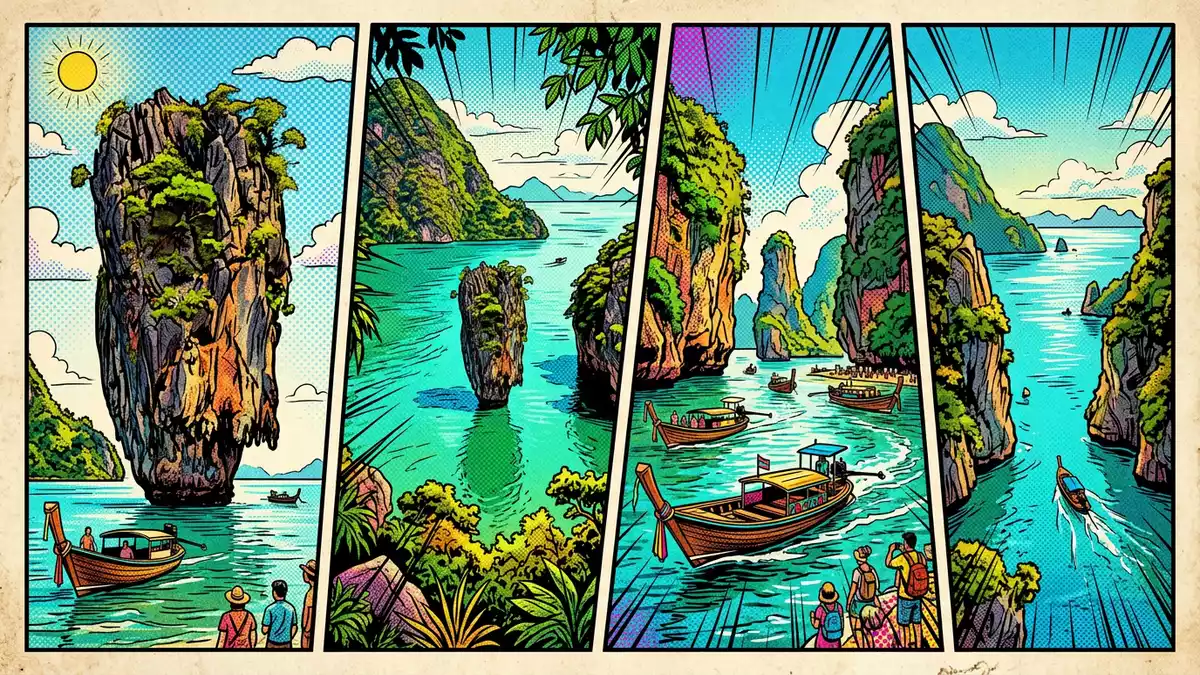
Khao Phing Kan in Phang Nga is a pair of forested limestone islands in Phang Nga Bay, part of Ao Phang Nga National Park. Its steep shores and low shoreline make the place read as a compact karst landscape rather than a single monument.limestone islands
Khao Phing Kan and Ko Ta Pu
The name Khao Phing Kan is tied to the islands themselves, while Ko Ta Pu stands just offshore as a separate limestone stack. The two together form the view most visitors recognise, with the narrow rock in the water set against the wider island mass.Ko Ta Pu
The setting belongs to the karst country of southern Thailand, where limestone has been cut into cliffs, towers and bays. In Khao Phing Kan, that geology appears in the steep flanks, the pale rock and the wooded tops that soften the outline.karst country
Phang Nga Bay’s film-set shoreline
Khao Phing Kan entered wider public memory through The Man with the Golden Gun, the 1974 James Bond film that used the bay as a setting. That association made the island pair a familiar image of Phang Nga Bay, even as the landform itself remained the main attraction.
The film link sits beside a much older story written in rock. The islands are limestone karst towers within Ao Phang Nga National Park, and their outline belongs to a coastal landscape shaped by erosion and uplift over geological time.
Phang Nga Bay’s limestone coast
From the water, Khao Phing Kan appears as steep limestone forms with short stretches of beach and dense vegetation on top. The contrast between vertical rock and small coves gives the place a clear structure before any boat arrives at the shore.
The bay around it is crowded with similar formations, but Khao Phing Kan is the name attached to this specific pair of islands. That distinction matters because the scene combines an island mass, an offshore stack and a national park setting in one compact view.
Visiting Khao Phing Kan: what travellers from Western Europe should know
- Khao Phing Kan lies in Phang Nga Bay, and access is by boat through Ao Phang Nga National Park.
- The shoreline is steep in places, with limestone rock, a small beach and short paths across the island pair.
- Ko Ta Pu stands offshore from the main island and is visible from the water and the beach area.
- The official language is Thai and the currency is the Thai baht.
- Entry requirements depend on your nationality; UK travellers can check the FCDO travel advice at gov.uk/foreign-travel-advice, Irish travellers the Department of Foreign Affairs at ireland.ie.
Searching for Khao Phing Kan on social platforms
These links open searches for Khao Phing Kan on each platform.
Frequently asked questions about Khao Phing Kan
Where is Khao Phing Kan?
Khao Phing Kan lies in Phang Nga Bay in southern Thailand, within Ao Phang Nga National Park. It sits with Ko Ta Pu, the limestone stack just offshore.
What does a visit involve?
Arrival is by boat, and the place is read through its limestone shoreline, short beach and offshore rock. The island pair is best understood as a karst landscape viewed from close range.
What makes Khao Phing Kan distinctive?
The main distinction is the combination of two forested limestone islands and the separate stack of Ko Ta Pu. The result is a tight, recognisable coastal form rather than a broad archipelago view.


