
Kigali Genocide Memorial brings burial, memory and learning together
Published on 09/23/2026 at 23:40 | Editorial responsibility: Rafael Müller, Editor-in-Chief AD HOC NEWS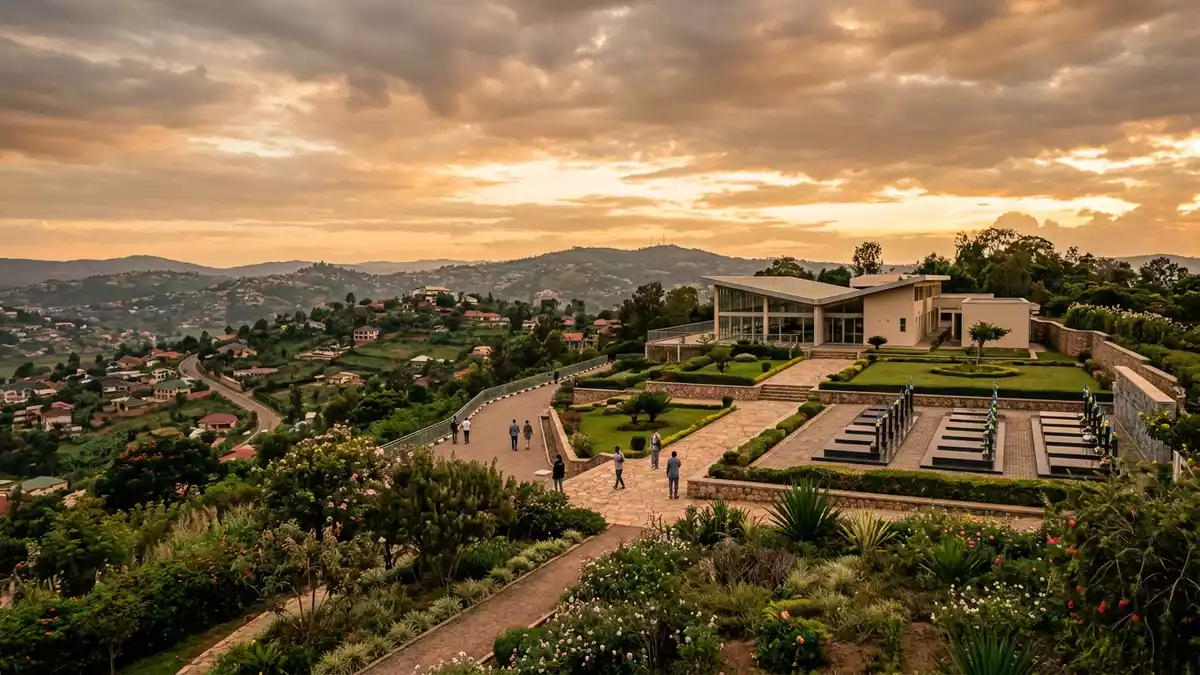
Kigali Genocide Memorial occupies a hillside in Gisozi, Kigali, where mass graves, gardens and exhibition buildings form one place of remembrance. Opened in 2004, it commemorates victims of the Genocide against the Tutsi and preserves their stories through memorial, archive and educational spaces.
Kigali Genocide Memorial on the Gisozi hillside
The memorial lies in the Gisozi area of Gasabo district, north-west of central Kigali. Its setting is a sloping urban hillside, with planted grounds around the burial area and low buildings containing exhibitions and educational facilities.
The site is the final resting place for 250,000 victims of the Genocide against the Tutsi. Long grave areas form the central physical element of the memorial grounds, while paths connect them with gardens and the indoor displays. The arrangement places burial, landscape and historical interpretation within the same complex.
From the 1994 genocide to a place of remembrance
The Genocide against the Tutsi took place in Rwanda in 1994. Kigali Genocide Memorial opened in 2004, on the tenth anniversary of the genocide, through collaboration between Rwandan authorities and the Aegis Trust for Genocide Prevention. Its opening date belongs to the memorial’s identity as both a burial place and a national centre of remembrance.
The memorial’s three permanent exhibitions include a large display on the 1994 Genocide against the Tutsi, a children’s memorial and an exhibition about genocidal violence in other parts of the world. The story of the memorial links these spaces with survivor testimony, peace education and the preservation of historical memory.
Exhibitions, archives and gardens of reflection
The Genocide Archive of Rwanda forms part of the complex. It preserves evidence, testimonies from survivors and information about victims, giving the memorial a documentary role alongside its commemorative function. The archive is connected with a wider programme of education and public learning.
The indoor displays move from Rwanda’s history to the events of 1994 and then to genocides beyond the country. A children’s memorial presents the lives of young victims through personal stories. Outside, gardens and the burial grounds provide a physical setting for remembrance, while the Flame of Remembrance marks the memorial landscape. The permanent exhibitions and archive make the site more than a single monument.
Education is part of the memorial’s established work. The peace and values programme began at the memorial in 2008, expanded through Rwanda in 2013 and entered the national schools curriculum in 2014. Its themes include critical thinking, empathy and personal responsibility.
Visiting Kigali Genocide Memorial: what travellers from Western Europe should know
- Kigali Genocide Memorial is in Gisozi, Gasabo district, on KG 14 Avenue in Kigali. Road transport from the city reaches the memorial through the capital’s north-western districts.
- The complex occupies a hillside. Paths across the gardens and burial grounds include sloping ground and paved surfaces.
- The official languages are Kinyarwanda, French and English, and the currency is the Rwandan franc.
- Entry requirements depend on your nationality; UK travellers can check the FCDO travel advice at gov.uk/foreign-travel-advice, Irish travellers the Department of Foreign Affairs at ireland.ie.
Searching for Kigali Genocide Memorial on social platforms
These links open searches for Kigali Genocide Memorial on each platform.
Frequently asked questions about Kigali Genocide Memorial
Where is Kigali Genocide Memorial?
It is in Gisozi, within Gasabo district in Kigali, Rwanda. The memorial stands on KG 14 Avenue on a hillside north-west of central Kigali.
What can visitors expect at the memorial?
The complex combines burial grounds, gardens, permanent exhibitions, an archive and educational spaces. Its displays document the Genocide against the Tutsi, children affected by genocide and genocidal violence around the world.
What makes the memorial distinctive?
It brings together a final resting place for 250,000 victims, survivor testimony, historical documentation and peace education. The result is a memorial landscape whose roles extend from remembrance to learning.


