Kiyomizu-dera and its wooden stage above Kyoto
Published on 08/08/2026 at 15:00 | Editorial responsibility: Rafael Müller, Editor-in-Chief AD HOC NEWS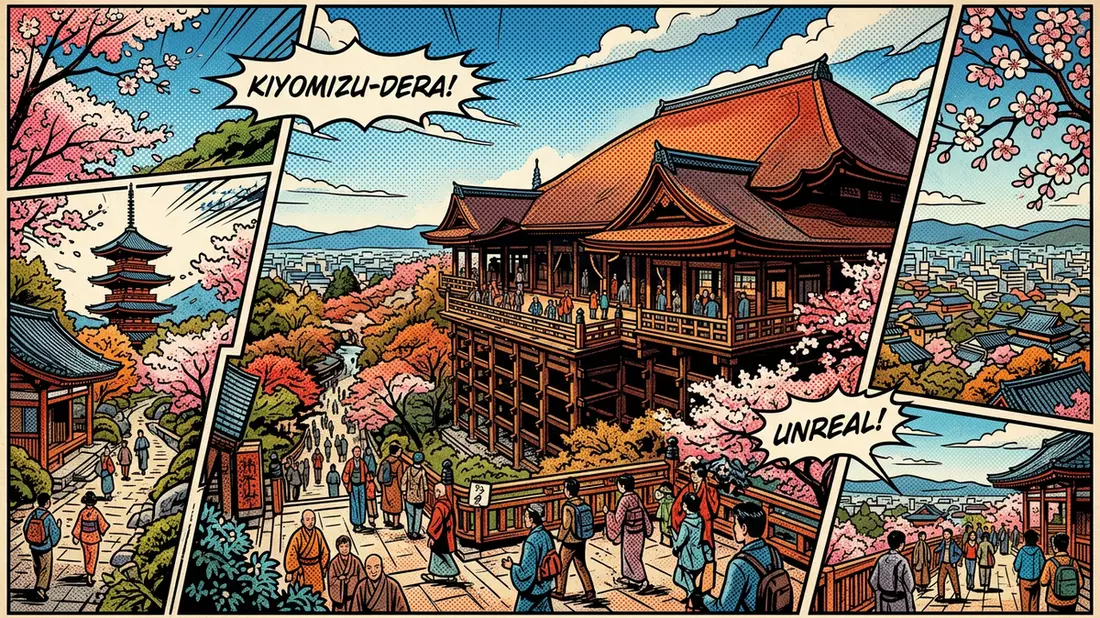
Kiyomizu-dera in Kyoto is known for its large wooden stage above the hillside, a form that makes the temple complex immediately legible from afar. Founded in the late eighth century and rebuilt under Tokugawa Iemitsu in 1633, it combines Heian-period origins with Edo-period timber work.
The hillside temple above Kyoto
The complex stands on the slopes of eastern Kyoto, with halls, stairways and verandu-like walkways stepping across the hillside. Its best-known feature is the broad wooden platform attached to the main hall, projecting over the trees below.
The temple is part of a long religious landscape associated with the Kannon cult, and the site includes several named structures within a compact mountain setting. The wood, tiled roofs and lanterns give it a strong architectural rhythm that changes as paths rise and narrow.
From late eighth-century foundation to Edo-period rebuilding
Kiyomizu-dera is traditionally dated to 778, when the Buddhist monk Enchin is linked with its foundation. The site’s present form reflects the rebuilding overseen by Tokugawa Iemitsu in 1633, after earlier phases were lost.
That combination of dates matters because the temple carries both early religious memory and a visible seventeenth-century timber structure. The main hall and stage are the most recognisable elements, but the compound also includes smaller shrines, gates and subsidiary halls.
Wood, water and worship
The name Kiyomizu-dera refers to pure water, and the temple is associated with the Otowa Waterfall. The temple precinct includes the spring-fed streams and ritual spaces that have long shaped visitor movement through the grounds.
Rather than a single monument, the site works as a sequence of built and natural elements: stone approaches, timber halls, hillside paths and water sources. That mix gives Kiyomizu-dera its character as a functioning temple and a layered historic ensemble.
Visiting Kiyomizu-dera: what travellers from Western Europe should know
- The site is in eastern Kyoto and is reached by bus, taxi and on foot from the surrounding streets.
- Admission arrangements and opening hours are set by the site's operator and change with the season; the official website is the only binding source.
- Spring and autumn bring the strongest seasonal colour in the surrounding hills, while early morning is quieter around the approach.
- The approach includes slopes, steps and uneven ground, and the temple sits on a hillside above the city.
- Payment on site is usually straightforward for visitors, and some small purchases may prefer cash; local behaviour is respectful and quiet inside temple grounds.
- Entry requirements depend on your nationality. UK travellers should check the FCDO travel advice at gov.uk/foreign-travel-advice; Irish travellers the Department of Foreign Affairs at ireland.ie; EU and EEA citizens their own national foreign ministry.
Searching for Kiyomizu-dera on social platforms
These links open searches for Kiyomizu-dera on each platform.
Frequently asked questions about Kiyomizu-dera
Where is Kiyomizu-dera?
Kiyomizu-dera is in eastern Kyoto, on a hillside above the city. It is one of the best-known temple complexes associated with that part of Kyoto.
What should visitors expect?
Expect steps, slopes and a temple layout spread across several levels. The main hall, wooden stage and hillside setting are the clearest features on arrival.
What makes it distinctive?
The large wooden stage and the long history of rebuilding give Kiyomizu-dera its strongest identity. Its association with pure water and the Otowa Waterfall adds another layer to the site.