
Kolner Dom and its soaring Gothic silhouette over Köln
Published on 09/19/2026 at 12:15 | Editorial responsibility: Rafael Müller, Editor-in-Chief AD HOC NEWS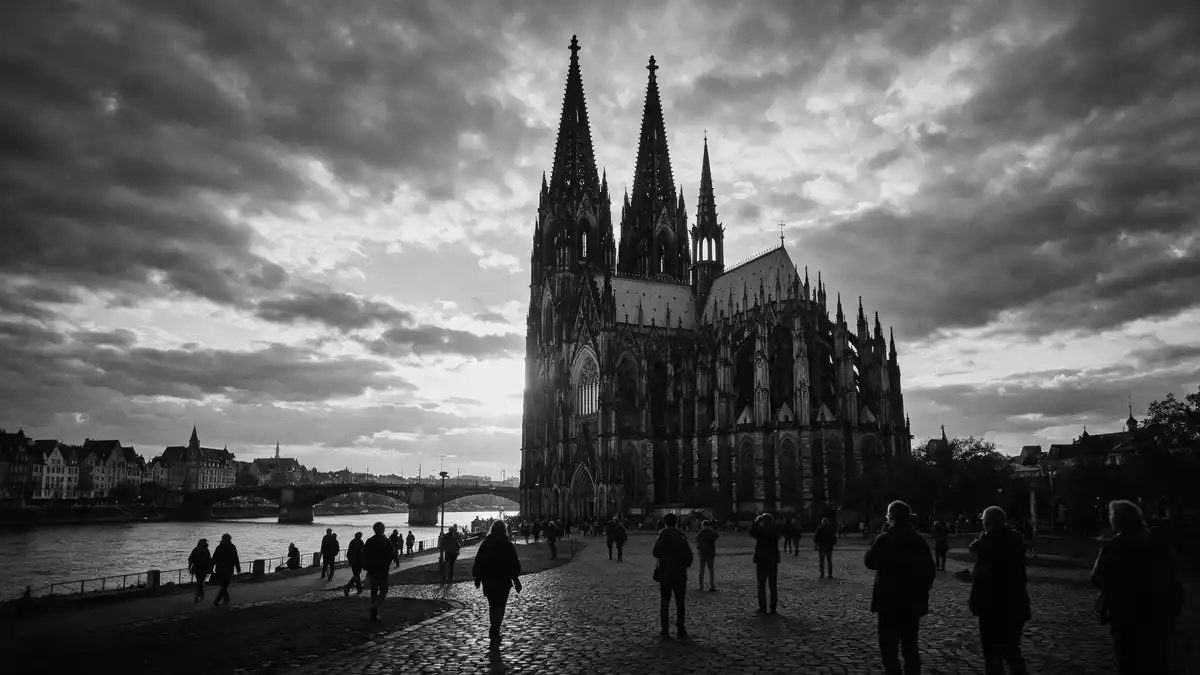
Kolner Dom, known in English as Cologne Cathedral, rises over central Köln with vast Gothic stonework and twin towers that define the city’s skyline. Construction of the present cathedral began in 1248 and its completion was celebrated in 1880, giving the building a construction history that stretches across more than six centuries.began in 1248 and completed in 1880 It stands as a Roman Catholic cathedral and since 1996 has been recognised as a UNESCO World Heritage Site.recognised as a UNESCO World Heritage Site
The long Gothic project above the Rhine
Kolner Dom belongs to the Gothic tradition that reshaped church building in medieval Europe, with work on the cathedral beginning in the thirteenth century under Archbishop Konrad von Hochstaden.Archbishop Konrad von Hochstaden The choir at the eastern end was consecrated in 1322, marking the point at which the cathedral could serve liturgical functions despite the wider structure still being incomplete.choir consecrated in 1322 Medieval building activity continued for roughly two centuries, leaving substantial masonry in place before work slowed and eventually stopped in the fifteenth century.
The halt in construction left an unfinished Gothic shell rising above the older city fabric, with a crane on a tower becoming part of Köln’s visual identity for generations. Interest in completing the cathedral returned in the nineteenth century, when original medieval drawings were used to resume work on the nave, transepts and west front.original medieval drawings Between 1842 and 1880 builders carried the stonework up to full height, finishing the twin towers and enclosing the vast interior on the medieval plan.completed on the medieval plan in 1880
Twin towers and a vast stone interior
The most striking feature of Kolner Dom is the pair of immense bell towers that rise from the west front, reaching about 157 m (515 ft) and framing the main entrance.towers about 157 m tall Their pinnacles, buttresses and traceried openings give the entire facade a dense vertical rhythm that is visible across much of the inner city. The overall layout follows a Latin cross plan with multiple naves, bringing together a long main vessel, transepts and the eastern choir in one continuous stone volume.Latin cross plan with several naves
Inside, Kolner Dom is marked by high vaults and clustered pillars that carry the Gothic structure upward, creating narrow vertical bays along the length of the church. Large areas of stained glass filter daylight through intricate patterns; the glazing spans thousands of square metres and includes windows from different periods, from medieval panels to nineteenth-century work.stained glass across thousands of square metres Stone tracery, sculpted figures and ornamental details run across portals and gallery levels, and chapels open from the side aisles, each with its own altars and artworks.
Relics, resilience and the cathedral’s role in Köln
Kolner Dom stands on a site that has carried Christian churches since the early centuries of the faith in the region, and it houses the shrine of the Three Kings, a major medieval pilgrimage focus. The present Gothic cathedral was intended to give architectural form to that role, with its grand choir and raised sanctuary emphasising the importance of the relics in the religious life of the city.shrine of the Three Kings Over time Kolner Dom also became a central symbol of Köln, its towers serving as a reference point for streets, bridges and rail lines along the Rhine.
The cathedral lived through the bombing of the Second World War, suffering a series of direct hits yet remaining standing amid heavy destruction in the surrounding city.survived multiple bomb hits Its survival led to extensive post-war restoration work on stone, glass and interior fittings, work that continues in intervals to maintain such a large Gothic structure. The combination of medieval origins, nineteenth-century completion and modern conservation makes Kolner Dom a layered record of how Köln has engaged with its cathedral across many generations.
Visiting Kolner Dom: what travellers from Western Europe should know
- Kolner Dom stands next to the main railway station in central Köln, a short walk from platforms serving regional and long-distance trains.
- The interior involves walking across long stone floors and, in some areas, climbing staircases with many steps inside the towers and upper levels.
- Köln lies in western Germany on the Rhine, where winters can bring cold, wet weather and summers can be warm; the official language is German and the currency is the euro.
Searching for Kolner Dom on social platforms
These links open searches for Kolner Dom on each platform.Frequently asked questions about Kolner Dom
Where is Kolner Dom located?
Kolner Dom stands in central Köln in western Germany, beside the main railway station and close to the Rhine river.
What should visitors expect inside Kolner Dom?
Visitors encounter a high Gothic interior with tall stone vaults, stained-glass windows and chapels along the aisles, all arranged within a large multi-nave plan.
What makes Kolner Dom distinctive among European cathedrals?
Its combination of twin towers about 157 m high, a construction period that spans from 1248 to 1880 and its UNESCO World Heritage status gives Kolner Dom a particular standing among Gothic churches.


