
Kom Ombo Temple and its mirrored double design
Published on 09/21/2026 at 07:32 | Editorial responsibility: Rafael Müller, Editor-in-Chief AD HOC NEWS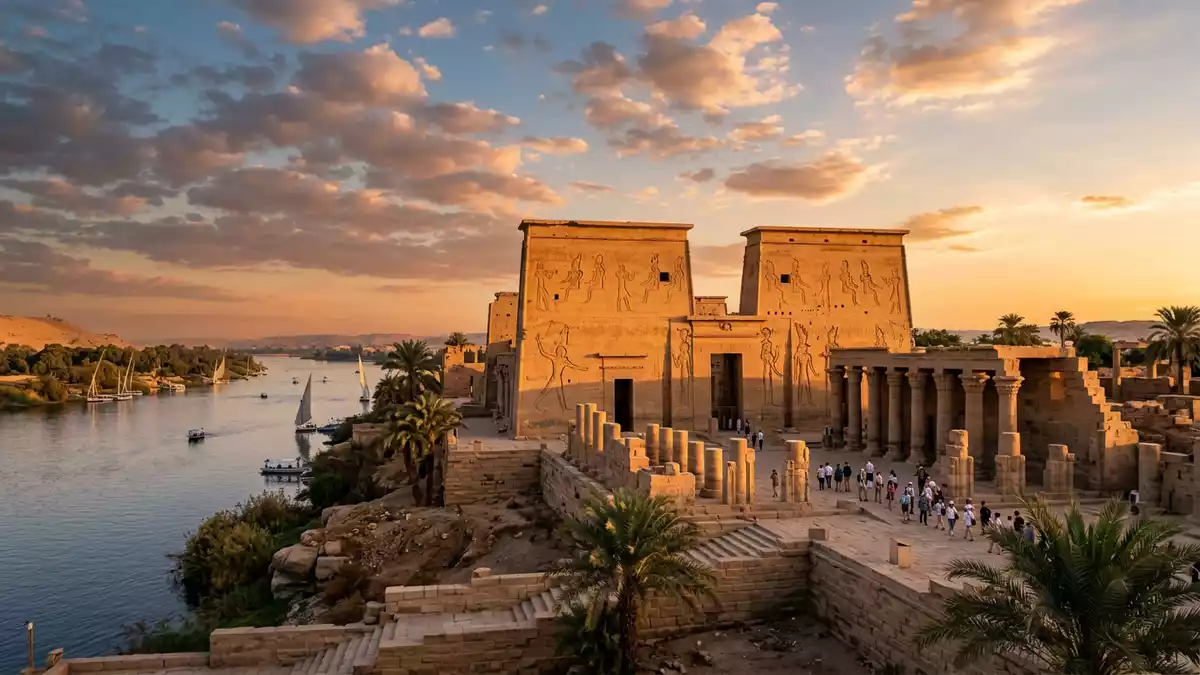
Kom Ombo Temple in Upper Egypt is a rare example of an ancient sanctuary laid out as two parallel temples within a single stone complex, facing the Nile at Kom Ombo.Temple of Kom Ombo The present structure belongs to the Graeco-Roman period, with construction beginning under Ptolemy VI Philometor in the second century BC and continuing under later rulers of the Ptolemaic dynasty.built during the Graeco-Roman Period
Dual gods, dual axes in stone
Kom Ombo Temple is dedicated to two distinct sets of deities, a feature reflected directly in its ground plan.dedicated to two deities One side honours Sobek, the crocodile god associated with the Nile and fertility, together with a triad that includes Hathor and Khonsu, while the other side is devoted to Haroeris, Horus the Elder, alongside Tasenetnofret and Panebtawy.two triads of divinities Standing inside the enclosure, visitors encounter a sequence of doubled elements: two entrances in the main façade, two courts, two hypostyle halls and two inner sanctuaries arranged along twin parallel axes.
The symmetry of the plan makes the temple read almost as a pair of sanctuaries built side by side, yet it remains one integrated building.symmetrical double plan The southern half is associated with Sobek, while the northern half belongs to Haroeris, and each has its own doorway, halls and inner cult rooms dedicated to its triad of gods.two identical entrances Reliefs carved on the walls depict both crocodile and falcon imagery, underscoring the dual character of the site within a single temple precinct.
Ptolemaic craftsmanship beside the Nile
Kom Ombo Temple stands on the east bank of the Nile at a bend where ancient crocodiles once basked, a location that ties the architecture closely to the river landscape.standing on a promontory at a bend in the Nile The temple lies in the town of Kom Ombo in the Aswan Governorate, north of Aswan and south of Luxor along the river’s course.stands in Kom Ombo The structure is built from stone, with columned halls and gateways arranged to follow the two main ceremonial routes from the riverfront into the sacred heart of the temple.
The current temple fabric dates to the Ptolemaic and Roman periods, with the earliest royal name preserved in its inscriptions belonging to Ptolemy VI, and later decoration attributed to Ptolemy XII Neos Dionysos.earliest attested royal name Graeco-Roman stylistic influences appear in the ordering of courts and column halls, yet the sanctuary keeps recognisably Egyptian forms, including reliefs showing ritual scenes and medical or calendrical imagery on some walls.Graeco-Roman period Stone surfaces around the inner areas carry inscriptions and carved figures that record the combined cults served here across the late pharaonic and Roman eras.
Crocodile remains and temple details
Close to the temple complex, a museum presents mummified crocodiles and related finds from the Kom Ombo region, linking the built sanctuary to the animal sacred to Sobek.Temple of Kom Ombo & Crocodile Museum Inside the temple, visitors walk through columned courts and hypostyle halls, observing how every major feature appears twice along the paired axes, from doorways and side chapels to the innermost sanctuaries.
The stone reliefs include depictions of the two main triads of gods, processional scenes and motifs that illustrate aspects of daily life and ritual practice in Ptolemaic Egypt.mythological bond of the two divinities The ground rises gently from the river edge towards the main entrance pylon, and within the enclosure visitors move between open courtyards and more enclosed halls, each side mirroring the other in plan while carrying its own iconography tied to either crocodile or falcon cults.split into two mirrored halves
Visiting Kom Ombo Temple: what travellers from Western Europe should know
- Kom Ombo Temple stands in the town of Kom Ombo on the east bank of the Nile between Aswan and Edfu, reached by river cruise stops, road journeys and local rail services.
- The site occupies slightly raised ground beside the river, with stone paving, uneven surfaces and a series of steps and ramps leading through the courts and columned halls.
- Kom Ombo lies in Egypt, where the official language is Arabic and the currency is the Egyptian pound.
- Entry requirements depend on your nationality; UK travellers can check the FCDO travel advice at gov.uk/foreign-travel-advice, Irish travellers the Department of Foreign Affairs at ireland.ie.
Searching for Kom Ombo Temple on social platforms
These links open searches for Kom Ombo Temple on each platform.Frequently asked questions about Kom Ombo Temple
Where is Kom Ombo Temple located in Egypt?
Kom Ombo Temple is located in the town of Kom Ombo in Upper Egypt, on the east bank of the Nile between Aswan and Edfu in the Aswan Governorate.
What can visitors expect when exploring Kom Ombo Temple?
Visitors walk through a sequence of doubled courts, halls and sanctuaries arranged along two parallel axes, with stone reliefs showing crocodile and falcon imagery and nearby displays of mummified crocodiles.
What makes Kom Ombo Temple distinctive among Egyptian temples?
Kom Ombo Temple is distinctive for its symmetrical double layout, with two entrances, two processional routes and twin inner sanctuaries serving Sobek and Haroeris within one integrated stone complex.


