
Kopalnia Soli Wieliczka: a subterranean world beneath Wieliczka
Published on 09/17/2026 at 06:07 | Editorial responsibility: Rafael Müller, Editor-in-Chief AD HOC NEWS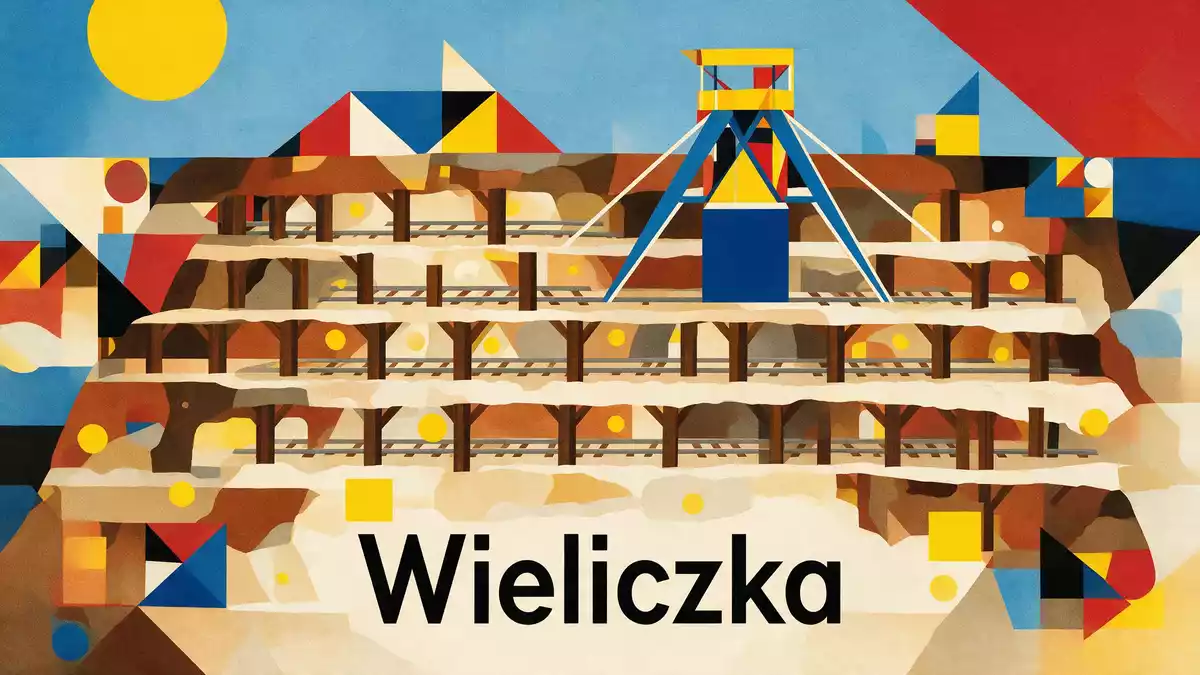
Beneath the small town of Wieliczka near Kraków, Kopalnia Soli Wieliczka opens into a deep, multi-level world of excavated rock salt, chapels and chambers carved over seven centuries of mining history.Wieliczka Salt Mine First organised rock salt extraction here dates to the thirteenth century, and industrial exploitation continued until the 1990s, giving the mine a rare continuity of use.thirteenth century exploitation
Layers of history beneath southern Poland
Kopalnia Soli Wieliczka lies under Wieliczka in southern Poland, within Lesser Poland, where rock salt deposits formed millions of years ago and later became the foundation of royal income and industrial development.salt mine in Wieliczka Organised mining on an industrial scale is linked by historians to shafts sunk in the 1280s, marking the transition from evaporating brine at the surface to extracting solid salt underground.Goryszowski shaft in the 1280s Over subsequent centuries the mine formed part of the Cracow Saltworks, a royal enterprise that provided substantial revenue to the Polish crown in the sixteenth and seventeenth centuries.Medieval Cracow Saltworks
Mining of rock salt in Wieliczka was brought to a close in 1964, and all exploitation of the deposit ended in 1996, after which the underground workings took on a new focus as an integrated heritage site, museum and health resort.end of exploitation in 1996 The mine belongs to the group of Wieliczka and Bochnia Royal Salt Mines recognised by UNESCO under criterion (iv), reflecting their status as early and important European industrial operations worked in parallel from the thirteenth century until the late twentieth century.Wieliczka and Bochnia Royal Salt Mines
An underground city of chambers, chapels and shafts
The scale of Kopalnia Soli Wieliczka is one of its most striking features: the mine extends across nine levels between about 57 m and 327 m (187 ft and 1,073 ft) below the surface, linked by a network of shafts and drifts.levels between 57 m and 327 m Over the centuries miners created thousands of chambers and hundreds of kilometres of corridors, leaving behind voids that together amount to millions of cubic metres of excavated space within the rock salt deposit.extent of chambers and corridors
Within this underground city, functional spaces such as extraction chambers and transport routes coexist with chapels, altars and statues carved directly from salt, some dating back several centuries.chapels and statues sculpted in salt Workings from different eras reflect changing mining techniques, from early hand-hewn galleries to areas equipped in the eighteenth and nineteenth centuries with underground railways and hoisting machinery introduced under Habsburg administration.underground railway and steam hoisting
From industrial saltworks to heritage and health resort
For much of its existence Kopalnia Soli Wieliczka formed part of a wider saltworks complex whose output contributed significantly to Poland’s economy, particularly once production volumes increased in the twentieth century.economic importance in Poland In the interwar period annual output reached well over 200,000 tonnes, before wartime disruption and later shifts in production methods changed the way salt was produced at the site.interwar annual production
In the later twentieth century the emphasis moved away from extracting new rock salt towards preserving the existing workings and adapting them for tourism, museum display and therapeutic stays in the underground environment.touristic, museum and therapeutic use It was in 1978 that Wieliczka was first inscribed on the UNESCO World Heritage List, among the earliest group of sites recognised, and later the inscription was extended to include Bochnia and the saltworks castle.UNESCO inscription in 1978
Visiting Kopalnia Soli Wieliczka: what travellers from Western Europe should know
- Kopalnia Soli Wieliczka lies in the town of Wieliczka south-east of Kraków in southern Poland; Wieliczka has rail and road connections with Kraków and the wider region.
- Access to the mine’s underground levels involves staircases and passages descending many metres below ground, with extended sections of walking through excavated chambers and corridors.
- The mine is in Poland, where the official language is Polish and the currency is the z?oty (PLN).
Searching for Kopalnia Soli Wieliczka on social platforms
These links open searches for Kopalnia Soli Wieliczka on each platform.
Frequently asked questions about Kopalnia Soli Wieliczka
Where is Kopalnia Soli Wieliczka located?
Kopalnia Soli Wieliczka is in the town of Wieliczka in southern Poland, close to Kraków in Lesser Poland Province.
What can visitors expect on a visit underground?
A visit typically follows designated routes through excavated chambers, corridors and chapels hewn in rock salt on several levels beneath the surface.
What makes Kopalnia Soli Wieliczka distinctive among salt mines?
Its long history of continuous operation from the thirteenth century to the late twentieth century and its extensive network of deep levels, chambers and carved chapels give it an unusual character.


