
Kronborg Slot, Helsingör’s Renaissance fortress by the sea
Published on 09/19/2026 at 19:57 | Editorial responsibility: Rafael Müller, Editor-in-Chief AD HOC NEWS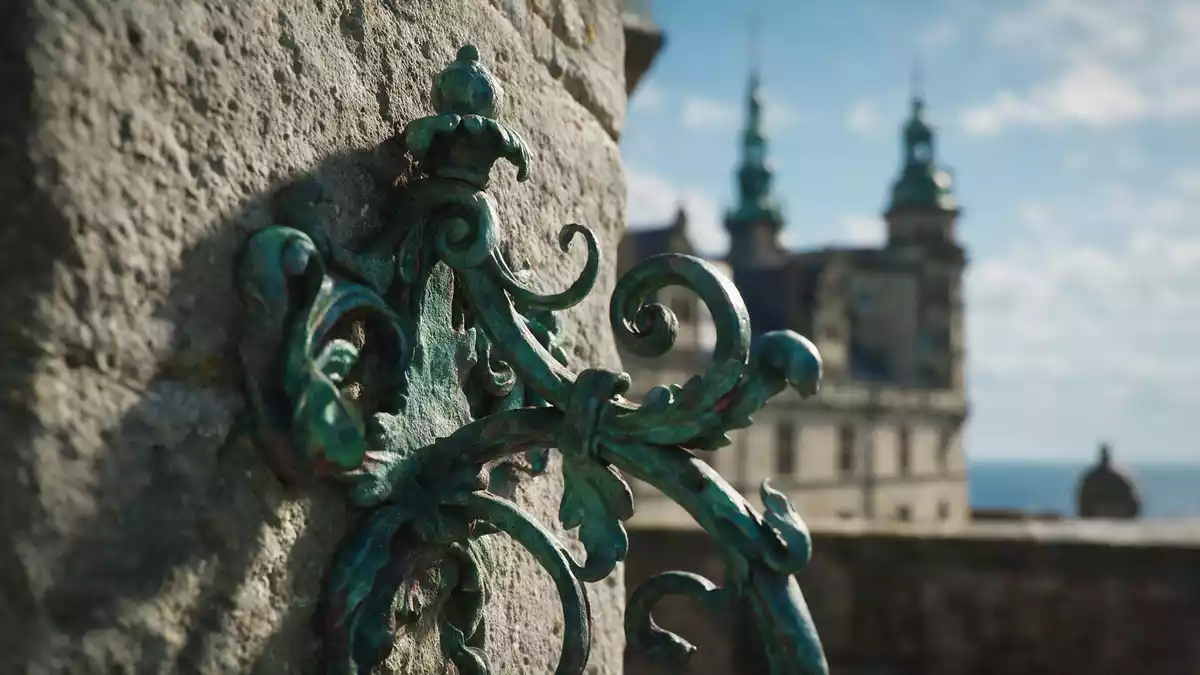
On the north-eastern shore of Zealand, Kronborg Slot rises over the Øresund at Helsingör, a Renaissance fortress whose bastions and halls once controlled the narrow strait between Denmark and Sweden.UNESCO World Heritage status recognises the castle’s role in northern Europe and its well-preserved architecture.
A Renaissance stronghold on the Øresund
Kronborg Slot stands on a low headland projecting into the Øresund, the stretch of water separating Zealand from the coast of Sweden.The site commands the Sound at one of its narrowest points, and ships passing between the Baltic and the North Sea have long sailed within sight of its walls. The location made Helsingör a strategic town in the late medieval and Renaissance periods, and the fortress forms a distinctive landmark at the entrance to the Baltic.
The present castle complex took shape as a grand Renaissance residence and military stronghold in the sixteenth century under King Frederick II of Denmark, who transformed an earlier fortification into a richly decorated palace.Kronborg is described as one of the most important Renaissance castles in northern Europe, with towers, ramparts, moats and state rooms arranged around a central courtyard. Its façades carry sandstone ornament and copper roofs that give the ensemble a characteristic profile above the harbour.
Architecture, halls and cultural layers
Approaching Kronborg Slot, visitors encounter a sequence of outer works, from earth ramparts and bastions to brick defensive walls and a moat, before entering the main quadrangular castle.The castle’s plan combines defensive features with ceremonial architecture, and the contrast between its rugged outer fortifications and refined inner courtyards is one of its defining impressions. Within the main ranges, long galleries, a chapel and service rooms reflect its dual role as royal residence and fortress.
One of the most striking interior spaces is the great hall, a long banqueting chamber that extends across much of one wing and is known for its scale and timber roof.Descriptions of Kronborg highlight its banquet hall and chapel, and the hall’s length and high windows make it an architectural centrepiece of the castle. Elsewhere, vaulted casemates beneath the courtyard and outer works emphasise the fortress character, while the chapel preserves carved wood and stone details associated with late sixteenth-century Danish court culture.
Hamlet, UNESCO and Helsingör’s seaward outlook
Beyond its military and royal history, Kronborg Slot holds a distinctive place in European culture as the model for Elsinore in William Shakespeare’s tragedy “Hamlet”.The association with Hamlet has linked the castle to English literature for centuries, and references to its battlements and courtyards in performances continue to frame it as “Hamlet’s castle”. This cultural layer adds to the experience of walking the ramparts and standing in the shadow of its towers.
In 2000, Kronborg Slot was inscribed on the UNESCO World Heritage List as a cultural site recognised for both its architecture and its historical role in controlling the Øresund trade route.The inscription cites the castle as an outstanding example of a Renaissance fortress, and as a symbol of Danish power in the sixteenth to eighteenth centuries. Set within the coastal town of Helsingör, the castle’s towers, moats and star-shaped outer works still face the sound, and the Swedish shore is visible across the water.
Visiting Kronborg Slot: what travellers from Western Europe should know
- Kronborg Slot stands at the tip of a headland north of central Helsingör, on the north-eastern coast of Zealand; trains run to Helsingör station from Copenhagen.
- The fortress complex includes ramparts, moats and cobbled courtyards, so a visit involves walking on uneven surfaces, crossing bridges over the moat and climbing staircases within the towers.
- The Øresund is visible from the ramparts, with views towards the Swedish coast across the narrow sound and over the harbour of Helsingör.
- The official language is Danish and the currency is the Danish krone.
- Entry requirements depend on your nationality; UK travellers can check the FCDO travel advice at gov.uk/foreign-travel-advice, Irish travellers the Department of Foreign Affairs at ireland.ie.
Searching for Kronborg Slot on social platforms
These links open searches for Kronborg Slot on each platform.
Frequently asked questions about Kronborg Slot
Where is Kronborg Slot located?
Kronborg Slot stands in Helsingör on the north-eastern coast of Zealand in Denmark, on a headland projecting into the Øresund strait.
What can visitors expect during a visit?
A visit to Kronborg Slot includes walking through fortified gateways, crossing a moat, exploring cobbled courtyards, halls and chapel spaces, and climbing staircases within the castle.
What makes Kronborg Slot distinctive among European castles?
Kronborg Slot combines a large Renaissance palace with extensive bastioned fortifications and holds UNESCO World Heritage status, while also being associated with Shakespeare’s Elsinore in “Hamlet”.


