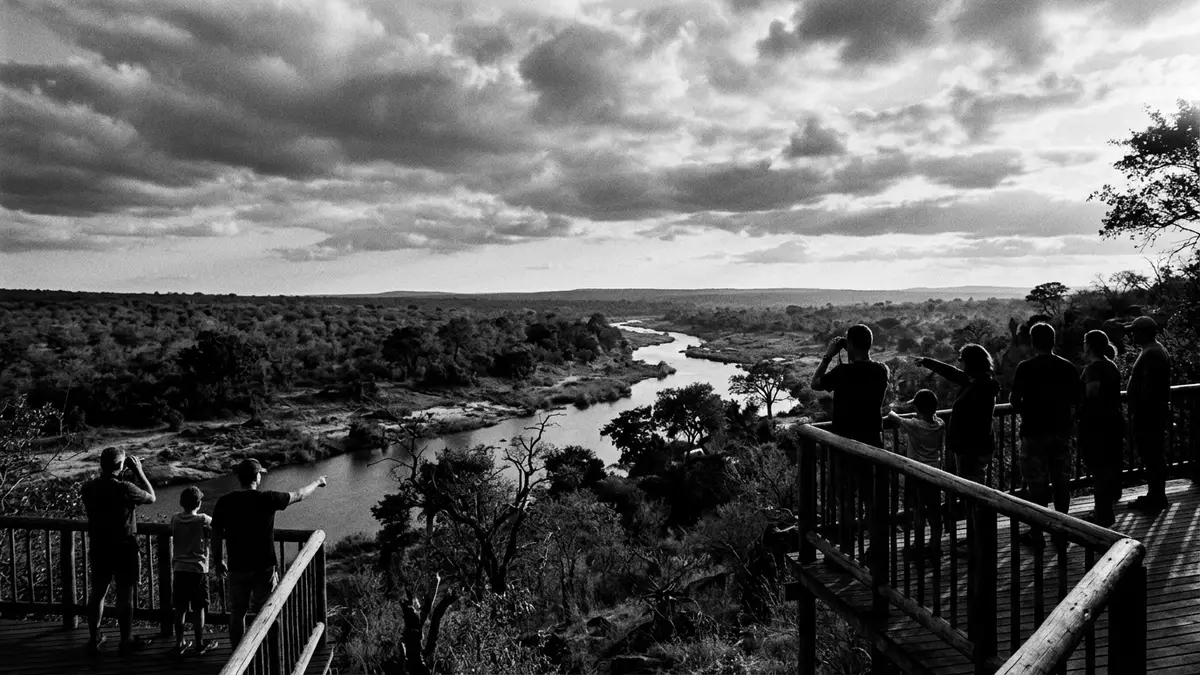
Kruger National Park’s wide horizons around Skukuza
Published on 08/09/2026 at 15:13 | Editorial responsibility: Rafael Müller, Editor-in-Chief AD HOC NEWS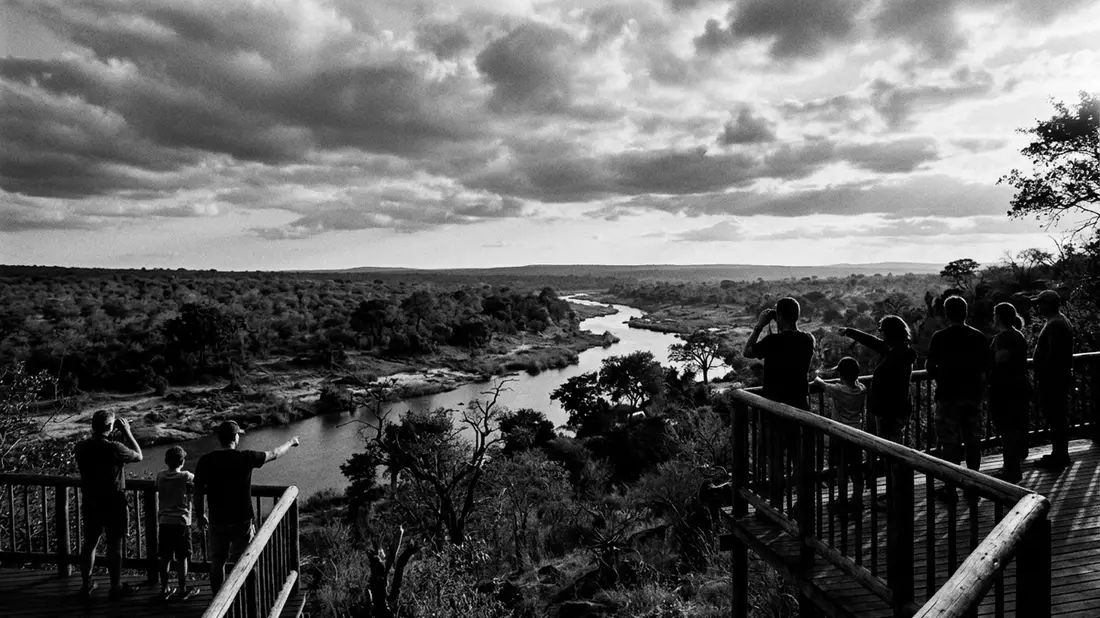
Kruger National Park in South Africa is a vast wildlife reserve centred on bushveld, river systems and long gravel roads, with Skukuza as its best-known administrative hub. The park’s scale, its old conservation history and its low, open landscape define the experience before a single animal appears.
Skukuza and the park’s everyday landscape
Skukuza sits in the southern part of Kruger National Park on the banks of the Sabie River. It functions as the park’s main administrative centre and a practical base for travellers, researchers and rangers moving through the reserve.
The landscape around it combines riverine vegetation, open woodland and broad stretches of savannah. The park is one of South Africa’s major protected areas and forms part of a longer conservation story that began in the late nineteenth century, when the region’s game reserves were first set aside.
From game reserve to national park
Kruger National Park is closely associated with Paul Kruger, the former president of the South African Republic, and with the creation of protected hunting-free territory in the region. The park was proclaimed in 1926, drawing together earlier reserves into a single national park.
Its character is still shaped by that early park idea: long distances, controlled access and an emphasis on seeing wildlife in an extensive natural setting rather than in landscaped enclosures. Skukuza reflects that history through its administrative role and its position within a working conservation landscape.
Wildlife, roads and the rhythm of a visit
Game viewing in Kruger National Park happens from roads, rest camps and marked routes that thread through bush and river country. The park is known for elephants, lions, leopards, rhinos and buffalo, but birdlife, antelope and smaller animals are part of the same scene.
The appeal lies in the way broad spaces and concentrated wildlife encounters sit side by side. At Skukuza, visitors meet the park as both a functioning institution and a place where the horizon remains open for kilometres.
Visiting Kruger National Park: what travellers from Western Europe should know
- The park is reached from South Africa by road and by air via regional gateways serving the south and north of the reserve.
- Admission arrangements and opening hours are set by the site's operator and change with the season; the official website is the only binding source.
- The dry season brings thinner vegetation and easier game spotting, while the green season brings denser growth and more dramatic skies.
- Travellers should expect long distances on internal roads, wildlife on the carriageway and limited services outside the main camps.
- English is widely used in visitor-facing settings, and card payment is common in larger facilities, though carrying some cash is sensible.
- Entry requirements depend on your nationality. UK travellers should check the FCDO travel advice at gov.uk/foreign-travel-advice; Irish travellers the Department of Foreign Affairs at ireland.ie; EU and EEA citizens their own national foreign ministry.
Searching for Kruger National Park on social platforms
These links open searches for Kruger National Park on each platform.
Frequently asked questions about Kruger National Park
Where is Kruger National Park?
Kruger National Park lies in north-eastern South Africa, along the border with Mozambique. Skukuza is in the southern section of the park.
What should I expect on a visit?
Expect long drives, early starts and a landscape where wildlife may appear close to the road. The park is organised around camps, routes and self-drive exploration.
What makes Kruger National Park distinctive?
Its combination of large scale, protected bushveld and a long conservation history gives it a strong identity. Skukuza adds the practical face of a major national park to that setting.