
Lago di Como: a lake shaped by three branches
Published on 09/22/2026 at 10:44 | Editorial responsibility: Rafael Müller, Editor-in-Chief AD HOC NEWS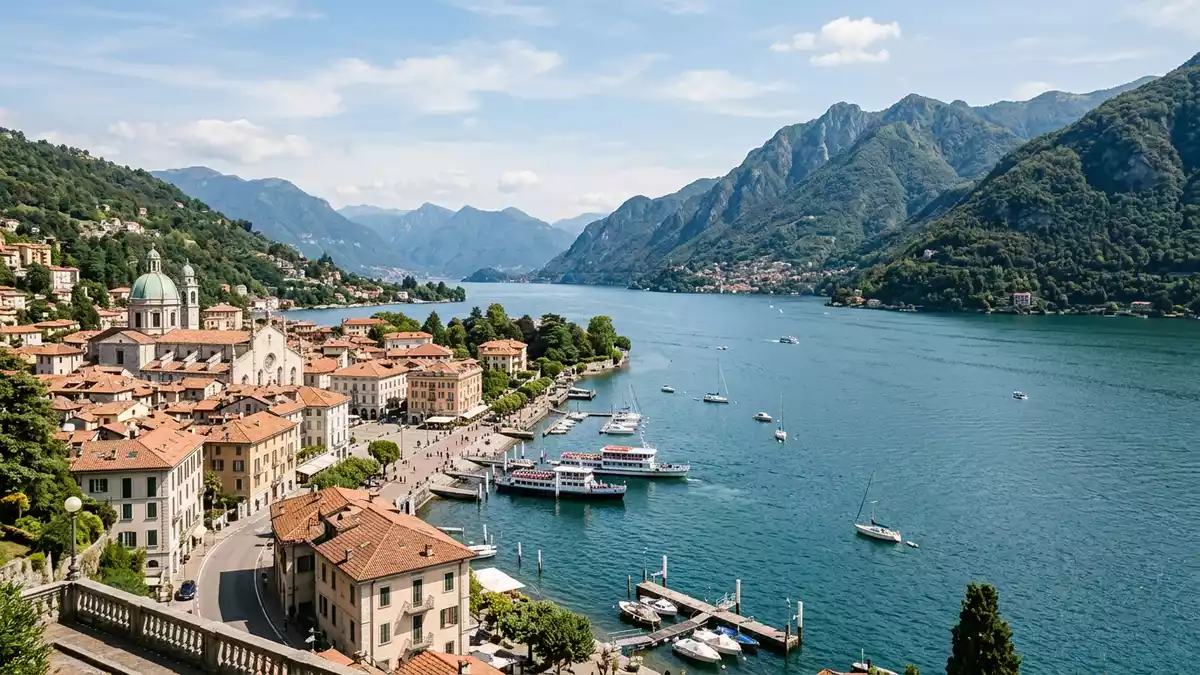
Lago di Como is a deep Alpine lake whose water divides into three long branches near Bellagio. Its shores connect Como, Bellagio, Varenna, Menaggio and Tremezzo with steep mountain scenery, historic villas and gardens.
Three branches between Como and the Alps
The lake lies in Lombardy, northern Italy, about 40 km north of Milan. It occupies a glacial basin surrounded by limestone and granite mountains, with the highest slopes rising above 2,400 m in the north-east.
Lago di Como extends for about 47 km and reaches a maximum width of roughly 4 km. Its surface covers about 146 square kilometres, while its deepest water reaches 414 m. The Adda enters near Colico and leaves the lake at Lecco, forming the lake’s main river system.
Como, Lario and the Roman foundation
The lake’s Latin name was Lacus Larius, and Lario remains a recognised local name. Como occupies the south-western end, where the lake opens towards the Po Valley and the Alpine passes.
Roman authority reached the area in 196 BC. Julius Caesar founded Novum Comum in 59 BC, establishing the city whose name became attached to the lake. Como’s Roman past appears beside a later urban fabric of churches, squares, silk workshops and waterfront streets.
Virgil, Pliny the Elder, Pliny the Younger and Claudian connected the lake with Classical literature. From the eighteenth century, Lago di Como formed part of the Grand Tour followed by European nobles and scholars, adding villas and landscaped gardens to its cultural identity.
Villas, gardens and waterside villages
The shoreline carries a sequence of named places rather than a single urban centre. Bellagio sits at the meeting point of the branches, while Varenna and Menaggio occupy opposite sides of the central lake. Tremezzo and Lenno line the western shore, and Colico marks the northern end.
Villa Carlotta in Tremezzo combines an historic residence with extensive gardens. Villa del Balbianello stands on the tip of the wooded Dosso di Lavedo promontory, on the western lakeshore. Its early eighteenth-century villa is associated with Cardinal Angelo Maria Durini and the cultural circles of the Italian Risorgimento.
Bellagio’s Villa Melzi and Villa Serbelloni add formal gardens to the shoreline landscape. Their paths, terraces, trees and sculptures sit beside water, mountain slopes and small harbours. The result is a place where geology, architecture and cultivated planting remain visible within the same view.
Visiting Lago di Como: what travellers from Western Europe should know
- Como stands at the south-western end of the lake. Rail services connect the city with Milan, and ferries link the lakeside towns and villages.
- The shoreline is mountainous. Villages such as Bellagio, Varenna and Menaggio contain steep lanes, stairways and sloping paths.
- The central lake is divided into western, eastern and northern reaches by the meeting of its branches near Bellagio.
- The official language is Italian and the currency is the euro.
Searching for Lago di Como on social platforms
These links open searches for Lago di Como on each platform.
Frequently asked questions about Lago di Como
Where is Lago di Como?
Lago di Como lies in Lombardy, northern Italy, about 40 km north of Milan. Como occupies its south-western end.
What can travellers expect around the lake?
The shoreline combines ferry-connected villages, steep lanes, historic villas, formal gardens, mountain slopes and small waterfront districts.
What makes Lago di Como distinctive?
Its water divides into three branches near Bellagio, while the lake reaches 414 m in depth and carries villas, gardens and Alpine scenery along its shores.


