
Lake Tana Monasteries as painted islands of faith
Published on 09/02/2026 at 12:11 | Editorial responsibility: Rafael Müller, Editor-in-Chief AD HOC NEWS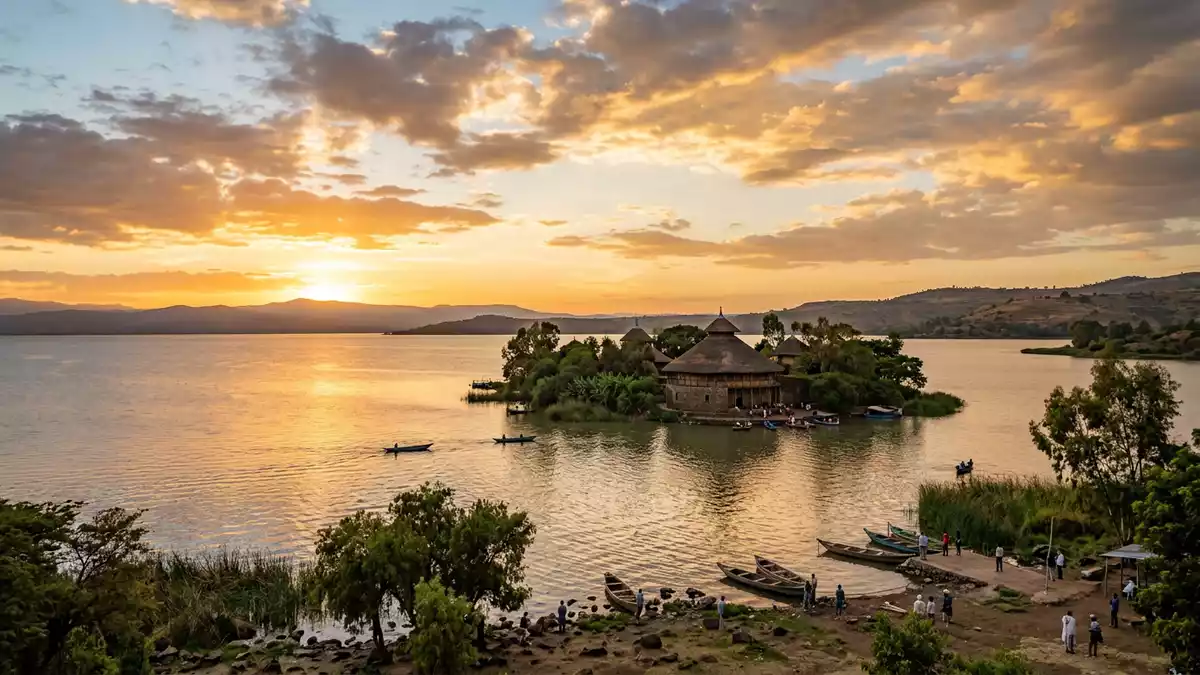
Lake Tana Monasteries form a constellation of churches and monastic compounds scattered across the islands and peninsulas of Ethiopia’s largest lake, reached from the city of Bahir Dar. Their painted church interiors and secluded settings reflect centuries of Ethiopian Orthodox Christian life around Lake Tana, from the medieval period into the nineteenth century.
Islands of devotion on Ethiopia’s largest lake
Lake Tana lies in the Ethiopian Highlands and feeds the Blue Nile, with Bahir Dar on its southern shore acting as the main gateway to the island monasteries.Lake Tana Monasteries in Bahir Dar A twentieth-century survey named 37 islands on the lake, with a significant number of them bearing monasteries or churches, making the lake both a geographical and spiritual landscape.37 islands on the lake
Monasteries stand on islands such as Dek and Narga, as well as on peninsulas like Zege, forming a loose ring of settlements around the southern and central parts of the lake.37 Islands around the lake Lake Tana itself is recognised on Ethiopia’s tentative list for World Heritage status for the combination of its island monasteries and wetlands, underlining the cultural and environmental importance of this highland lake.Lake Tana Island Monasteries and its Adjacent Wetland
From medieval foundations to painted church interiors
The monastic story of Lake Tana stretches back to the Middle Ages, with foundations dating to the fourteenth century and later.Kebran Gabriel founded in the 14th century Ura Kidane Mihret on the Zege Peninsula is associated with a fourteenth-century monastic community, while its present circular church is linked to the sixteenth century.present circular church dates from the 16th century On Dek Island, Narga Selassie, whose name means “Trinity of the Rest”, belongs to the late eighteenth century and is associated with the reign of Empress Mentewab.Narga Selassie built on Dek Island
Some monasteries are tied to rulers of more recent centuries, such as Debre Maryam, built by Emperor Tewodros II in the nineteenth century near the eastern side of the lake.Debre Maryam built by Emperor Tewodros Others, like Kebran Gabriel near Bahir Dar, combine fourteenth-century origins with seventeenth-century rebuilding, reflecting the long history of monastic occupation and reconstruction around Lake Tana.Kebran Gabriel rebuilt in the 17th century Inside churches such as Ura Kidane Mihret, walls are covered with vividly coloured murals depicting biblical scenes and Ethiopian saints, a characteristic feature of Ethiopian Orthodox church art around the lake.murals depicting biblical scenes
Zege Peninsula and the monastic landscape
The Zege Peninsula projects into the southwestern part of Lake Tana and carries a cluster of monasteries and churches reachable by boat from Bahir Dar.Ura Kidane Mihret is located on a Zege Peninsula Ura Kidane Mihret stands within a forested area on this peninsula, its church laid out in the traditional circular form, with a central sanctuary ringed by an ambulatory, and surrounded by monastic buildings and shaded paths.island monasteries
Other monasteries on or near Zege include Azwa Mariam, while on islands further out lie communities such as Daga Estifanos and Tana Cherkos, known for their links to royal burials and Ethiopian Christian treasures.remains of ancient Ethiopian emperors The combination of wooded peninsulas, island churches and the wide expanse of Lake Tana gives the monasteries a setting in which water, forest and architecture sit in close relationship.
Visiting Lake Tana Monasteries: what travellers from Western Europe should know
- Lake Tana Monasteries are reached from Bahir Dar, a city in northern Ethiopia on the southern shore of Lake Tana, with boat trips crossing to islands and the Zege Peninsula.
- Reaching monasteries such as Ura Kidane Mihret involves disembarking at a lakeside landing and walking on unpaved forest paths, which can include tree roots and gentle gradients.
- The monasteries stand in a highland region of Ethiopia, so visitors encounter an elevated setting around the lake, with weather that can change between strong sun and cooler winds on the water.
- Ethiopia’s official working language for federal institutions includes Amharic, and the national currency is the Ethiopian birr.
- Entry requirements depend on your nationality; UK travellers can check the FCDO travel advice at gov.uk/foreign-travel-advice, Irish travellers the Department of Foreign Affairs at ireland.ie.
Searching for Lake Tana Monasteries on social platforms
These links open searches for Lake Tana Monasteries on each platform.Frequently asked questions about Lake Tana Monasteries
Where are Lake Tana Monasteries located?
Lake Tana Monasteries are situated on islands and peninsulas in Lake Tana in northern Ethiopia, with Bahir Dar on the southern shore as the main access point.
What should visitors expect on a visit?
Visitors encounter boat crossings, forest paths and church interiors lined with Ethiopian Orthodox murals, with some monasteries allowing access to specific groups in line with religious custom.
What makes Lake Tana Monasteries distinctive?
The combination of medieval foundations, painted circular churches and their distribution across Lake Tana’s islands and peninsulas gives Lake Tana Monasteries a character tied closely to both water and worship.


