
Leptis Magna and the stone city of Septimius Severus
Published on 09/24/2026 at 07:10 | Editorial responsibility: Rafael Müller, Editor-in-Chief AD HOC NEWS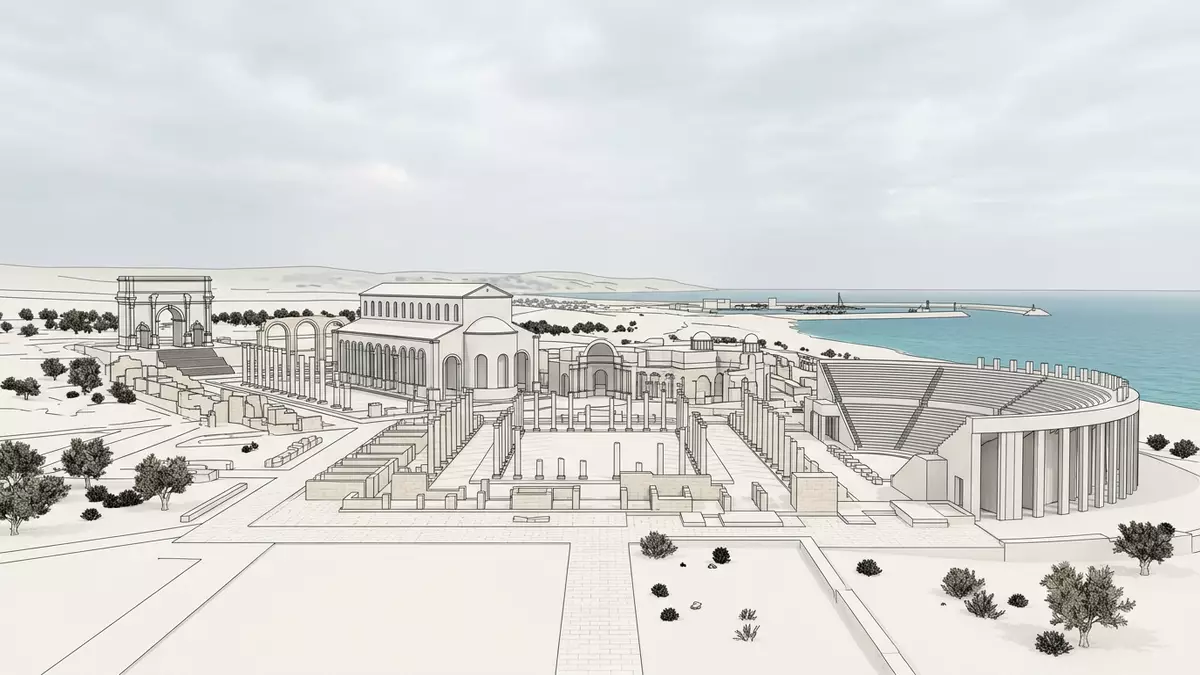
Leptis Magna lies on Libya’s Mediterranean coast near Al Khums, where streets, forums, baths, a theatre and harbour remains preserve the scale of a Roman city. Founded as a Phoenician settlement and enlarged under Emperor Septimius Severus, it is a place where urban life survives through architecture rather than a single monument.
Leptis Magna: a city laid out in stone
The archaeological site extends around the mouth of the Wadi Lebda, close to the coast. Its remains include public squares, colonnaded streets, shops, storehouses, residential districts and harbour works. The setting makes Leptis Magna readable as an urban landscape, with separate buildings connected by streets and open spaces.
The city began as a Phoenician foundation in the seventh century BC. Carthaginian rule followed, and Rome incorporated Leptis Magna into its African territories in the first century BC. The ancient settlement retained its coastal position while its public architecture acquired the materials and forms associated with Roman cities.
From Phoenician foundation to imperial capital
Septimius Severus was born at Leptis Magna and became Roman emperor in 193 AD. His reign brought major building activity to the city, including the Severan basilica, a new forum and monumental works near the harbour. The imperial period gave Leptis Magna its largest surviving architectural ensemble.
The UNESCO World Heritage inscription dates from 1982. The designation covers a cultural site recognised for its Roman monuments, harbour, public buildings and evidence of Mediterranean urban development.
Theatre, basilica and harbour beside the sea
The Augustan theatre occupies a prominent position within the ruins, while the amphitheatre and Hadrianic baths show different aspects of Roman public life. The market, forum and basilica form further parts of the city’s civic landscape. Marble surfaces, columns, arches and carved architectural details remain visible across the site.
The Severan basilica is associated with Septimius Severus and belongs to the city’s imperial expansion in the late second and early third centuries AD. Nearby streets lead towards the harbour, where the relationship between civic buildings, commercial spaces and the Mediterranean remains legible. Leptis Magna’s identity rests on this combination of scale, material and connected urban form.
Visiting Leptis Magna: what travellers from Western Europe should know
- Leptis Magna lies on the Mediterranean coast of Libya, about 3 km east of Al Khums and east of Tripoli. Al Khums is the nearest modern urban base.
- The site is an extensive archaeological landscape. Visits involve walking between separated ruins, including the theatre, forum, baths, basilica and harbour area.
- The remains stand near the mouth of the Wadi Lebda, with coastal terrain surrounding the ancient streets and monumental buildings.
- The official language is Arabic and the currency is the Libyan dinar.
- Entry requirements depend on your nationality; UK travellers can check the FCDO travel advice at gov.uk/foreign-travel-advice, Irish travellers the Department of Foreign Affairs at ireland.ie.
Searching for Leptis Magna on social platforms
These links open searches for Leptis Magna on each platform.Frequently asked questions about Leptis Magna
Where is Leptis Magna?
Leptis Magna is on Libya’s Mediterranean coast, close to Al Khums and east of Tripoli. The ruins lie near the mouth of the Wadi Lebda.
What can visitors expect to see?
The site contains Roman streets, forums, baths, a theatre, an amphitheatre, a market, basilicas and harbour remains. The buildings are spread across an extensive archaeological landscape.
What makes Leptis Magna distinctive?
Its distinctive character comes from the scale of the preserved Roman city and its connection with Septimius Severus. Phoenician origins, Roman urban planning and Mediterranean harbour architecture meet in one place.


