
Lineas de Nazca, the desert geoglyphs between Nazca and Palpa
Published on 09/18/2026 at 06:31 | Editorial responsibility: Rafael Müller, Editor-in-Chief AD HOC NEWS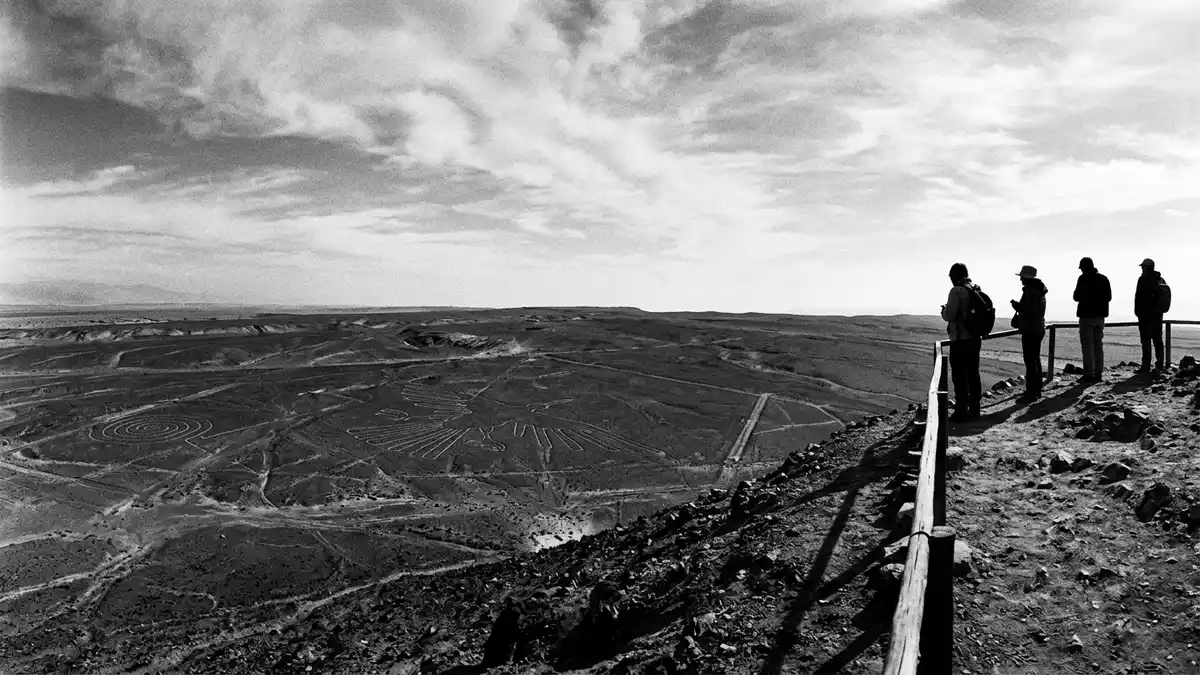
Lineas de Nazca, better known in English as the Nazca Lines, stretch across the desert plateau between Nazca and Palpa in southern Peru and form one of the largest fields of ancient geoglyphs on Earth. Created by pre-Hispanic societies between around 500 BC and AD 500, the figures and lines are protected as the UNESCO World Heritage Site “Lines and Geoglyphs of Nasca and Pampas de Jumana”, a cultural landscape that links the coastal plain with the lower Andean foothills.
A desert plateau turned into a vast drawing
The Nazca Lines occupy an arid coastal plain around the town of Nazca in the Ica Region, about 400 km south of Lima, where the high plateau known as the Pampas de Jumana runs between Nazca and Palpa. Across this plateau and neighbouring pampas, straight lines, geometric motifs and animal figures have been scratched into the light desert surface, creating an open-air composition that only resolves into clear forms when viewed from elevated ground or the air.Lines and Geoglyphs of Nasca and Pampas de Jumana The site lies in the river basin of the Río Grande de Nasca, where the plateau rises gently between the Pacific coast and the first ridges of the Andes.
Archaeological surveys describe hundreds of straight lines and geometric patterns together with numerous figures that take the form of animals, plants and imaginary beings.animal figures stretch across The geoglyphs extend over an area measured in hundreds of square kilometres, with designs appearing both on open plains and on low slopes where the ground is bare of vegetation. From ground level many individual lines can appear as narrow tracks or shallow cuts in the desert crust, while the relationships between figures only become legible when seen from vantage points along the surrounding foothills or from aircraft crossing the plateau.
Ancient geoglyphs and their cultural context
The people who created Lineas de Nazca belonged primarily to the Nazca culture, part of a sequence of pre-Hispanic societies on the Peruvian south coast that flourished between the first millennium BC and the first millennium AD.pre-Hispanic societies which flourished The lines and figures are traditionally dated to the span between about 500 BC and AD 500, with earlier phases linked to cultures such as Paracas and later phases associated with the Nazca people whose pottery and textiles form part of museum collections across Peru and beyond.between 500 B.C. and A.D. 500
The geoglyphs include zoomorphic designs such as birds and other animals, together with stylised plants and large geometric figures that may span several kilometres.living creatures, stylized plants and imaginary beings They were made by removing surface pebbles and exposing the differently coloured ground beneath, a technique suited to the stable, dry climate of the Nazca Desert. The open, treeless pampas provide a broad canvas, and the consistency of the desert surface has helped the lines to survive for many centuries with limited erosion.
World Heritage status and the scale of the site
In 1994 Lineas de Nazca were inscribed on the UNESCO World Heritage List under the title “Lines and Geoglyphs of Nasca and Pampas de Jumana”, recognising their outstanding universal value as a cultural site.inscribed on the UNESCO World Heritage List in 1994 The protected zone covers tens of thousands of hectares of desert plain and low hills in the provinces of Nasca and Palpa in the Department of Ica, reflecting both the sheer number of geoglyphs and the breadth of the landscape they occupy.75,358.47 ha World Heritage Site
Within this area, researchers have identified hundreds of straight lines that run across the plateau, intersecting at various angles and forming large trapezoids and other geometric forms, alongside numerous animal and plant figures of differing scales.over 800 straight lines, 300 geometric patterns The plateau itself stretches for more than 80 km between Nazca and Palpa, with geoglyphs appearing on the pampas and on the low Andean foothills rising from the coastal plain.high, arid plateau stretches more than 80 km The combination of scale, number and variety has made Lineas de Nazca an enduring focus of archaeological study and a key reference point for understanding ancient ritual landscapes on the Peruvian south coast.
Visiting Lineas de Nazca: what travellers from Western Europe should know
- Lineas de Nazca lie in the Ica Region of southern Peru, on desert plains between the towns of Nazca and Palpa about 400 km south of Lima.
- The plateau where the Nazca Lines are found is a high arid plain, and visiting viewpoints or towers involves time outdoors on exposed ground with limited shade.
- The official language is Spanish and the currency is the Peruvian sol.
- Entry requirements depend on your nationality; UK travellers can check the FCDO travel advice at gov.uk/foreign-travel-advice, Irish travellers the Department of Foreign Affairs at ireland.ie.
Searching for Lineas de Nazca on social platforms
These links open searches for Lineas de Nazca on each platform.Frequently asked questions about Lineas de Nazca
Where are Lineas de Nazca located?
Lineas de Nazca are located on the Nazca Desert plateau in the Ica Region of southern Peru, between the towns of Nazca and Palpa on the Pampas de Jumana.
What can visitors expect when seeing the Nazca Lines?
Visitors encounter an arid plateau marked by straight lines, geometric shapes and animal figures etched into the desert surface, with viewpoints and flights revealing their relationships across the pampas.
What makes Lineas de Nazca distinctive among archaeological sites?
The Nazca Lines are distinctive for the combination of hundreds of geoglyphs, their creation between around 500 BC and AD 500, and their inscription as the UNESCO World Heritage Site “Lines and Geoglyphs of Nasca and Pampas de Jumana”.


