
Loch Nis: a long, deep Highland loch near Inverness
Published on 09/21/2026 at 10:24 | Editorial responsibility: Rafael Müller, Editor-in-Chief AD HOC NEWS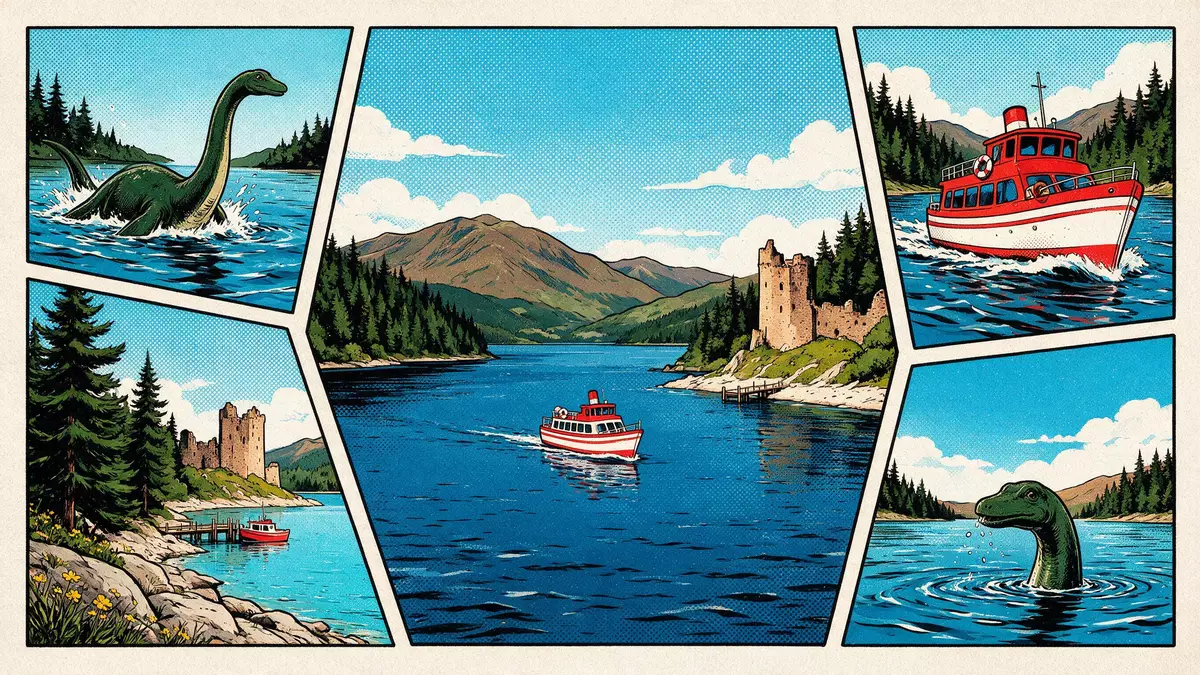
Loch Nis is the long, narrow freshwater loch stretching south?west from Inverness through the Great Glen, framed by steep hills and scattered settlements along its shores. It is known for its depth, its elongated form and the ruined outline of Urquhart Castle on one of its promontories, bringing together Highland landscape, medieval stonework and the enduring stories attached to the water.
The long corridor of water through the Great Glen
Loch Nis occupies a natural fault line in the Highlands, running from south?west to north?east as part of the Great Glen and forming one link in a chain of lochs and valleys across Scotland. The northern end of the loch lies south?west of Inverness, while Fort Augustus stands near the southern end where the water narrows towards the Highlands further inland.The northern end of the loch From its head near Inverness, the River Ness flows out of the loch and runs north?east to reach the Moray Firth at the city, connecting the inland water to the sea and making Inverness the natural gateway to this stretch of the Highlands.The River Ness as outlet
The loch itself is notably long and narrow, extending for roughly several tens of kilometres, with steep sides dropping down into dark water and only a small number of broader bays and headlands punctuating the shore.Its elongated form Away from Inverness, the main road along the western shore passes places such as Drumnadrochit and Urquhart Bay, while smaller roads and tracks reach scattered houses and fields near the water on both sides of the loch. The combination of steep slopes, forest patches and open pasture means that most views of Loch Nis include both water and rising ground in close proximity, emphasising its character as a corridor through the Highlands rather than a broad, open lake.
Depth, water and the character of the loch
Beneath the surface, Loch Nis holds a large volume of freshwater in a deep basin that drops well below the level of most surrounding hillsides. Measurements from lake surveys indicate mean depths of over 100 m (328 ft) and maximum depths close to 230 m (754 ft), making it one of the deeper bodies of inland water in the country.Mean and maximum depth figures The depth and length together give the loch a distinctive appearance: long bands of dark water stretching along the glen, with the far shore visible but often distant, and hills rising sharply beyond.
The water of Loch Nis feeds and is fed by rivers and burns running down from the surrounding Highlands, and the loch forms part of a wider drainage system that travels through the Great Glen. At the northern end, the River Ness carries water onwards to the coast at Inverness, while other connections link the loch to nearby waterways along the glen.Connection between loch and river Around the shores, the landscape varies from sections of rocky edge to small pebbled areas and patches of grass, with some places offering closer access to the water and others dropping sharply from road or hillside to the loch below. On brighter days, the light on the water can shift quickly as clouds move along the glen, and visibility along the length of Loch Nis changes with the weather.
Urquhart Castle and the loch’s human history
On a rocky headland projecting into Loch Nis near Drumnadrochit, the ruins of Urquhart Castle form one of the most recognisable man?made features on the loch. The present stone castle is a medieval fortress dating from the thirteenth to the sixteenth centuries, built on a site that had already seen earlier fortification in preceding periods.Thirteenth? to sixteenth?century ruins The castle occupies Strone Point, a triangular promontory on the north?western shore, giving broad views along the water and across to the opposite side of the loch.Position on Strone Point
Urquhart Castle’s history reflects wider conflicts in Scotland. During the Wars of Scottish Independence, it played a role as one of the strongholds contested between English forces and Scottish leaders, and it was taken by the English army of Edward I in 1296.Capture by Edward I Later, it became a royal castle and was raided on several occasions by the MacDonald Earls of Ross, before the Crown granted it to Clan Grant in 1509, with responsibility for repair and use.Granting to Clan Grant In the late seventeenth century, government troops deliberately damaged parts of the castle, including the gatehouse, so that it could no longer serve as a strong military base, and the ruins visible beside Loch Nis today date from that period of abandonment and destruction.Deliberate destruction in 1692
Visiting Loch Nis: what travellers from Western Europe should know
- Loch Nis lies south?west of Inverness in the Scottish Highlands, with the River Ness connecting the loch to the Moray Firth at the city and roads following the shore on both sides.
- The terrain around the loch combines steep hillsides and rocky sections with some gentler stretches of shore; approaches to viewpoints and castle ruins include uneven ground and steps.
- Urquhart Castle stands on a rocky promontory on the north?western shore near Drumnadrochit, reached by the main road along the western side of Loch Nis.
- The official language is English and the currency is the pound sterling.
- Entry requirements depend on your nationality; UK travellers can check the FCDO travel advice at gov.uk/foreign-travel-advice, Irish travellers the Department of Foreign Affairs at ireland.ie.
Searching for Loch Nis on social platforms
These links open searches for Loch Nis on each platform.
Frequently asked questions about Loch Nis
Where is Loch Nis in relation to Inverness?
Loch Nis lies to the south?west of Inverness along the Great Glen, with its northern end reached from the city and the River Ness carrying water out towards the coast.
What should visitors expect when they reach the loch?
Visitors find a long, narrow expanse of freshwater bordered by steep Highland slopes, with viewpoints, stretches of shore and historic sites such as Urquhart Castle beside the water.
What makes Loch Nis distinctive among Highland lochs?
The combination of considerable depth, its elongated corridor?like shape through the Great Glen and the presence of medieval ruins on prominent headlands gives Loch Nis a particular character.


