
Longmen Shiku and the stone cliffs of Luoyang
Published on 09/22/2026 at 14:57 | Editorial responsibility: Rafael Müller, Editor-in-Chief AD HOC NEWS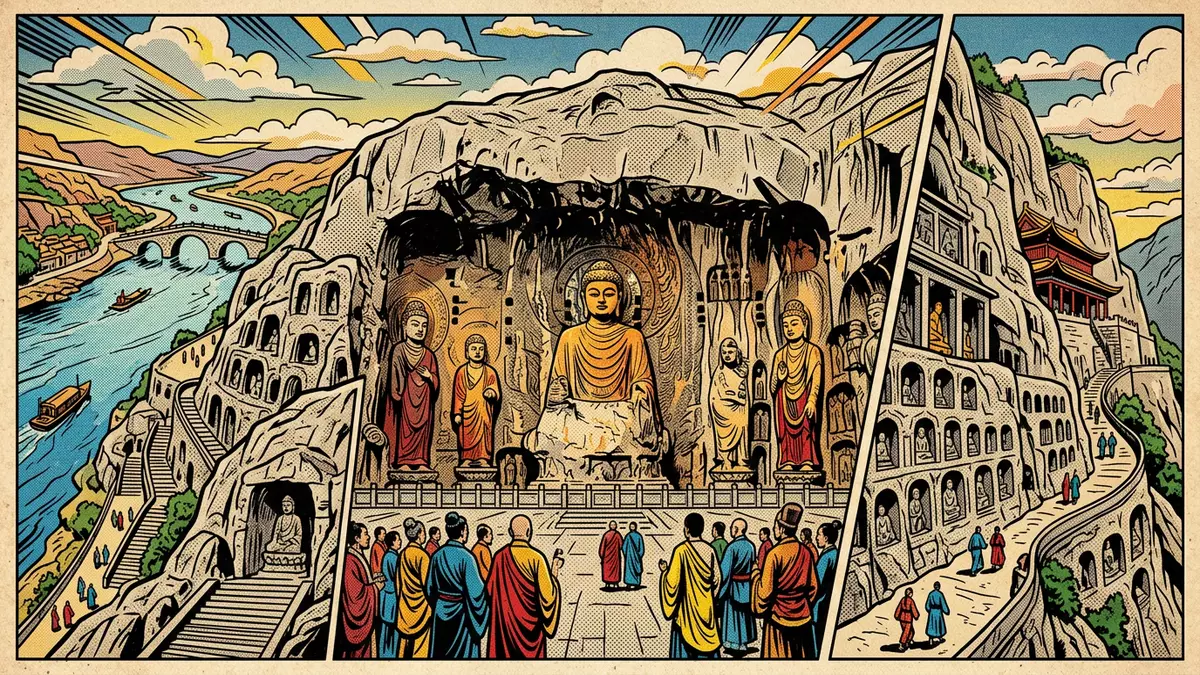
Longmen Shiku extends along limestone cliffs beside the Yi River south of Luoyang. More than 2,300 caves and niches hold almost 110,000 Buddhist stone statues, creating a sculpted landscape shaped by centuries of carving. The site began in 493 under Emperor Xiaowen of the Northern Wei dynasty and received UNESCO World Heritage status in 2000.
Longmen Shiku: Buddhist sculpture beside the Yi River
The grottoes occupy the cliffs of Longmen and Xiangshan, facing each other across the river. Their carved surfaces continue for over 1 km, with chambers, recesses, figures, stupas and inscriptions distributed across the rock.
The setting combines natural limestone with densely worked stone. The river corridor, the opposing hills and the carved cliff faces form a clear spatial arrangement. UNESCO records more than 60 stupas and about 2,800 inscriptions on steles among the statues and niches. UNESCO’s Longmen description
From Northern Wei beginnings to Tang sculpture
Emperor Xiaowen moved the Northern Wei capital to Luoyang in 493, and the first major carving phase began at Longmen. Guyangdong and the Binyang Caves belong to this early period, with Buddhist figures and inscriptions shaped by Northern Wei artistic conventions.
Carving expanded during the Tang dynasty, when Luoyang again held an important imperial position. Tang sculpture at Longmen introduced fuller bodies, more elaborate details and a broader range of expressive faces. The site therefore preserves changes in Chinese Buddhist art across the late fifth to mid-eighth centuries. Longmen’s Northern Wei origins
Fengxian Temple and the Vairocana Buddha
Fengxian Temple contains the largest sculptural group at Longmen. Its central Vairocana Buddha measures 17.14 m (56 ft) in height, with attendant figures arranged across the surrounding rock face.
The cave was completed in 675 during the Tang dynasty. Emperor Gaozong and Empress Wu Zetian are associated with its dedication, while the sculpture presents a formal group of Buddha, disciples, bodhisattvas, heavenly kings and guardians.
The central figure’s scale contrasts with the small niches distributed across other cliff surfaces. This change of scale is visible throughout Longmen Shiku, from tiny devotional images to monumental sculpture. The Vairocana Buddha’s dimensions
Visiting Longmen Shiku: what travellers from Western Europe should know
- Longmen Shiku lies south of Luoyang in Henan province, on both sides of the Yi River. Luoyang is the nearest major city.
- The site follows steep limestone cliffs. Visiting involves walking along riverside routes and approaching carved caves, niches and temples on uneven ground.
- The main sculptural areas include West Hill and East Hill. Fengxian Temple, Guyangdong and the Binyang Caves are named parts of the complex.
- The official language is Mandarin Chinese and the currency is the renminbi.
- Entry requirements depend on your nationality; UK travellers can check the FCDO travel advice at gov.uk/foreign-travel-advice, Irish travellers the Department of Foreign Affairs at ireland.ie.
Searching for Longmen Shiku on social platforms
These links open searches for Longmen Shiku on each platform.Frequently asked questions about Longmen Shiku
Where is Longmen Shiku?
Longmen Shiku is south of Luoyang in Henan province, China. The caves and niches occupy limestone cliffs on both sides of the Yi River.
What can visitors expect at Longmen Shiku?
Visitors encounter riverside paths, steep cliffs, Buddhist caves, inscriptions, stupas and statues ranging from small carved figures to monumental works.
What makes Longmen Shiku distinctive?
Its limestone cliffs contain more than 2,300 caves and niches, almost 110,000 Buddhist statues and the 17.14 m Vairocana Buddha at Fengxian Temple.


