
Lukang Laojie and the red-brick lanes of Changhua
Published on 08/25/2026 at 21:27 | Editorial responsibility: Rafael Müller, Editor-in-Chief AD HOC NEWS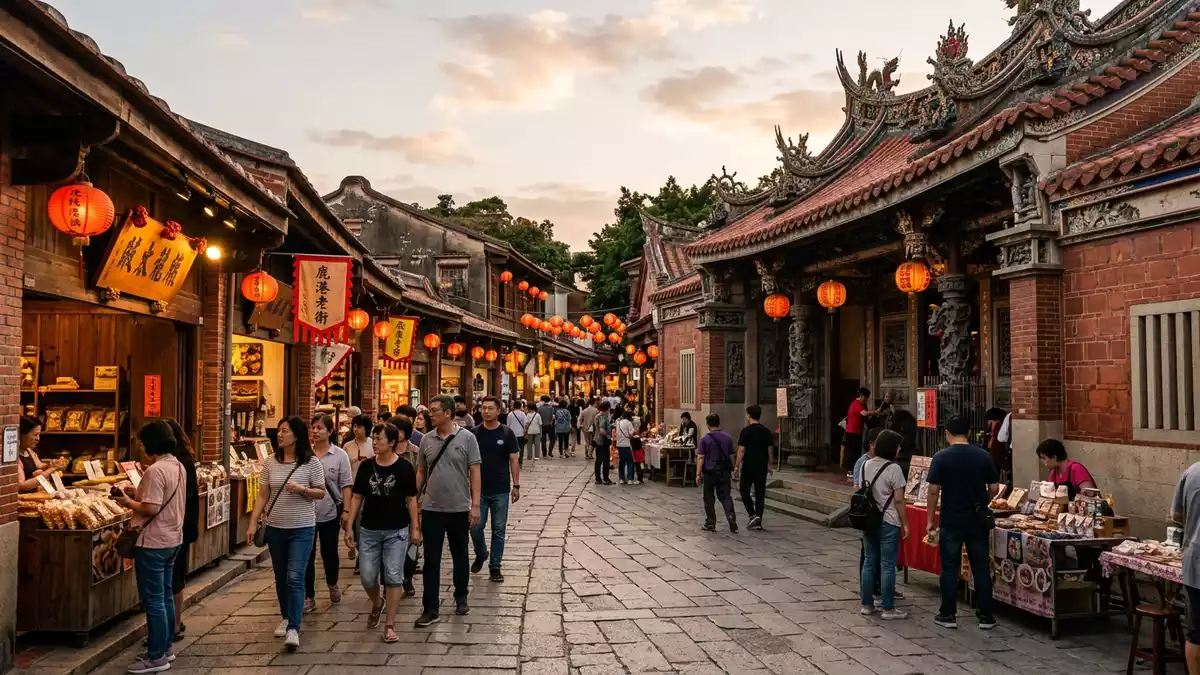
Lukang Laojie in Changhua, Taiwan is a historic street area where red-brick shop houses and winding alleys preserve the fabric of a Qing dynasty commercial town. Centered on Yaolin Street and Putou Street, it forms a compact district of Minnan-style buildings that still frame courtyards, covered walkways and narrow lanes in the heart of Lukang.
Red tiles, curved lanes and Qing-era street life
Lukang Laojie is made up of curved, red-tiled lanes that follow the line of the old town streets rather than a straight grid, with Yaolin, Putou and Dayou streets forming its core.curved, red-tiled lanes On both sides stand shop houses whose brick and timber exteriors have been renovated to reflect traditional Lukang facades, while their interiors retain long, narrow rooms and open courtyards that run back from the street.
The district was designated the Changhua County Historic Street Preservation Zone in 1986, recognising one of Taiwan’s most intact surviving examples of a Qing dynasty Minnan-style commercial street.Historic Street Preservation Zone Many buildings extend in a continuous line with arcaded qilou walkways at ground level, where covered passages allow pedestrians to pass along the front of shop fronts under shelter.arcaded qilou walkways Some facades still show spirit-screen walls and gabled fire walls, details characteristic of Minnan architecture that give the street its layered appearance.
From shop houses to preservation area
Once an important commercial area for Lukang, the streets of Lukang Laojie hold long rows of early storefront buildings and striped Fujian-style structures that reflect how trade and domestic life overlapped in the town.early storefront buildings Shop houses typically combine a narrow frontage with extended interiors, where rooms open onto rear courtyards, providing space for storage, workshops and family life behind the commercial ground floor.
When Lukang Laojie was formally recognised as an ancient street preservation area in 1986, the protected zone encompassed sites such as Yihexing, Xinzu Palace, Guihua Lane and the Lukang Public Hall, with a total length of over 500 m.over 500 m The preservation status helps maintain the street’s characteristic red-brick elevations, tile paving and long shophouse floor plans, so that visitors walking its length experience a continuous sequence of historic frontages rather than isolated buildings.newly renovated old-style shop buildings
Walking Lukang Laojie today
Yaolin Street is a narrow, pedestrian lane that begins at Minquan Road in Lukang’s historical centre and then bends northwest, turning into Putou Street as it continues.pedestrian-only Yaolin Street As the lane winds through the old town, it passes shophouses, small temples and traditional confectionery and craft shops, some of which have been registered as historical buildings under Changhua County’s heritage system.registered as historical buildings
Along the way, side turns lead towards landmarks such as Xinzu Temple and onward to Zhongshan Road and Lukang Tianhou Temple, extending a visit beyond Lukang Laojie itself into the wider historic town.route past Xinzu Temple The combination of covered arcades, brick facades and temple courtyards within short walking distance makes Lukang Laojie a compact place to trace the layout and architecture of a traditional trading town in central Taiwan.
Visiting Lukang Laojie: what travellers from Western Europe should know
- Lukang Laojie lies in Lukang Township in Changhua County on Taiwan’s western plain, with the preserved streets centred on Yaolin Street and Putou Street in the old town.Lukang Township, Changhua County
- The terrain is level, with lanes paved in red tiles and shophouses linked by covered qilou arcades; walking involves negotiating narrow alleys and occasional low steps between street sections.red-brick buildings and qilou
- Within the preserved area, temples such as Xinzu Palace and streets like Guihua Lane and Jiuqu Lane lie a short walk from the main axis, so a visit easily expands into the surrounding historic neighbourhood.Xinzu Palace and Guihua Lane
- The official language is Mandarin Chinese and the currency is the New Taiwan dollar.
- Entry requirements depend on your nationality; UK travellers can check the FCDO travel advice at gov.uk/foreign-travel-advice, Irish travellers the Department of Foreign Affairs at ireland.ie.
Searching for Lukang Laojie on social platforms
These links open searches for Lukang Laojie on each platform.
Frequently asked questions about Lukang Laojie
Where is Lukang Laojie and what area does it cover?
Lukang Laojie is in Lukang Township in Changhua County on Taiwan’s west coast, centred on Yaolin, Putou and Dayou streets in the town’s historic core.Putou, Yaolin and Dayou streets
What can visitors expect when walking Lukang Laojie?
Visitors encounter red-brick shophouses, tiled lanes, covered qilou arcades and small temples and heritage shop fronts, with courtyards and alleys extending behind the main street.Qing dynasty Minnan shophouse floor plan
What makes Lukang Laojie distinctive among Taiwan’s historic streets?
Lukang Laojie is distinctive for its designation as a historic street preservation zone since 1986 and for its continuous sequence of Qing-era Minnan commercial buildings with arcaded walkways and traditional architectural details.one of Taiwan's most intact surviving Qing dynasty Minnan-style commercial streets


