Luxor Temple and the living stone of ancient Thebes
Published on 09/01/2026 at 14:46 | Editorial responsibility: Rafael Müller, Editor-in-Chief AD HOC NEWS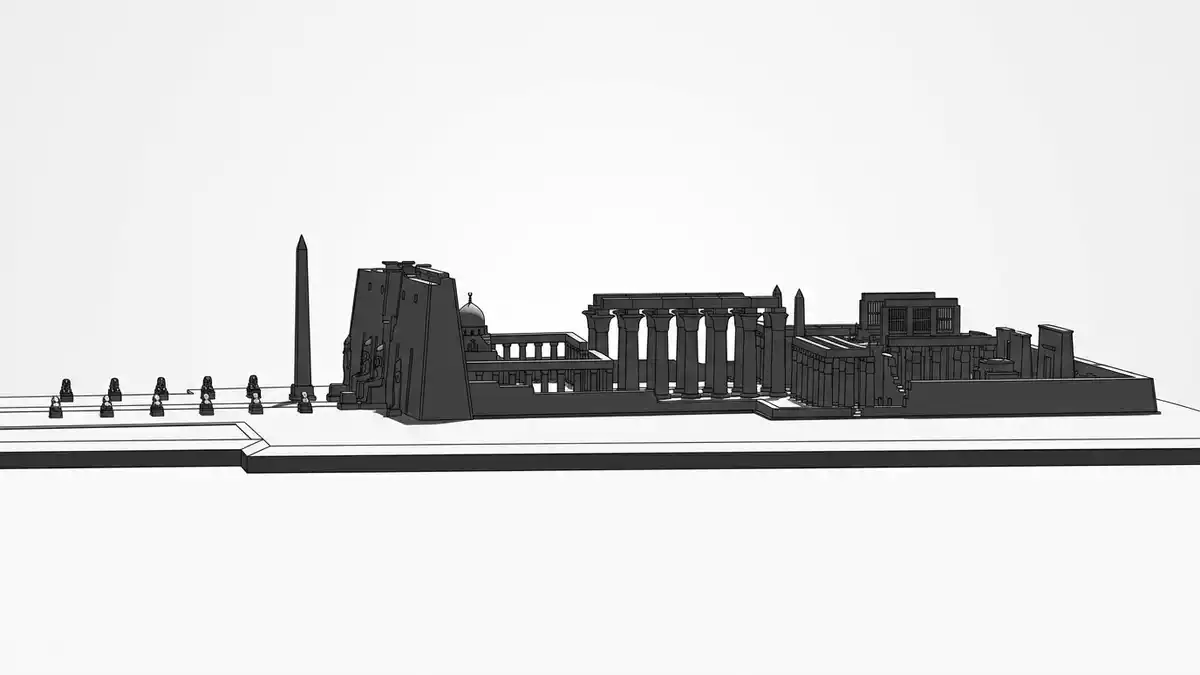
Luxor Temple on the east bank of the Nile in Luxor, Egypt, is a vast New Kingdom sanctuary where successive pharaohs left their names and sandstone architecture in a single unfolding axis. Built chiefly under Amenhotep III in the fourteenth century BC and expanded by Ramesses II in the thirteenth century BC, it preserves an extraordinary sequence of courts, colonnades and chapels that still outline the ceremonial heart of ancient Thebes.
A riverside temple at the heart of ancient Thebes
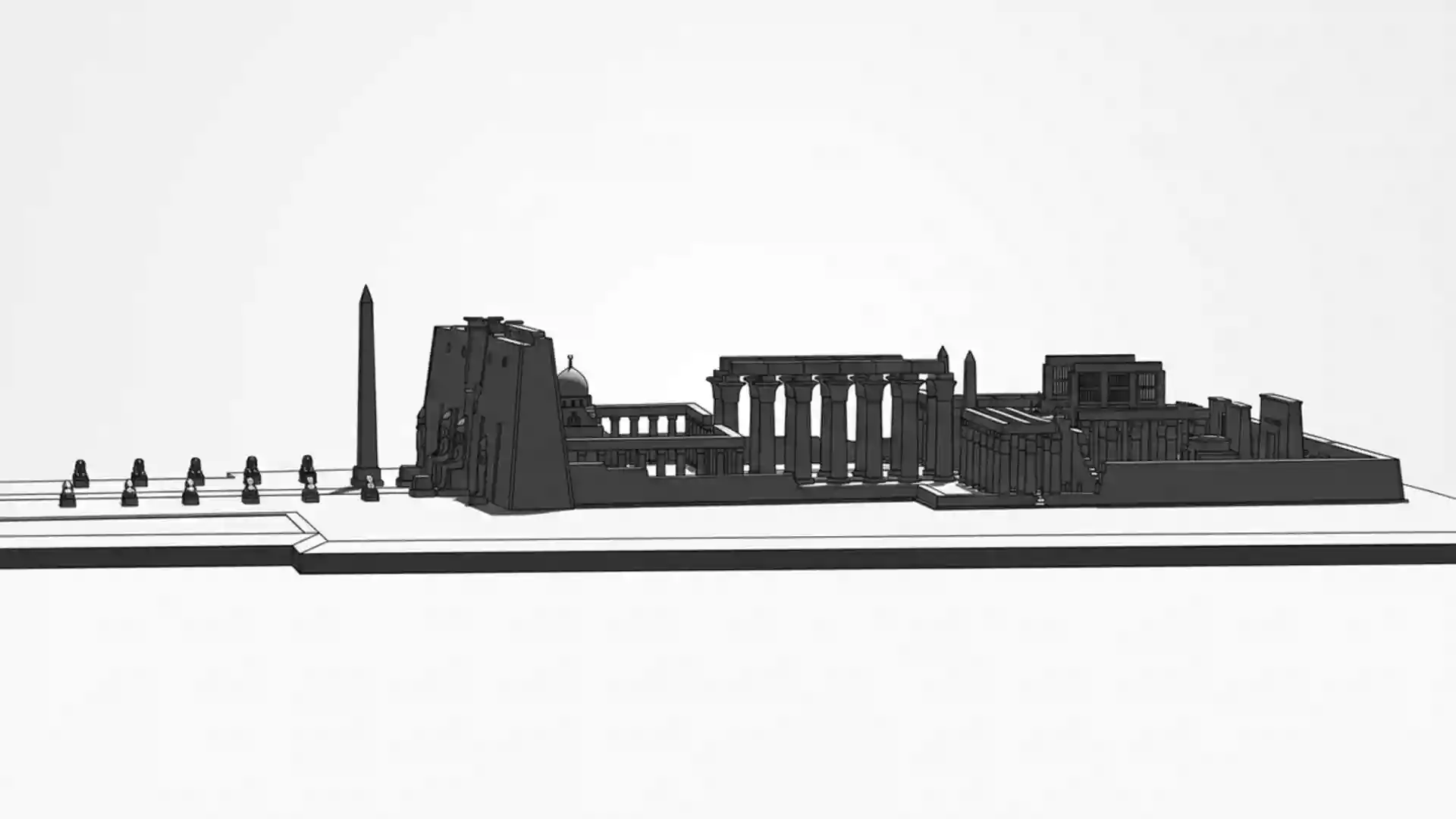
Luxor Temple stands in modern Luxor on the eastern bank of the Nile, aligned broadly parallel to the river and facing towards the former processional route from Karnak Temple. The ancient Egyptians called it Ipet-resyt, “the southern sanctuary”, a name that reflects its position within the wider sacred landscape of Thebes.Ipet-resyt, “Southern Sanctuary” Today the temple complex is surrounded by the streets of Luxor, yet the long stone axis from the entrance pylon through courts and halls still reads clearly in the ground plan.
The oldest identifiable structures at Luxor Temple belong to the eighteenth dynasty, when Hatshepsut and later Amenhotep III built shrines and the main core of the temple.Eighteenth Dynasty remains This New Kingdom focus gives the architecture a characteristic sequence: open courtyards near the river, roofed hypostyle halls deeper inside, and sanctuaries at the far end where the cult statues of the gods once stood.New Kingdom temple architecture
Courts, colonnades and the work of Amenhotep III and Ramesses II
The core of Luxor Temple, including the great colonnade and sun court, was built under Amenhotep III, who reigned in the late eighteenth dynasty.Amenhotep III and the core His work established the long central axis, lined with high sandstone columns whose capitals bloom above visitors as they walk between them, and framed open courts that once caught the light from the Nile valley.
Ramesses II, of the nineteenth dynasty, extended the complex at the northern end by adding a monumental pylon and his own forecourt, decorated with colossal statues and originally flanked by obelisks.Ramesses II pylon and court One of these obelisks stands today in Paris, while its partner remains at Luxor, marking the formal entrance to the temple axis.obelisks at Luxor and in Paris Behind this pylon, the sequence of spaces passes from open court to colonnade and into darker halls, giving a clear physical sense of progression towards the inner sanctuary.
The Theban triad and a temple used across 3,000 years
Luxor Temple is dedicated primarily to the Theban triad of Amun, his consort Mut, and their son Khonsu, the same group of deities honoured at nearby Karnak.temple dedicated to Amun, Mut and Khonsu In New Kingdom times it played a central role in the Opet Festival, when statues of these gods were carried in procession from Karnak to Luxor along the avenue of sphinxes that once linked the two complexes.Opet Festival processions
Use of the site continued far beyond the pharaonic period. In the Roman era, parts of the temple were incorporated into a fortress and administrative centre for the region, and later a church occupied space within the complex.Roman and later reuse A mosque now rises above one of the courtyards, sitting directly over ancient columns and chapels, so that layers of worship in stone and later brick share the same footprint.
Visiting Luxor Temple: what travellers from Western Europe should know
- Luxor Temple stands in central Luxor on the east bank of the Nile, a short walk from the riverside corniche and close to Luxor railway station.
- The ground inside the complex is largely level but surfaces vary between stone paving and compacted earth, with flights of steps leading into some halls and chapels.
- The wider setting includes the remains of the avenue of human-headed sphinxes running towards Karnak Temple, parts of which can be seen extending away from the entrance.
- The official language is Arabic and the currency is the Egyptian pound.
- Entry requirements depend on your nationality; UK travellers can check the FCDO travel advice at gov.uk/foreign-travel-advice, Irish travellers the Department of Foreign Affairs at ireland.ie.
Searching for Luxor Temple on social platforms
These links open searches for Luxor Temple on each platform.
Frequently asked questions about Luxor Temple
Where is Luxor Temple and what kind of place is it?
Luxor Temple is a large ancient Egyptian temple complex in Luxor in southern Egypt, on the east bank of the Nile River.
What can visitors expect when entering the temple complex?
Visitors move from a monumental pylon and forecourt through long colonnades and roofed halls into more enclosed chapels and sanctuaries.
What makes Luxor Temple distinctive among Egyptian temples?
Its long axial layout, major building phases under Amenhotep III and Ramesses II, and continuous reuse from pharaonic times through Roman, Christian and Islamic periods give it unusual architectural depth.