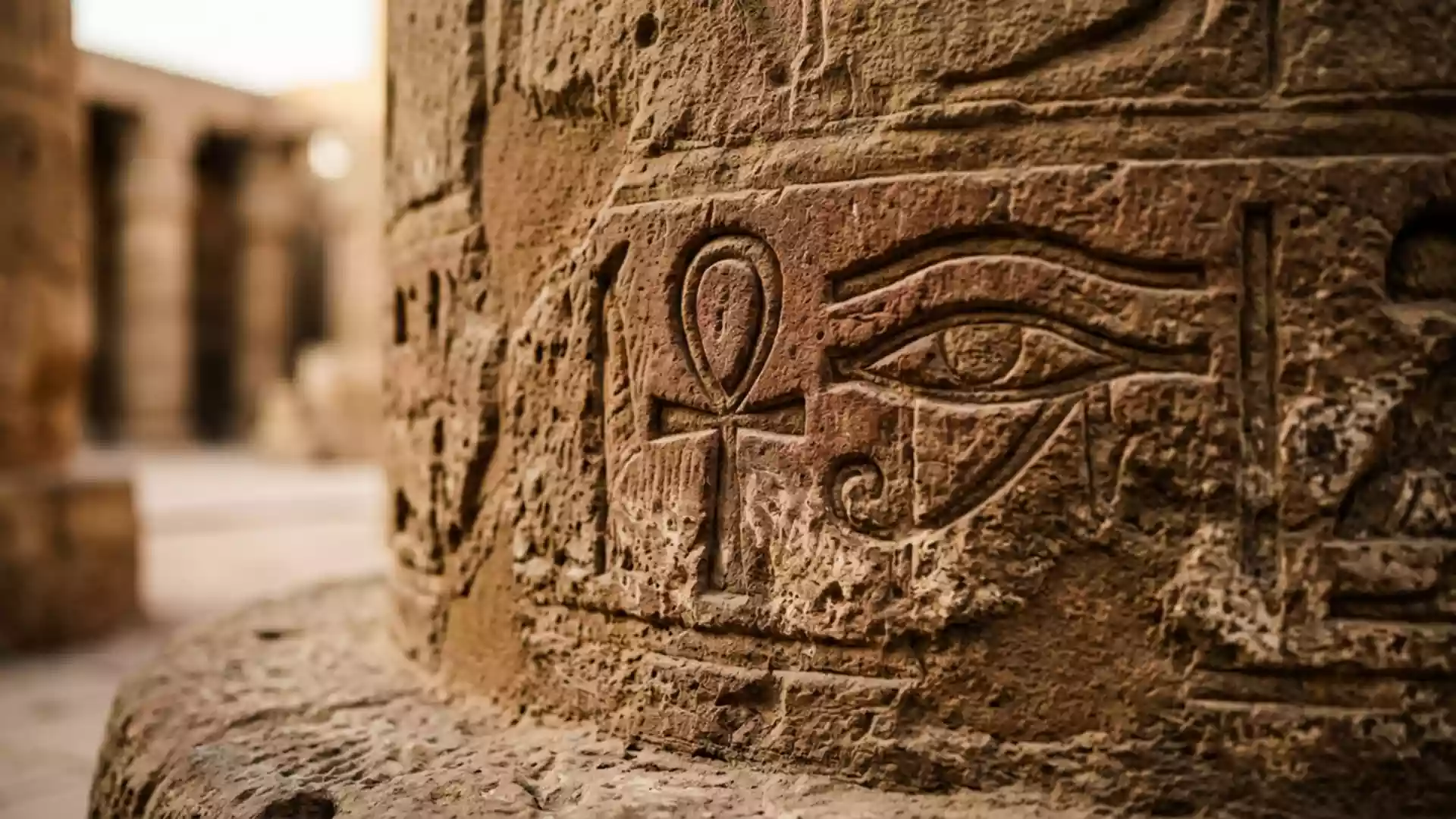
Luxor Temple in Luxor: an ancient processional stage
Published on 08/17/2026 at 13:32 | Editorial responsibility: Rafael Müller, Editor-in-Chief AD HOC NEWS
Luxor Temple on the east bank of the Nile in Luxor is an ancient sanctuary shaped over many centuries, from the New Kingdom work of Amenhotep III to later Roman and Islamic layers.
A riverside temple at the heart of ancient Thebes
Luxor Temple stands in Luxor, the city that once formed part of ancient Thebes, on the east bank of the Nile River opposite the cultivated floodplain.
The core of the complex dates to the eighteenth dynasty, when Amenhotep III commissioned a stone temple dedicated to the god Amun together with his consort Mut and their son Khonsu, the Theban triad.Amenhotep III of the late eighteenth dynasty Luxor Temple was known to the ancient Egyptians as Ipet-resyt, the “Southern Sanctuary”, a name that reflects its position within the wider sacred landscape of Thebes.Ipet-resyt, Southern Sanctuary
The temple is aligned broadly parallel to the riverbank and lies several kilometres south of Karnak Temple, with which it was connected by an avenue of sphinxes forming a ceremonial processional way.an avenue of sphinxes linked Luxor and Karnak The temple complex formed part of the fabric of New Kingdom Thebes, a city that combined palaces, shrines and cemeteries on both banks of the Nile.
Pharaohs, dynasties and a layered building history
The earliest extant structures at Luxor Temple belong to the Eighteenth Dynasty, with evidence for a shrine of Hatshepsut and a major building phase under Amenhotep III around the fourteenth century BC.a shrine of Hatshepsut and the core of Amenhotep III The main stone temple built by Amenhotep III dates to about 1400 BCE and established the axial layout that later rulers expanded.Amenhotep III around 1400 BCE
Subsequent pharaohs of the eighteenth dynasty, including Tutankhamun and Horemheb, added columns, statuary and reliefs, re-inscribing the temple after the religious changes under Akhenaten.completed by Tutankhamun and Horemheb In the nineteenth dynasty, Ramesses II transformed the appearance of the temple entrance by constructing a large pylon and an open forecourt decorated with colossal statues.Ramesses II added the pylon and court Later, in the Ptolemaic and Roman periods, chapels and a fort were inserted into and around the original Egyptian structures, and during the mediaeval Islamic period a mosque dedicated to Abu Al Haggag was established within one of the temple courts.a Roman fort and Abu Al Haggag mosque
Across its history Luxor Temple has carried different religious roles, from a New Kingdom house of Amun and a place for royal rites to a Roman military and administrative centre and a site of Christian and Islamic worship.
Processional architecture: courts, colonnades and sacred rooms
Luxor Temple presents a sequence of spaces arranged along a strong east–west axis, leading from the monumental pylon attributed to Ramesses II through open courts and columned halls towards more enclosed sanctuaries.
Beyond the entrance pylon lies the Forecourt of Ramesses II, flanked by colossal statues and once accompanied by standing obelisks that marked the threshold between the outer world and the temple interior.the first court and pylon of Ramesses II A long processional colonnade, whose foundations were laid by Amenhotep III and which was completed and decorated under Tutankhamun, connects this forecourt to the large court of Amenhotep III.Amenhotep III’s court and colonnade completed by Tutankhamun
South of Amenhotep III’s court stands a hypostyle hall with papyrus-bundle columns, leading deeper into chapels and offering rooms that formed the sacred heart of the temple.a hypostyle hall with papyrus columns Reliefs carved on the walls record religious scenes, including episodes tied to the annual Opet festival that linked Luxor Temple with Karnak.
The density of architectural details, from carved column capitals to reused blocks bearing older inscriptions, reflects the long building history of Luxor Temple and the way successive rulers inserted their own images and texts into an existing sacred framework.
Visiting Luxor Temple: what travellers from Western Europe should know
- Luxor Temple stands in central Luxor on the east bank of the Nile and is reached by road from Luxor’s railway station and airport.
- The complex includes uneven stone pavements, broad exterior courts and interior halls with steps and raised thresholds, so moving through it involves walking on ancient surfaces.
- The wider site lies within the city, with the Nile River and the remains of the avenue of sphinxes nearby, and views across to the West Bank from some open areas.
- The official language is Arabic and the currency is the Egyptian pound. Entry requirements depend on your nationality; UK travellers can check the FCDO travel advice at gov.uk/foreign-travel-advice, Irish travellers the Department of Foreign Affairs at ireland.ie.
Searching for Luxor Temple on social platforms
These links open searches for Luxor Temple on each platform.Frequently asked questions about Luxor Temple
Where is Luxor Temple located?
Luxor Temple is located in Luxor in southern Egypt, on the east bank of the Nile River a short distance south of Karnak Temple.
What can visitors expect to see inside Luxor Temple?
Visitors encounter monumental courts, a long processional colonnade, a hypostyle hall with carved columns, chapels, relief-covered walls and the mosque of Abu Al Haggag within an ancient court.
What makes Luxor Temple distinctive among Egyptian temples?
Luxor Temple is distinctive for its long building history under rulers such as Amenhotep III, Tutankhamun and Ramesses II and for later Roman, Christian and Islamic additions within the same complex.