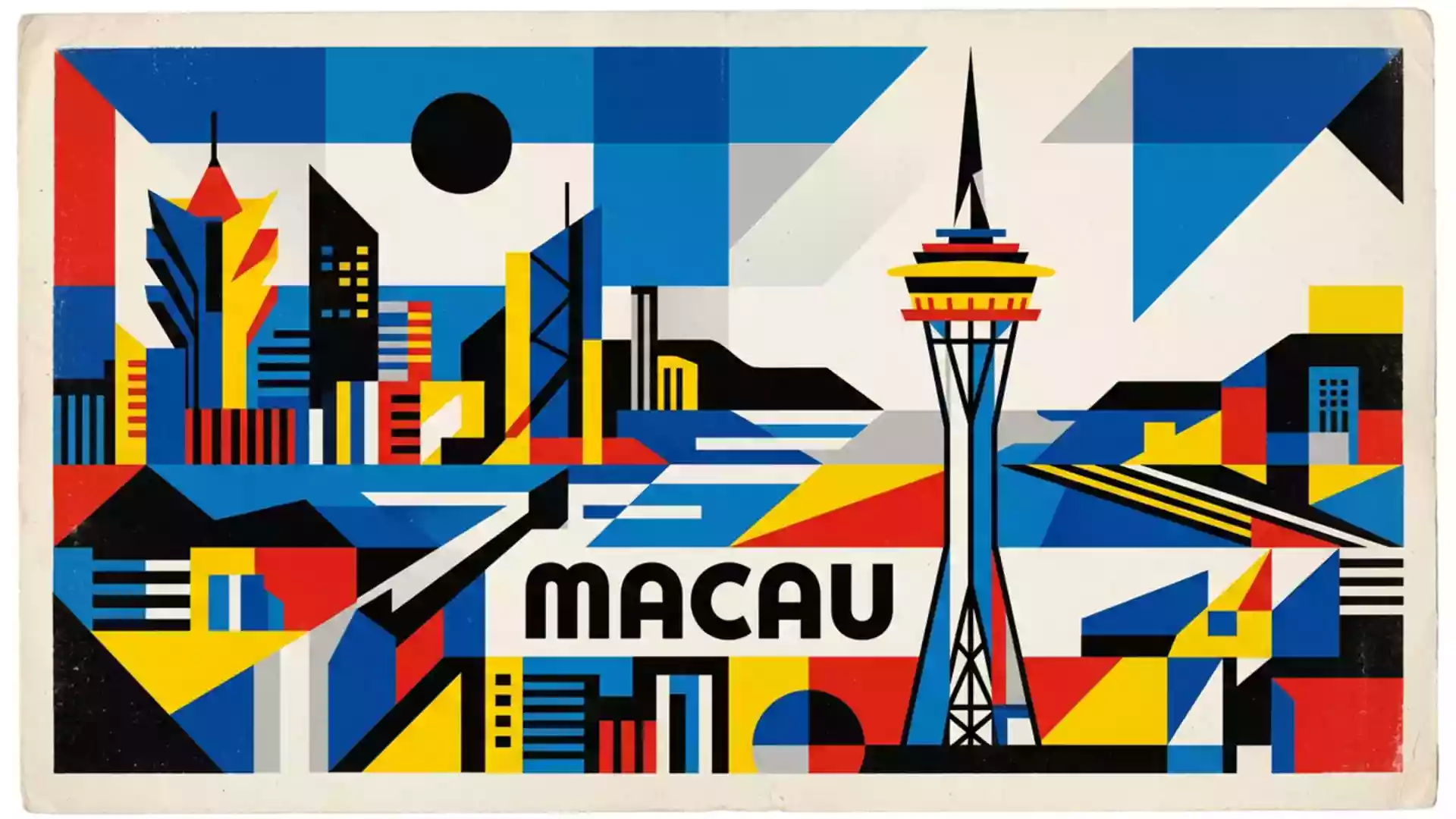
Macau Tower and the vertical face of modern Macau
Published on 08/14/2026 at 14:07 | Editorial responsibility: Rafael Müller, Editor-in-Chief AD HOC NEWS
Macau Tower is a slender concrete and steel landmark on Macau’s waterfront, rising to 338 m (1,109 ft) and turning views of the city into a vertical experience of height and horizon.
A freestanding tower built for the skyline
Macau Tower stands in the reclaimed waterfront district west of the historic Macau Peninsula, facing Nam Van Lake and the low islands and estuaries of the Pearl River Delta. The tower forms the centrepiece of a larger convention and entertainment complex, with a broad podium at its base and a single, tapering shaft that carries the observation decks and broadcast structures high above the city. The shaft rises from a reinforced concrete foundation and narrows gradually as it climbs, before flaring again into a thicker section that houses the main viewing levels and a circular platform above.Macau Tower has a total height of 338 metres from ground to the highest point and stands among the taller freestanding urban towers built at the turn of the twenty-first century.The official opening took place on 19 December 2001
Planning for the tower dates to the late 1990s, when Macau was preparing for the end of four centuries of Portuguese administration and its transfer to China as a special administrative region in 1999.Construction work started in 1998, and the structure reached completion in 2001 as a statement of contemporary engineering at the edge of the estuary. The design is associated with New Zealand architect Gordon Moller, working through the practice Craig Craig Moller, and with structural engineers Beca Carter Hollings & Ferner. The tower belongs to the family of late twentieth-century telecommunications and observation towers that combine broadcasting infrastructure with public viewing decks and hospitality spaces.The wider complex is formally known as the Macau Tower Convention & Entertainment Centre, a title that reflects its multiple uses.
Observation decks and the panorama of the Pearl River Delta
Above the shaft, a band of enclosed floors and terraces forms the main cluster of observation facilities, restaurants and event spaces. The principal indoor observation deck sits more than 220 m (around 730 ft) above ground, with wide picture windows giving a 360-degree view across Macau’s compact peninsula, the isthmus linking it to Taipa, and the bridges and causeways that cross the water. From here the city’s layered character is visible at once: the low, tiled roofs of older neighbourhoods, modern casino towers, reservoirs and lakes, and the flat expanses of reclaimed land projecting into the bay.The main observation deck is documented at 223 metres above ground, with further viewing levels extending slightly higher.
Sections of the floor on some levels use thick glass panels, letting visitors look straight down to the roads and waterfront below and measure the tower’s height against the streets and waterlines of Macau. Outside, open-air terraces ring portions of the decks, exposing the shaft, support structures and balustrades that hold the circular platforms in place. In clear conditions, the view reaches across the estuary towards mainland China and, in the far distance, the direction of Hong Kong across the Pearl River Delta. The decks are used not only for casual viewing but also for dining, events and conferences, and they connect by lifts and internal stairways to the rest of the convention and retail spaces in the podium.
Adventure platforms on a vertical playground
Macau Tower is known for turning its upper decks into an organised adventure zone, with commercial activities that use the outer rim, mast and façade as controlled high-altitude routes. The most visible of these is the Skywalk, a guided circuit along a narrow walkway that runs around the outer circumference of one of the high levels. Participants wear harnesses clipped to a continuous rail fixed above head height and move along a path without intermediate fencing between the walkway and the drop, with the tower’s concrete shaft and steel framing rising on one side and the open air on the other.The Skywalk route is described as encircling the observation deck at around 223 metres above ground, using the existing maintenance ledges and structural brackets as the basis for the path.
Another signature activity is the bungee jump, in which participants step from a platform near the top of the tower attached to elastic cords and guide lines anchored to the structure. The jump uses a combination of ropes, pulleys and damping systems to manage descent and rebound, with a landing platform arranged well below the main decks. The tower also hosts variations such as vertical descents along fixed cables and climbs that lead further up the mast above the highest enclosed floor, all framed as commercial adventure experiences operated by specialist companies. These activities make the upper parts of Macau Tower a layered stack: enclosed lounges and restaurants at one level, open terraces and viewing rails at another, and exposed walkways and jumping platforms further out, all projecting from the core shaft.
Visiting Macau Tower: what travellers from Western Europe should know
- Macau Tower stands on the Macau Peninsula near Nam Van Lake, in the western waterfront district of the city’s reclaimed land. It is reached by urban road connections and local bus routes that link the peninsula with Taipa and the Outer Harbour ferry terminals.
- The interior approach from the ground level to the observation decks is entirely indoors, using lifts and escalators in the podium to reach the main tower elevators; the ascent within the shaft itself is by high-speed lift rather than stairs.
- The surrounding ground is level, with paved plazas and access roads around the base; once inside the complex, moving between shops, exhibition spaces and tower entrances involves standard mall-style corridors and occasional short staircases or ramps.
- Macau lies in subtropical southern China, with hot, humid summers and milder winters; on high decks wind exposure is stronger than at street level, and the outer adventure platforms operate in weather conditions that permit safe use.
- The official language is Chinese and the currency is the Macanese pataca; Hong Kong dollars circulate alongside but are a separate currency.
Searching for Macau Tower on social platforms
These links open searches for Macau Tower on each platform.Frequently asked questions about Macau Tower
Where is Macau Tower located within Macau?
Macau Tower rises on the western side of the Macau Peninsula in southern China, in a reclaimed waterfront area near Nam Van Lake and the city’s bridges.
What can visitors expect on a visit to Macau Tower?
Visitors encounter indoor and outdoor observation decks at over 220 m above ground, restaurants, retail spaces and, for those who choose them, organised adventure activities on the tower’s outer rim and upper platforms.
What makes Macau Tower distinctive among urban towers?
The combination of a 338 m freestanding tower, high observation decks above the Pearl River Delta and commercial adventure routes around its upper structure gives Macau Tower a particularly vertical character compared with many city landmarks.