
Machu Picchu and the stone ridge above Aguas Calientes
Published on 09/18/2026 at 17:22 | Editorial responsibility: Rafael Müller, Editor-in-Chief AD HOC NEWS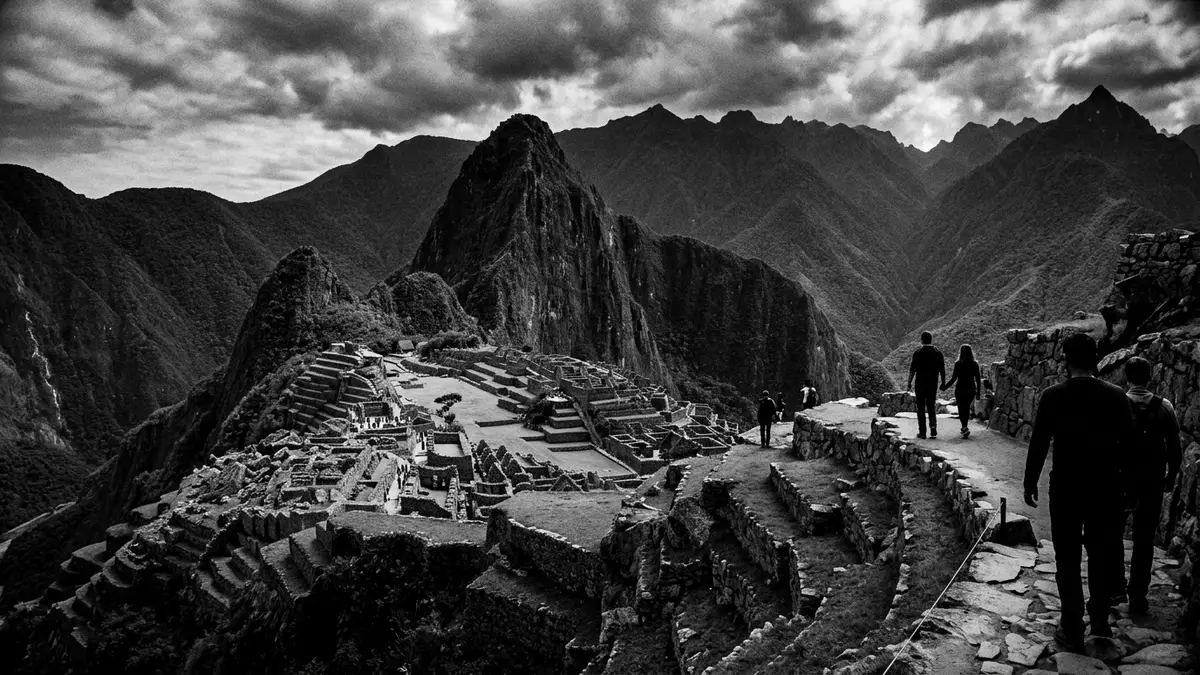
Machu Picchu rises from a narrow ridge above Aguas Calientes in Peru’s Cusco region. The Inca citadel is a stone complex of terraces, walls and ramps, set at more than 2,400 m (7,874 ft) above sea level and linked to the reign of Pachacuti.
Inca stonework on a mountain ridge
The settlement belongs to the fifteenth century and carries the formal name Historic Sanctuary of Machu Picchu. The site is associated with the Inca Empire, whose builders left a dense arrangement of dry-stone walls, agricultural terraces and ceremonial spaces across the ridgeHistoric Sanctuary.
The landscape around it is part of the eastern Andes, where the mountain slopes fall towards the upper Amazon basin. UNESCO records the place as a mixed World Heritage property, combining cultural and natural values within the protected sanctuarymixed World Heritage property.
Terraces, walls and the line of the ridge
The built fabric is what gives the place its force: fitted stone blocks, stepped platforms and enclosed precincts sit against the ridge rather than on a level plain. The arrangement includes walls, ramps and open spaces that follow the slope of the mountain.
That relationship between architecture and terrain is visible in the way terraces descend in bands and the masonry keeps close to the rock. The result is a compact hilltop city with a strong horizontal profile against the steep Andean setting.
Pachacuti and the fifteenth-century sanctuary
The historical framework centres on Pachacuti, the ruler usually linked with the site’s establishment in the fifteenth century. The sanctuary was abandoned after the Inca Empire fell to the Spaniards in the sixteenth century, and it remained outside wider knowledge for centuriesPachacuti.
The place’s recorded importance lies in that blend of imperial association, mountain setting and survival of substantial architecture. The formal designation and the preserved ridge-top layout make it one of the defining Andean archaeological landscapesAndean archaeological landscapes.
Visiting Machu Picchu: what travellers from Western Europe should know
- The site lies above Aguas Calientes in the Cusco region of Peru. Rail services and road access lead to the district, with the final approach rising into the mountain sanctuary.
- The terrain is steep and the altitude is high. Paths, steps and terraces make the interior a walk across changing levels rather than a flat visit.
- The stone architecture is exposed and close to the ridge edge in many places. Walls, platforms and open courtyards dominate the plan.
- English is not an official language in Peru; the official language is Spanish and the currency is the Peruvian sol.
- Entry requirements depend on your nationality; UK travellers can check the FCDO travel advice at gov.uk/foreign-travel-advice, Irish travellers the Department of Foreign Affairs at ireland.ie.
Searching for Machu Picchu on social platforms
These links open searches for Machu Picchu on each platform.
Frequently asked questions about Machu Picchu
Where is Machu Picchu?
It stands above Aguas Calientes in the Cusco region of Peru, on a mountain ridge in the Andes. The sanctuary forms part of a larger protected landscape around the citadel.
What does a visit involve?
The place is defined by stone terraces, ramps, walls and steep levels rather than broad streets. The altitude and the uneven ground shape the way the site is experienced.
What makes Machu Picchu distinctive?
The combination of Inca masonry, ridge-top setting and formal World Heritage status gives it a clear identity. Its fifteenth-century origin and strong survival of built fabric remain central to its character.


