
Matsumoto-jo, the black flatland castle of central Japan
Published on 09/19/2026 at 12:28 | Editorial responsibility: Rafael Müller, Editor-in-Chief AD HOC NEWS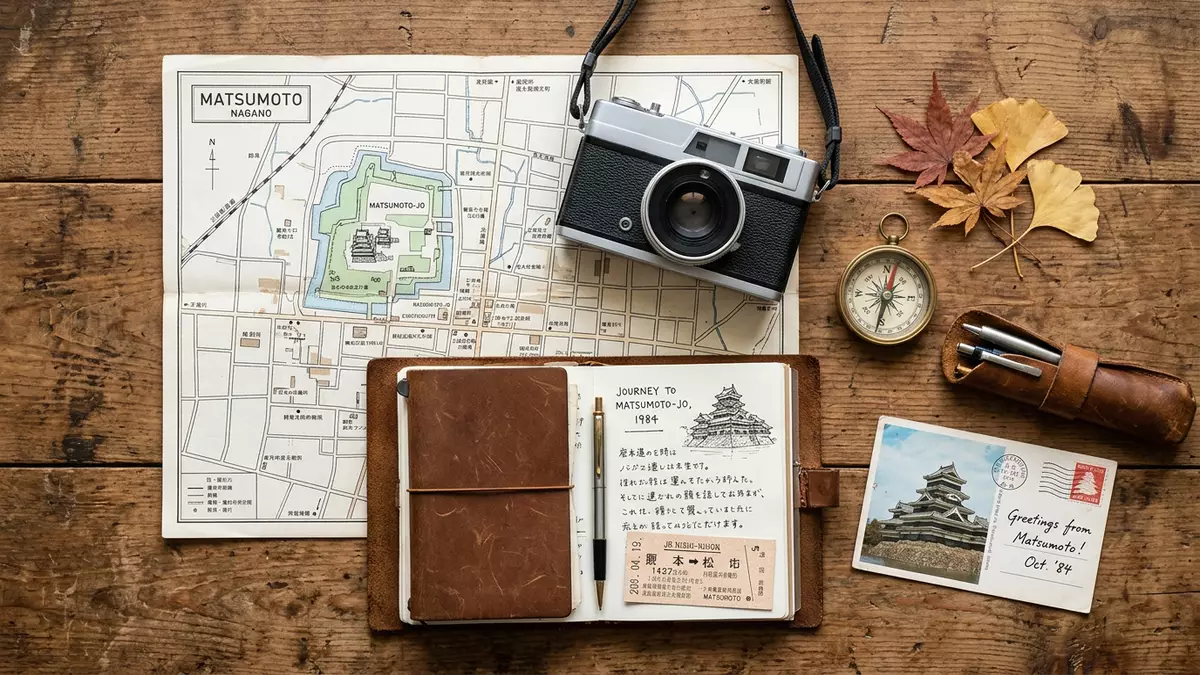
Matsumoto-jo, better known in English as Matsumoto Castle, is a striking flatland fortress in Matsumoto City in Nagano Prefecture, with a black timber tower mirrored in a broad moat and backed by the peaks of central Japan. Completed in the late sixteenth century in the Azuchi–Momoyama period, its multi-storey wooden keep survives in its original structure and is classified as a National Treasure of Japan.
A black timber castle on a flat plain
Matsumoto-jo stands on level ground rather than a hill, a type of fortification known in Japanese as a hirajiro, or flatland castle, laid out within moats and earthen defences on the plain at Matsumoto.a hirajiro flatland castle The site lies in the Marunouchi district of the city, in central Honshu, surrounded at distance by the Northern Japan Alps, so the dark silhouette of the keep rises above still water with mountain ridges in the background.flatland fortress in Matsumoto City
The central keep is clad in dark timber and plaster that has given Matsumoto-jo the nickname “Crow Castle”, a contrast to paler stone fortifications elsewhere in Japan.black lacquer earning the nickname Crow Castle The tower rises in stacked levels above stone foundations, with defensive openings and overhanging sections, and is linked by covered passages to subsidiary turrets that together form what castle historians describe as a connected-complex plan.
A sixteenth-century stronghold that survived intact
The origins of Matsumoto-jo lie in the early sixteenth century, when a first fortification known as Fukashi Castle was established on the site by the Ogasawara clan during the Eisho era in the Sengoku period.Fukashi Castle by the Ogasawara clan In the 1590s the stronghold was redeveloped under Ishikawa Kazumasa and his son Ishikawa Yasunaga, vassals associated with Toyotomi Hideyoshi, and the main keep achieved its present late Azuchi–Momoyama form.
The wooden tower is a five-storey structure with six internal floors, one concealed between the exterior levels, completed in 1594 according to several historical accounts.current form completed in 1594 Matsumoto-jo later served as the seat of the Matsumoto Domain under the Tokugawa shogunate in the early Edo period, and the castle’s surviving wooden keep is regarded as one of Japan’s few original multi-storey castle towers.
National Treasure status and interior wooden spaces
Matsumoto-jo is designated a National Treasure of Japan, a formal status shared with only a small number of other castle keeps including those at Hikone, Himeji and Inuyama.one of four castles designated National Treasures This recognition reflects both the age of the main tower and its survival with original timber framing and interior floors rather than modern concrete reconstruction.
Inside the keep, steep wooden staircases climb through successive floors, and structural beams, planks and roof spaces remain visible, giving a clear sense of late sixteenth-century Japanese castle construction.one of the most complete among Japan's original castles Narrow passages link the main tower to attached turrets, and openings built into the walls once served defensive purposes, set above the encircling moat and inner compounds.
Visiting Matsumoto-jo: what travellers from Western Europe should know
- Matsumoto-jo stands in the Marunouchi district of Matsumoto City in Nagano Prefecture on the island of Honshu, within walking distance of JR Matsumoto Station on the main railway line through the city.
- The castle grounds are relatively level because Matsumoto-jo is a flatland fortress, but the climb inside the wooden keep involves a series of steep staircases between narrow floors.
- Matsumoto-jo stands in central Honshu, bordered by mountain ranges known collectively as the Japanese Alps, so the approach through the city streets brings the castle into view with distant peaks behind.
- The official language is Japanese and the currency is the yen.
- Entry requirements depend on your nationality; UK travellers can check the FCDO travel advice at gov.uk/foreign-travel-advice, Irish travellers the Department of Foreign Affairs at ireland.ie.
Searching for Matsumoto-jo on social platforms
These links open searches for Matsumoto-jo on each platform.
Frequently asked questions about Matsumoto-jo
Where is Matsumoto-jo located?
Matsumoto-jo stands in Matsumoto City in Nagano Prefecture in central Honshu, Japan, on a flat plain bordered by the Japanese Alps.
What should visitors expect inside the castle?
Visitors encounter original wooden interiors, steep staircases between narrow floors and views over the surrounding moat and city from the upper levels of the keep.
What makes Matsumoto-jo distinctive among Japanese castles?
Matsumoto-jo combines a black-timber flatland fortress layout, a late sixteenth-century multi-storey wooden keep and National Treasure status, all preserved in an original structure.


