Medina of Tripoli's narrow streets and Ottoman layers
Published on 08/09/2026 at 15:10 | Editorial responsibility: Rafael Müller, Editor-in-Chief AD HOC NEWS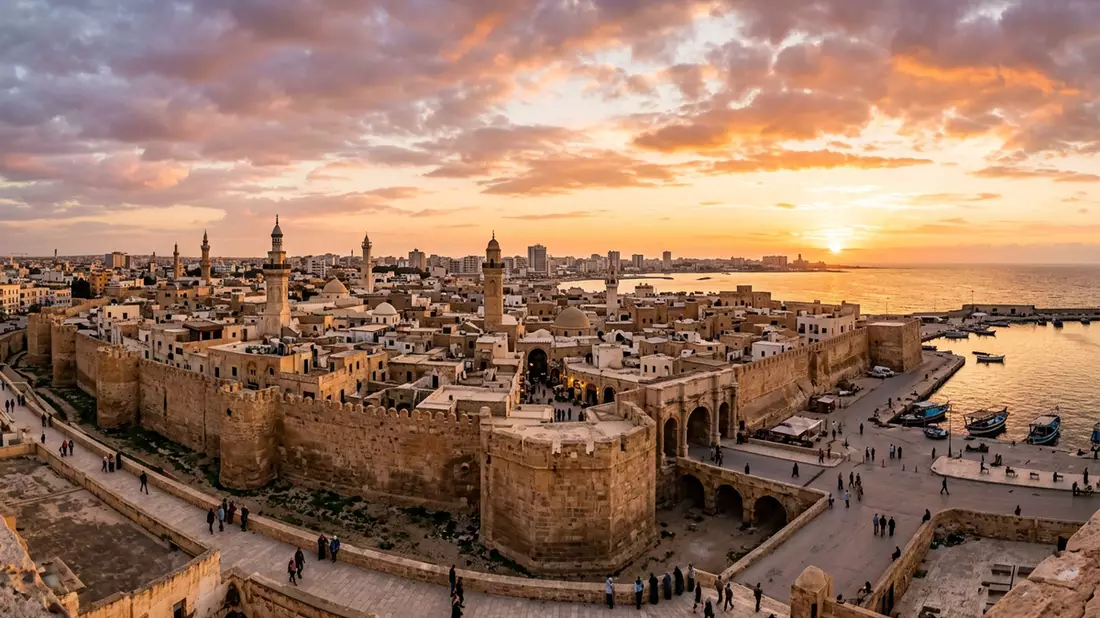
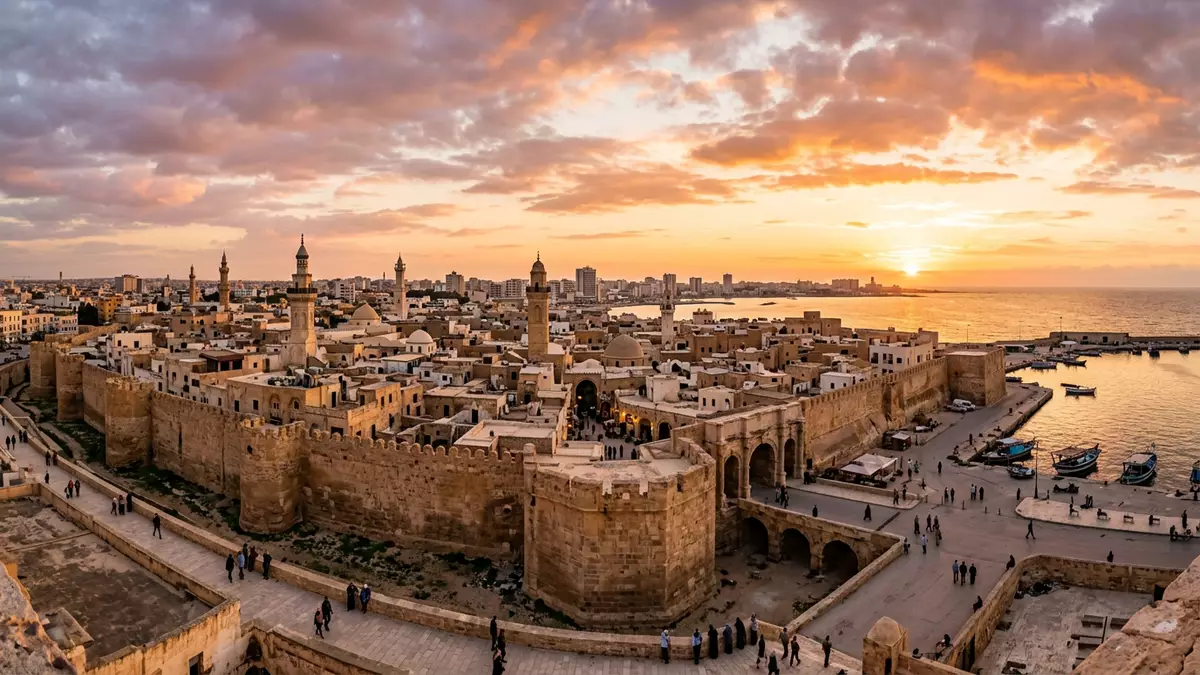
Medina of Tripoli is the old walled core of Tripoli, the capital of Libya, where narrow streets, caravan-era fabric and later Ottoman layers sit close together. Its fabric includes mosques, souks and religious schools, with the Red Castle nearby as the city’s best-known landmark.
Tripoli’s old city in stone and plaster
The medina’s lanes are tight and irregular, with whitewashed walls, projecting balconies and carved doorways that break up long street fronts. Stone, plaster and timber appear in different combinations, and the result is a dense historic quarter rather than a single grand monument.
Tripoli became an important coastal city under the Ottomans, and that heritage is visible in mosques and urban houses across the old centre. Mamluk and earlier Islamic phases also left traces in the street pattern and in the surviving religious buildings.
Mosques, markets and civic memory
Among the medina’s best-known structures are the Gurgi Mosque and the Karamanli Mosque, both part of the city’s Islamic architectural legacy. Their courtyards, domes and decorated interiors sit within streets that also hold shops, small workshops and everyday urban life.
The old city is not a museum district cut off from its surroundings. It remains a lived-in quarter, where historic buildings stand alongside market activity and routine movement through the lanes.
A layered historic centre on the Mediterranean coast
Medina of Tripoli reflects the long history of a port city that linked the Maghreb with Mediterranean trade routes. Its value lies in that combination of urban texture, religious architecture and coastal position.
The nearby Red Castle adds a powerful visual anchor on the edge of the old city. Together, the castle, the medina streets and the mosques give Tripoli a centre that reads as layered rather than uniform.
Visiting Medina of Tripoli: what travellers from Western Europe should know
- It is in central Tripoli, on Libya’s Mediterranean coast, and is reached from the city by road.
- Admission arrangements and opening hours are set by the site's operator and change with the season; the official website is the only binding source.
- Late afternoon suits the old streets well, when the light is softer on the facades.
- The ground is uneven in places, with narrow lanes and walking surfaces that vary from street to street.
- Arabic is the main language in everyday use, and cash remains useful in small shops and markets.
- Entry requirements depend on your nationality. UK travellers should check the FCDO travel advice at gov.uk/foreign-travel-advice; Irish travellers the Department of Foreign Affairs at ireland.ie; EU and EEA citizens their own national foreign ministry.
Searching for Medina of Tripoli on social platforms
These links open searches for Medina of Tripoli on each platform.
Frequently asked questions about Medina of Tripoli
Where is Medina of Tripoli?
It is the historic centre of Tripoli, the capital of Libya, on the Mediterranean coast. The old quarter sits within the city rather than apart from it.
What should visitors expect?
Expect compact streets, historic mosques, market activity and a dense urban fabric. Walking conditions vary, so comfortable shoes matter.
What makes it distinctive?
Its character comes from the mix of Ottoman, Mamluk and older Islamic layers in one old city. The nearby Red Castle strengthens that sense of a layered historic centre.