
Mercado de Chichicastenango and the living Maya traditions of Guatemala
Published on 09/18/2026 at 10:06 | Editorial responsibility: Rafael Müller, Editor-in-Chief AD HOC NEWS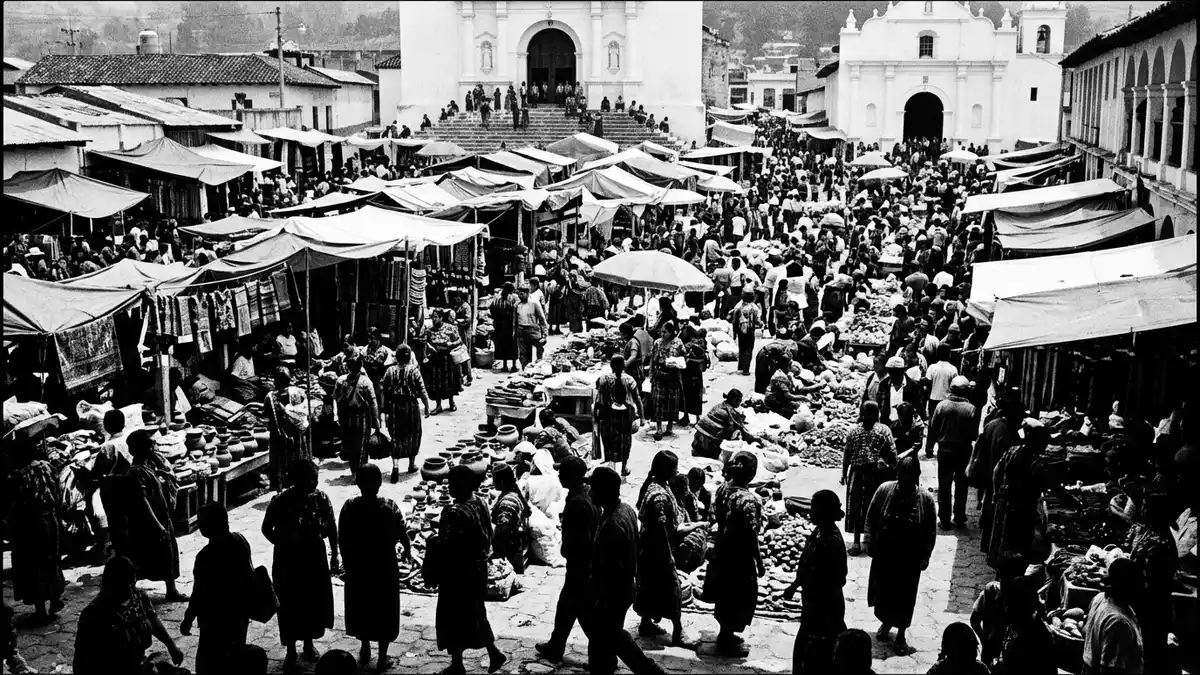
Mercado de Chichicastenango in the Guatemalan highlands is both a sprawling marketplace and a stage where living Maya traditions unfold between church steps, cobbled streets and terraces of stalls. Set in the town of Chichicastenango, in the Quiché department of Guatemala, it is widely known for its concentration of Indigenous vendors and the dense grid of textiles, masks, food and ritual objects that take over the centre on market days.
The highland setting and the heart of the market
Chichicastenango lies in Guatemala’s western highlands, surrounded by ridges and valleys that shape a compact town of narrow, paved streets and a central plaza. Mercado de Chichicastenango occupies this core of the town, with stalls laid out around the main square and extending along nearby streets so that the built fabric and the market activity become difficult to separate.The centre of the market is commonly described as Plaza y Mercado Santo Tomás, a space that anchors trading and social life.
On market days vendors arrive from the surrounding highland communities, many of them K’iche’ Maya, carrying produce, woven cloth and carved objects that reflect local traditions. Stalls selling handicrafts tend to cluster nearest the square, while other areas of the market are given over to staple foods, household goods and flowers.Descriptions of Mercado de Chichicastenango emphasise its role as a meeting point for regional trade as well as for visitors from further afield.
Textiles, masks and everyday goods
The visual character of Mercado de Chichicastenango rests largely on textiles: long rows of woven cloth, embroidered blouses, table runners and shawls hang from frames or spill over wooden racks, turning streets into bands of colour. Many of these textiles draw on patterns from K’iche’ Maya communities, with repeat motifs and broad stripes that identify particular towns or regions. Alongside them, artisans display belts, bags and other fabric pieces, often using backstrap-loom weaving that remains common across the Guatemalan highlands.Guides to the market consistently highlight handicrafts as a central feature.
Another distinctive group of stalls focuses on carved wooden masks, flutes and other objects tied to ceremonial dance and local performance traditions. Some masks reference characters from traditional dances, while others are produced for decoration and for sale to visitors. Between these displays stand tables of ceramics, including bowls, mugs and figurines, and stacks of baskets woven from natural fibres. Everyday trade runs through food stalls, with piles of fruit and vegetables, sacks of grain and prepared dishes served from large pans; one area, around the commercial centre near the Santo Tomás church, concentrates this food market activity.Accounts of the market layout describe the food section as one of its most distinctive spaces.
Santo Tomás church and Maya ritual life
Mercado de Chichicastenango does not stand apart from religious practice; it frames and surrounds it. On the edge of the main square stands the Church of Santo Tomás, a colonial-era Catholic church built in the sixteenth century, which has long been associated with Chichicastenango’s K’iche’ community.Descriptions of Iglesia Santo Tomás link it closely with the surrounding market and nearby ceremonial sites.
On market days, steps leading up to the Santo Tomás church become another layer of activity, used by flower vendors and by people preparing offerings; incense smoke and petals mingle with the movement of crowds below. This relationship continues further out, between the town and Pascual Abaj, a hill overlooking Chichicastenango where Maya ceremonies are held at a stone altar. For visitors, the market, the church and this ritual site form a connected sequence: trading streets in the centre, a church where Catholic and Maya practices meet, and a hill where traditional ceremonies take place apart from the bustle.Travel guides to Chichicastenango regularly mention these three elements together.
Visiting Mercado de Chichicastenango: what travellers from Western Europe should know
- Mercado de Chichicastenango takes place in the town of Chichicastenango in Guatemala’s Quiché department; the market fills the central square and the surrounding streets.
- The market area consists of cobbled streets, temporary stalls and steps around the Santo Tomás church; moving between sections involves walking on uneven ground and climbing exterior stairways.
- Chichicastenango can be reached overland from other towns in Guatemala, with buses and organised transport services connecting it to highland centres and to routes towards Guatemala City.
- The official language is Spanish and the currency is the Guatemalan quetzal.
- Entry requirements depend on your nationality; UK travellers can check the FCDO travel advice at gov.uk/foreign-travel-advice, Irish travellers the Department of Foreign Affairs at ireland.ie.
Searching for Mercado de Chichicastenango on social platforms
These links open searches for Mercado de Chichicastenango on each platform.
Frequently asked questions about Mercado de Chichicastenango
Where is Mercado de Chichicastenango located?
Mercado de Chichicastenango takes place in the town of Chichicastenango in Guatemala’s Quiché department, centred on the main square and the streets around the Santo Tomás church.
What can visitors expect during a visit?
Visitors encounter dense rows of stalls selling textiles, masks, ceramics, food and everyday goods, with market activity framed by the colonial Santo Tomás church and nearby Maya ceremonial sites.
What makes Mercado de Chichicastenango distinctive among markets in Guatemala?
Its scale, the concentration of K’iche’ Maya vendors and the close relationship between trading spaces, the Santo Tomás church and Pascual Abaj hill make Mercado de Chichicastenango a singular highland market environment.


