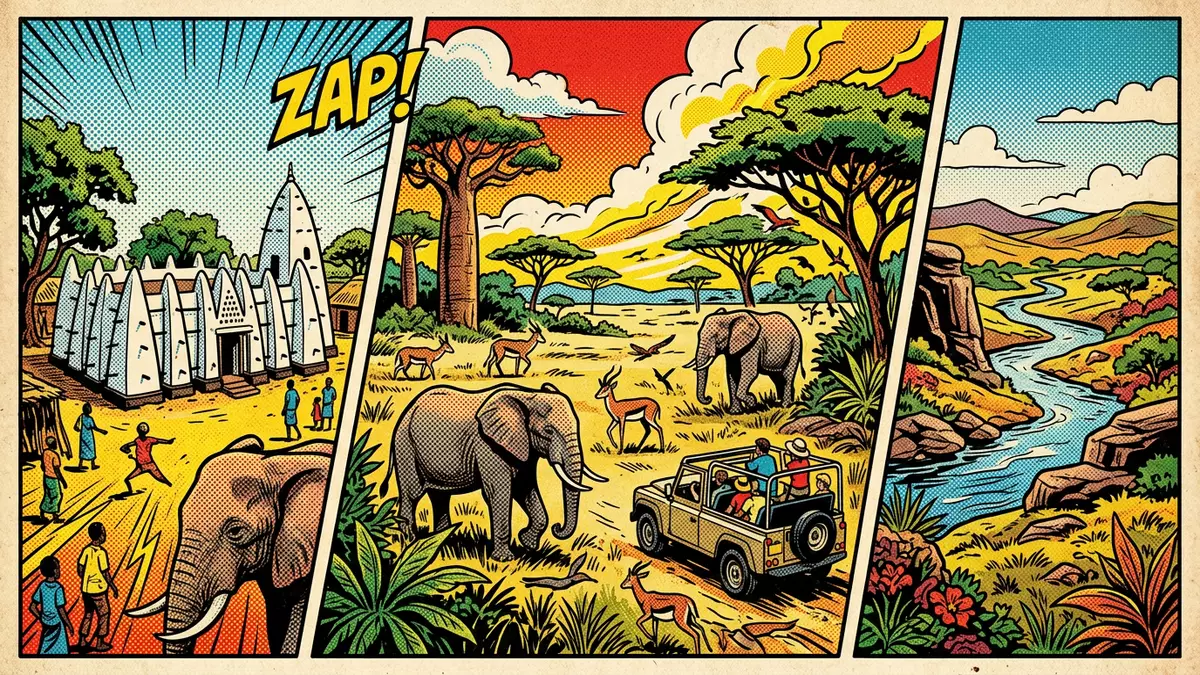
Mole National Park and its broad savanna landscape
Published on 08/10/2026 at 15:04 | Editorial responsibility: Rafael Müller, Editor-in-Chief AD HOC NEWS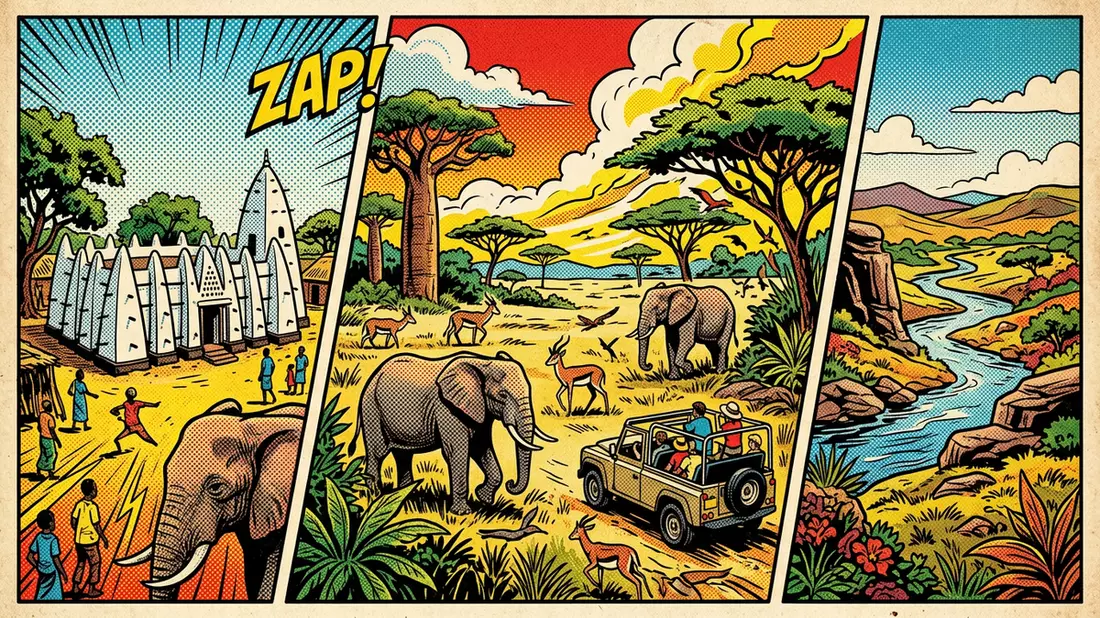
Mole National Park near Larabanga is Ghana’s largest protected area, and its open savanna gives the place a broad, legible character. The park is closely linked with the north of the country and with the landscape around Larabanga.
Savanna, woodland and waterholes
The park is known for a mix of grassland, woodland and seasonal waterholes. That landscape supports antelope, warthogs, baboons and elephants, and it makes the park feel expansive rather than enclosed.
The terrain is part of the attraction in its own right. Low vegetation, scattered trees and open sightlines create long views across the park, with tracks and water points acting as the main reference marks.
Wildlife and the park’s living character
Mole National Park is the best-known wildlife reserve in Ghana’s north. Visitors come for animals that are easier to notice in open country than in dense forest, and for the sense of space that defines the park.
Elephants are the species most strongly associated with Mole, but the park also holds a wider savanna community. The experience is shaped less by grand scenery than by repeated encounters with the same open landscape in different forms.
Larabanga and the northern setting
The park sits near Larabanga, a settlement long associated with trade routes and Islamic heritage in northern Ghana. That location gives Mole a cultural frame as well as a natural one.
Larabanga is also linked to the famous Larabanga Mosque, a landmark of west African Islamic architecture. Together with the park, it makes this part of Ghana a place where landscape and history meet in a compact area.
Visiting Mole National Park: what travellers from Western Europe should know
- The site is reached from Ghana by road, with Larabanga as the nearest well-known settlement.
- Admission arrangements and opening hours are set by the site's operator and change with the season; the official website is the only binding source.
- The dry season is generally the easier time for wildlife viewing, while early morning and late afternoon suit outdoor walks and drives.
- The park has open terrain, dusty tracks and long distances between features, so sturdy shoes and protection from the sun are useful.
- English is used widely in Ghana, and cash in local currency is practical for small on-the-ground purchases.
- Entry requirements depend on your nationality. UK travellers should check the FCDO travel advice at gov.uk/foreign-travel-advice; Irish travellers the Department of Foreign Affairs at ireland.ie; EU and EEA citizens their own national foreign ministry.
Searching for Mole National Park on social platforms
These links open searches for Mole National Park on each platform.
Frequently asked questions about Mole National Park
Where is Mole National Park?
Mole National Park is in northern Ghana near Larabanga. It lies in a savanna landscape rather than in the forest belt farther south.
What should a visit feel like?
Expect open ground, wildlife viewing and straightforward outdoor movement on tracks and paths. The park’s scale comes from space and distance more than from built structures.
What makes Mole National Park distinctive?
Its combination of savanna, elephants and a northern Ghana setting gives it a clear identity. Larabanga adds a cultural landmark that broadens the area beyond a single nature reserve.