
Mole National Park’s elephant savanna near Larabanga
Published on 08/14/2026 at 14:37 | Editorial responsibility: Rafael Müller, Editor-in-Chief AD HOC NEWS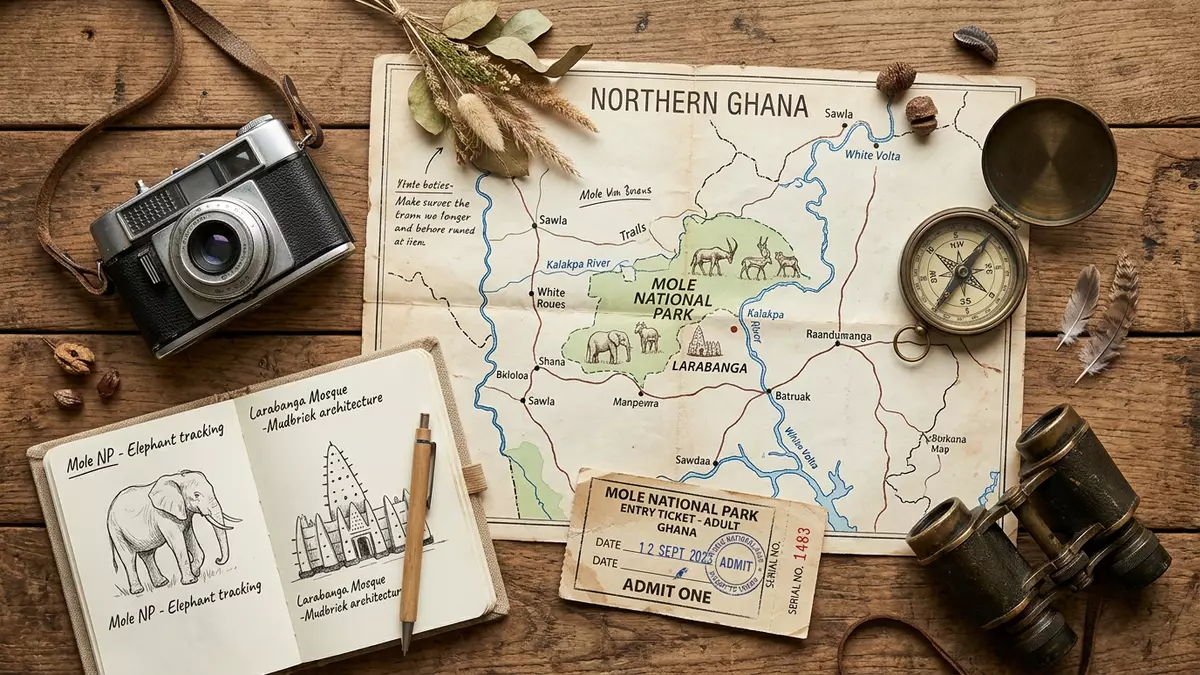
Mole National Park in northern Ghana stretches across a wide expanse of Guinea savanna, with its main entrance reached through the town of Larabanga. The protected area was first set aside as a wildlife refuge in 1958 and re-designated as a national park in 1971, marking an early chapter in Ghana’s organised conservation efforts.
Guinea savanna and escarpment landscapes
Mole National Park lies in the Savannah Region in the northern part of Ghana, covering thousands of square kilometres of relatively undisturbed Guinea savanna woodland and grassland. The park is described by Ghana’s Forestry Commission as the country’s first and largest protected area, with an extent of 4,577 km² of undulating terrain characterised by steep scarps and plateaux.first and largest protected area Rocky outcrops rise above the plains and an escarpment forms a natural balcony from which visitors can look out across woodland, open grassland and a mosaic of seasonal waterholes.
The savanna vegetation at Mole is recognised in ecological surveys as a relatively intact example of the Guinea savanna zone, with a mix of tall grasses and scattered trees that create open vistas across the park.Guinea savanna ecosystem of substantial size The terrain includes broad valleys where water collects during the rains and dries back to pools, as well as higher ridges where viewpoints and lodge terraces overlook the landscape. This combination of escarpment and savanna gives Mole a distinctive setting among West African protected areas.
Wildlife refuge for elephants and antelope
Mole National Park is Ghana’s largest wildlife refuge and holds an important share of the country’s remaining savanna fauna.largest wildlife refuge Surveys compiled by the Forestry Commission list over 90 mammal species and more than 300 bird species within the park’s boundary.over 90 mammal species African savanna elephants are the signature animals, sharing the savanna and woodlands with buffalo, various antelope and primates.
Commonly seen large mammals at Mole include kob, roan antelope, hartebeest, Defassa waterbuck, bushbuck, warthog and buffalo, alongside primates such as baboons, patas monkeys and green monkeys.species commonly seen Birdlife is equally varied, with raptors, vultures and colourful savanna species using the mosaic of woodland and open areas. Conservation organisations highlight the park’s role as habitat for African savanna elephants and for vultures including the white-backed vulture and hooded vulture, both of which face serious declines elsewhere in Africa.critical habitat for conservation concern
From game reserve to Ghana’s premier national park
Protection of the Mole area began in 1958, when a game reserve was established shortly after Ghana’s independence to safeguard wildlife in the southern part of what is now the park.set aside as wildlife refuge in 1958 In 1971 Mole was formally gazetted as a national park, under wildlife reserve regulations that consolidated and enlarged the protected area.gazetted as a National Park in 1971 Subsequent boundary adjustments brought the park to roughly its current size, establishing Mole as Ghana’s largest single protected savanna landscape.
Official tourism and conservation sources present Mole as Ghana’s premier national park within the “Savannahland” tourism destination area, reflecting its scale, wildlife diversity and relative accessibility.Savannahland Tourism Destination Area The park’s nearest community, Larabanga, is known for its historic mosque and serves as the gateway settlement at the main entrance. From there, roads lead towards park headquarters, lodges on the escarpment edge and tracks that fan out into the protected savanna.
Visiting Mole National Park: what travellers from Western Europe should know
- Mole National Park lies in northern Ghana’s Savannah Region, with its main entrance reached by road through Larabanga from larger centres such as Tamale.
- The terrain inside the park includes undulating savanna and an escarpment; viewpoints and some lodge areas stand on higher ground above valleys and waterholes, reached by roads and footpaths.
- The official language is English and the national currency is the Ghanaian cedi.
- Entry requirements depend on your nationality; UK travellers can check the FCDO travel advice at gov.uk/foreign-travel-advice, Irish travellers the Department of Foreign Affairs at ireland.ie.
Searching for Mole National Park on social platforms
These links open searches for Mole National Park on each platform.
Frequently asked questions about Mole National Park
Where is Mole National Park and how is it related to Larabanga?
Mole National Park is in northern Ghana’s Savannah Region, with its main entrance reached by road through the nearby town of Larabanga, which serves as the gateway community.
What can visitors expect on a visit to Mole National Park?
Visitors encounter a broad Guinea savanna landscape with escarpment viewpoints, seasonal waterholes and the chance to see elephants, antelope, warthogs, primates and varied birdlife in a large protected area.
What makes Mole National Park distinctive among West African parks?
Mole combines a sizeable Guinea savanna ecosystem, free-ranging African savanna elephants and the dramatic setting of lodges and viewpoints on an escarpment overlooking woodland and waterholes near Larabanga.


