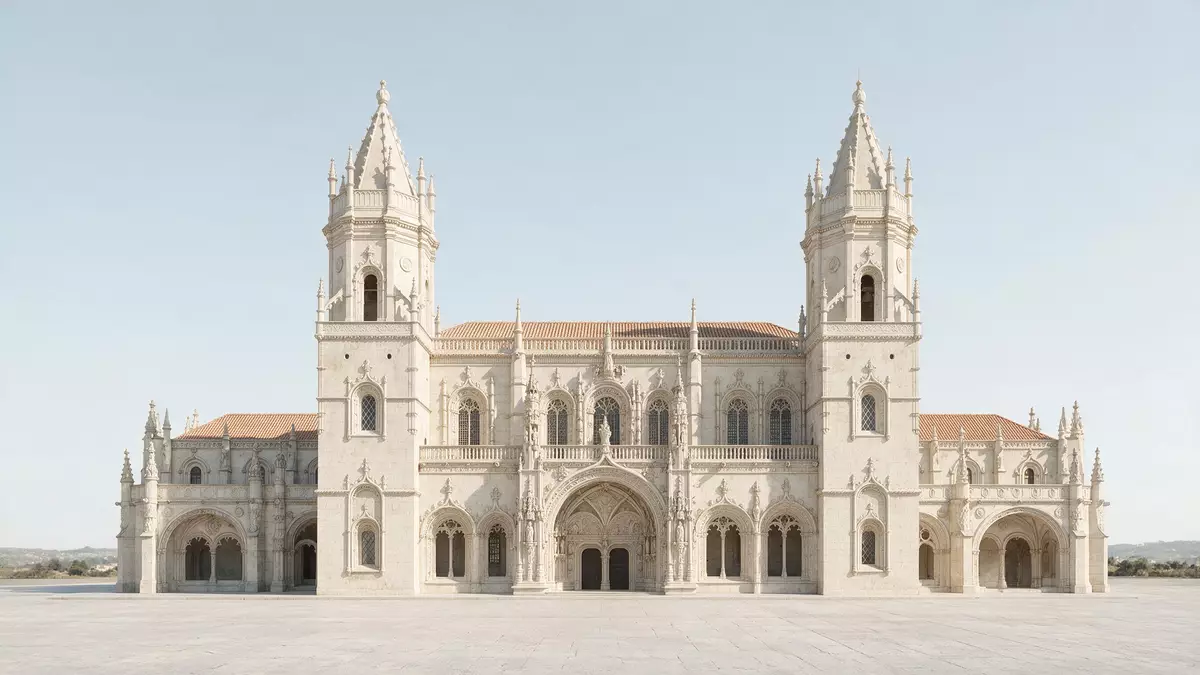
Mosteiro dos Jeronimos and its Manueline stonework
Published on 08/09/2026 at 15:16 | Editorial responsibility: Rafael Müller, Editor-in-Chief AD HOC NEWS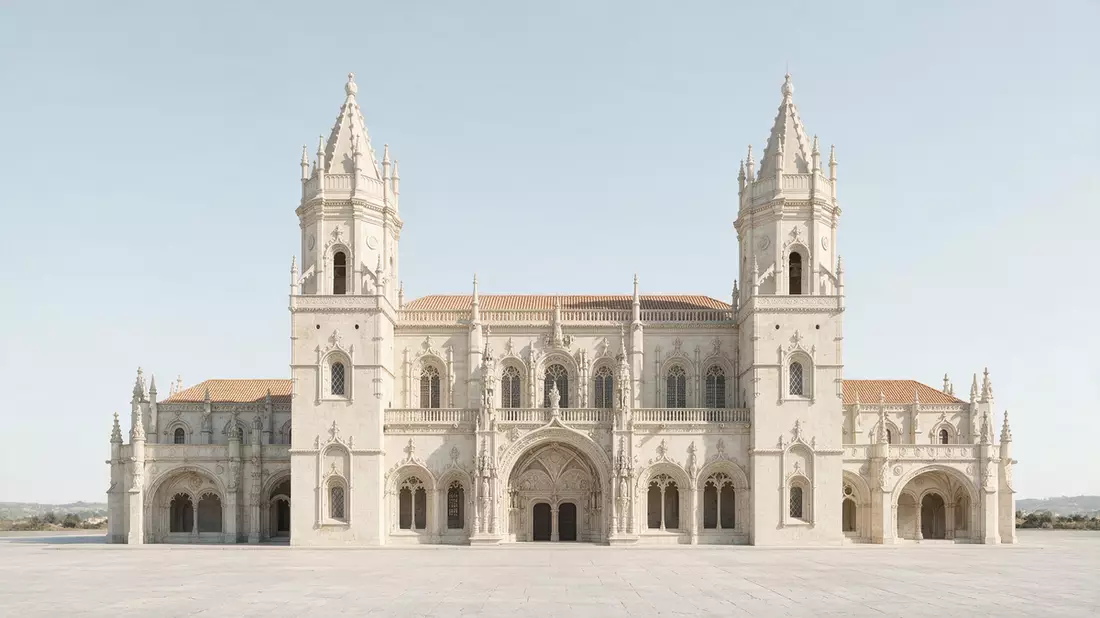
Mosteiro dos Jeronimos in Lissabon is a vast Manueline monastery in pale limestone, with cloisters, a church and royal tombs under one complex roofline. Built in the early sixteenth century under King Manuel I, it remains one of Portugal’s most recognisable stone ensembles.
Manueline carving in a royal monastery
The monastery belongs to the age of Portuguese expansion, when architecture took on maritime symbols and dense ornament. Its facades and interior arches carry carved rope, foliage and heraldic detail in a language that mixes late Gothic structure with Renaissance richness.
The church and cloister give the place its character as much through mass as through decoration. Heavy stone piers, vaulting and arcades sit beside intricate carving, and the whole complex keeps a formal order that suits a royal foundation.
Church, cloister and tombs
The church of Santa Maria de Belém is the centre of the ensemble, and the cloister is the part most visitors linger over. Tombs associated with Vasco da Gama and Luís de Camões place exploration and literature within the same monastic setting.
The place also preserves the memory of a religious house that became part of the national story. Its stone surfaces, open galleries and chapel spaces make that history visible without any need for reconstruction or display devices.
From monastic life to national monument
The monastery was tied to the Jeronimos order and to the patronage of Manuel I, who links it to the late medieval and early modern court. It belongs to Belém, the riverside district of Lissabon, where the monumental scale matches the ceremonial ambitions of the area.
The building later took on a wider civic meaning, and its presence now reads as both church and monument. That dual identity is one reason the long arcades and richly worked portals matter: they hold worship, memory and ceremony in the same fabric.
Visiting Mosteiro dos Jeronimos: what travellers from Western Europe should know
- Mosteiro dos Jeronimos stands in Belém, west of central Lissabon, and is reached by tram, bus and rail links serving the riverside district.
- Admission arrangements and opening hours are set by the site's operator and change with the season; the official website is the only binding source.
- Late morning and early afternoon can bring more movement through the complex, while quieter light often falls across the cloister in the morning.
- The site includes steps, stone floors and long gallery walks, so comfortable shoes are sensible for visitors who want to move slowly through the church and cloister.
- Portuguese is the main language on site, and card payment is widely used in Lisbon, though small purchases may still suit cash.
- Entry requirements depend on your nationality. UK travellers should check the FCDO travel advice at gov.uk/foreign-travel-advice; Irish travellers the Department of Foreign Affairs at ireland.ie; EU and EEA citizens their own national foreign ministry.
Searching for Mosteiro dos Jeronimos on social platforms
These links open searches for Mosteiro dos Jeronimos on each platform.
Frequently asked questions about Mosteiro dos Jeronimos
Where is Mosteiro dos Jeronimos?
It stands in Belém, a riverside district of Lissabon in Portugal. The monastery sits among major historic landmarks linked to the city’s maritime past.
What should a visit include?
The church, cloister and carved portals are the main elements to see. Stone vaults, arcades and tombs give the complex its strong architectural rhythm.
What makes it distinctive?
Its Manueline carving, royal patronage under King Manuel I and association with Vasco da Gama place it among Portugal’s defining monuments. The pale limestone and dense ornament make the building immediately recognisable.