
Mount Rainier National Park and its glacier-covered volcano
Published on 09/24/2026 at 00:29 | Editorial responsibility: Rafael Müller, Editor-in-Chief AD HOC NEWS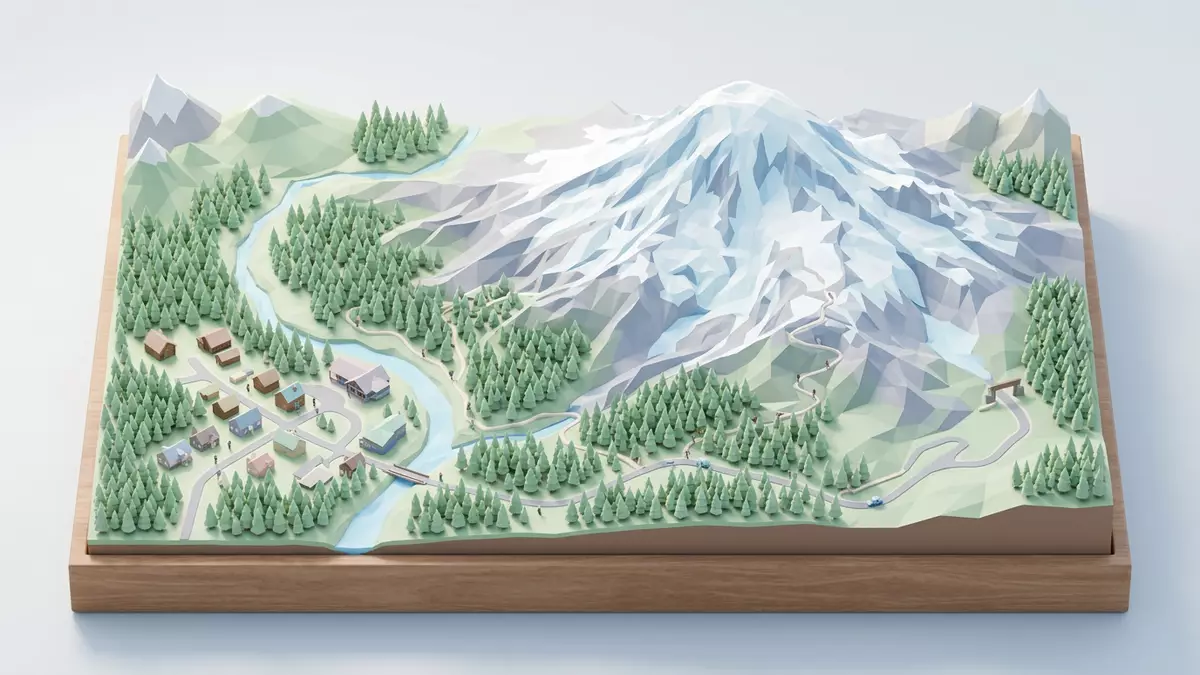
Mount Rainier National Park is a landscape organised around one glacier-covered volcano. Mount Rainier rises to 4,392 m (14,410 ft) above sea level, while forests, subalpine meadows, volcanic ridges and ice-filled valleys spread across west-central Washington.
A volcano rising above Washington forests
Mount Rainier is an active stratovolcano in the Cascade Range. Its modern volcanic cone formed during repeated eruptions over roughly 500,000 years, above rocks that are millions of years older. Mount Rainier’s geological formation remains visible in its ridges, lava-built slopes and deeply cut valleys.
The park extends from lower forested country to the mountain summit. At high elevations, exposed rock and talus replace deep soils. Lower slopes contain glacial deposits, while rivers carry water from the mountain through valleys shaped by ice and volcanic material.
Ice fields, glaciers and five major rivers
Glaciers cover more than 35 square miles of Mount Rainier. The mountain contains more than 29 major glaciers, including Emmons Glacier and Carbon Glacier. The mountain’s glacial system forms a defining part of the park’s geography.
Ice descends through valleys beneath the summit and feeds streams that become major rivers. The park’s waters reach the Nisqually, Puyallup, White, Carbon and Cowlitz river systems. Snow and ice therefore connect the high volcanic slopes with forests and settlements far below.
From national park designation to protected wilderness
Congress established Mount Rainier National Park on 2 March 1899. The designation made it the fifth national park in the United States and protected a large mountain landscape before the National Park Service existed.
Human use reaches far deeper into the past. Archaeological evidence records activity in the Mount Rainier area for about 9,000 years. The park also contains a large wilderness area and a National Historic Landmark District, combining geological, ecological and cultural protection. The 1899 national park designation remains central to its identity.
Visiting Mount Rainier National Park: what travellers from Western Europe should know
- Mount Rainier National Park lies in west-central Washington, south-east of Seattle and west of Yakima. Ashford sits beside the park’s south-western approach.
- The park rises from forested valleys to 4,392 m (14,410 ft). Routes through the mountain landscape include steep ground, exposed rock, snow and changing elevation.
- Paradise lies on the mountain’s southern side at about 1,650 m (5,420 ft). The area is surrounded by subalpine meadows and views towards glaciers.
- The official language is English and the currency is the US dollar.
- Entry requirements depend on your nationality; UK travellers can check the FCDO travel advice at gov.uk/foreign-travel-advice, Irish travellers the Department of Foreign Affairs at ireland.ie.
Searching for Mount Rainier National Park on social platforms
These links open searches for Mount Rainier National Park on each platform.Frequently asked questions about Mount Rainier National Park
Where is Mount Rainier National Park?
The park is in west-central Washington, on the western side of the Cascade Range. Ashford lies beside the south-western approach.
What can visitors expect in the park?
The landscape includes old-growth forest, subalpine meadows, volcanic ridges, glaciers and river valleys. Routes range from lower forest areas to high mountain terrain.
What makes Mount Rainier distinctive?
A single active volcano dominates the park and carries a large network of glaciers. Its summit rises to 4,392 m (14,410 ft), above forests and ice-shaped valleys.


