
Murano and the glass island of Venice
Published on 09/19/2026 at 18:30 | Editorial responsibility: Rafael Müller, Editor-in-Chief AD HOC NEWS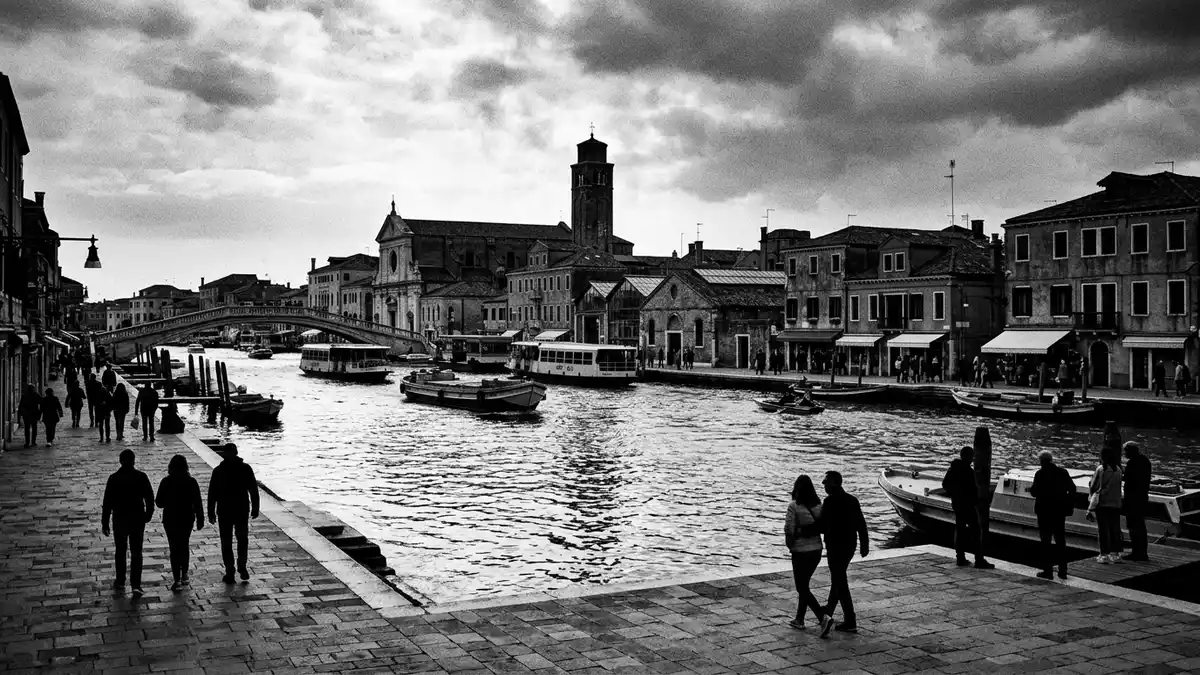
Murano is a small island town in the Venetian Lagoon whose canals, workshops and low palazzi revolve around one craft: glass. Forming part of the municipality of Venice in northern Italy, it has built its identity over many centuries on furnaces, kilns and the expertise of glass masters, making a short journey across the water feel like a passage into the working history of Venedig.
An island of canals and connected islets
Murano lies to the north of Venice, in the inner part of the lagoon, and is composed of several islands linked by bridges over narrow waterways. The settlement stretches roughly 1.5 km (1 mi) across, giving it the scale of a compact town rather than a single harbour quay, with canals crossing the built-up area and separating the different island fragments into distinct neighbourhoods.series of islands linked
The islands are divided by channels and connected by bridges, forming a small archipelago inside the lagoon. One of the main waterways is a canal known locally as the Grand Canal of Murano, which curves through the town and is lined with houses, glass showrooms and modest palazzi facing directly onto the water.Grand Canal overlooked by houses Low buildings with coloured façades sit beside later structures in brick and stone, giving the banks a mix of residential and commercial frontages. As on the main islands of Venice, everyday movement depends on boats, but the bridges link the different parts of Murano for those exploring on foot.
From decree to glass capital
The defining moment in Murano’s history came in 1291, when the government of the Venetian Republic ordered glass furnaces to relocate from the densely built core of Venice to the island. Concentrating the kilns on Murano reduced the fire risk to timber buildings in the city and created a distinct glassmaking district across the water.law was passed in 1291 In the following centuries, guilds and state regulations shaped a system in which masters guarded recipes and techniques, and the island’s workshops supplied mirrors, tableware and decorative pieces to courts and merchants.
Techniques developed on Murano include cristallo, an exceptionally clear glass that became a prestige material in fifteenth-century Europe, and filigrana, where fine white or coloured rods form patterns inside transparent glass.Angelo Barovier developed cristallo Millefiori and murrine use patterned rods cut in cross-section to produce flower-like or geometric motifs, while aventurine glass suspends copper crystals in a translucent mass. These techniques, refined over generations, underpin the output of workshops that visitors encounter along Murano’s canals.
The Glass Museum and historic palazzi
One of Murano’s key landmarks is the Glass Museum, housed in Palazzo Giustinian in the San Donato district. Established in 1861 on the initiative of Vincenzo Zanetti and Antonio Colleoni, the museum grew into a major collection tracing glass in the lagoon from Roman times through medieval workshops to twentieth-century design.Murano Glass Museum established in 1861 Its rooms display historic furnaces, sample pieces and experimental works, and the palazzo itself, with its Gothic windows and waterside position, forms part of the experience.
Beyond the museum, Murano retains churches, smaller palazzi and squares that reflect its role as an island town rather than only a production site. The façades along the main canal show how glass shops and studios settled into older residential fabric, with workshops tucked behind storefronts and kilns located away from the busiest quays. Together, the buildings and the glass institutions keep the link between everyday life and specialised craft visible in the townscape.
Murano in the wider Venetian Lagoon
Murano forms part of the network of lagoon islands that includes Burano and Torcello, sitting roughly north of Venice’s historic centre and linked to it administratively. It was annexed to the municipality of Venice in the early twentieth century, becoming a fraction of the larger comune while still retaining its own identity as the principal glassmaking settlement.part of the wider Venice lagoon island network The relationship between the islands and the main city is visible in the constant boat traffic connecting workshops, homes and visitors.
Glass production on Murano continues alongside residential life, and the craft links the island to trade routes and exhibitions beyond the lagoon. Historic techniques such as cristallo, filigrana and millefiori combine with contemporary design, meaning that pieces from small furnaces share a lineage with works made for aristocratic patrons in the fifteenth and sixteenth centuries.Murano Glass History and techniques For visitors, the island offers a chance to see that continuity in the setting where it developed.
Visiting Murano: what travellers from Western Europe should know
- Murano lies north of central Venedig in the Venetian Lagoon and is reached by boat services from the city’s waterfront, with several landing stages along its canals.
- The island consists of connected islets divided by canals, so walking involves frequent bridge crossings and some narrow pavements beside the water.
- Burano and Torcello sit further out in the lagoon, and boat routes from Venedig link Murano with these neighbouring islands for combined excursions.
- The official language is Italian and the currency is the euro.
Searching for Murano on social platforms
These links open searches for Murano on each platform.Frequently asked questions about Murano
Where is Murano in relation to Venedig?
Murano is an island town in the Venetian Lagoon, lying to the north of Venice’s historic centre and forming part of the same municipality.
What can visitors expect on a visit to Murano?
Visitors encounter canals lined with glass workshops and shops, low houses, historic palazzi and the Glass Museum, all within a compact island setting.
What makes Murano distinctive among lagoon islands?
Murano’s defining feature is its centuries-old concentration of glass furnaces and artisans, which turned the island into Venice’s principal glassmaking centre.


