
Museo del Prado and the art of Spanish painting
Published on 09/24/2026 at 07:47 | Editorial responsibility: Rafael Müller, Editor-in-Chief AD HOC NEWS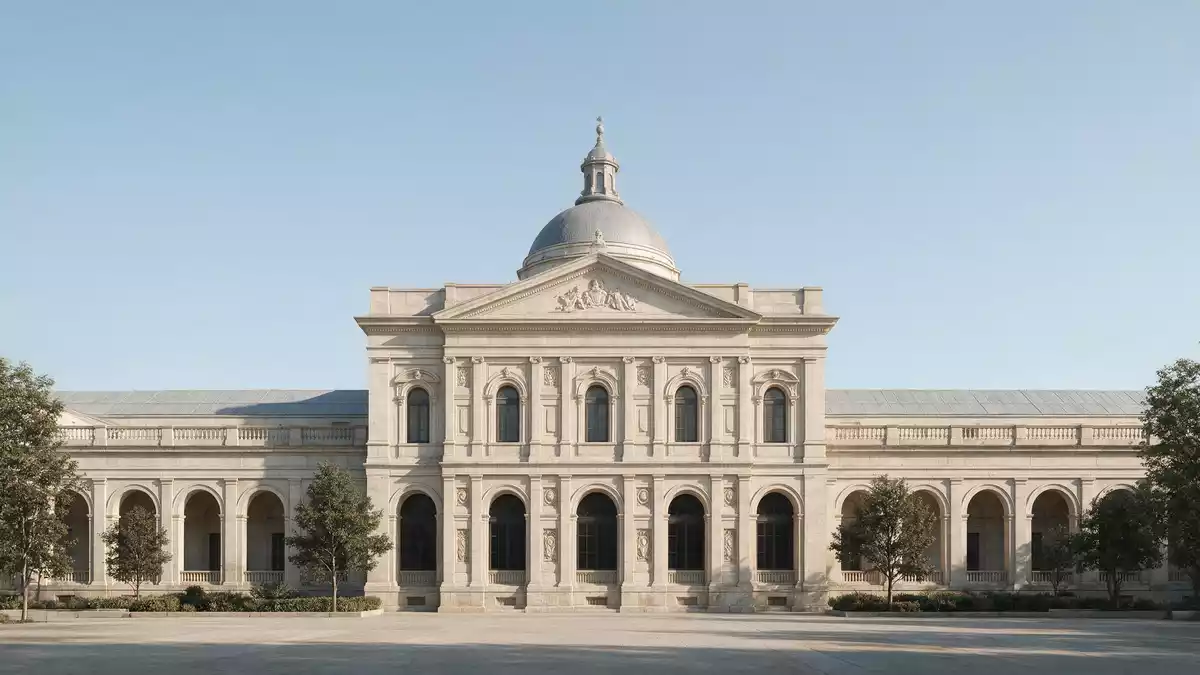
Museo del Prado occupies a neoclassical building on Madrid’s Paseo del Prado, where architecture and painting share the same cultural landscape. Juan de Villanueva designed the building in 1785, and the Royal Museum of Paintings opened there in 1819. Inside, Spanish painting becomes the central thread, from El Greco and Diego Velázquez to Francisco de Goya.
Juan de Villanueva’s neoclassical museum
The Prado began as an architectural project for Charles III. Juan de Villanueva designed it as a building connected with the study of natural history, using the disciplined language of Spanish Neoclassicism. Its long façades, columned entrances and carefully ordered volumes remain visible parts of the museum’s identity.
The building’s museum history began under Ferdinand VII. The Royal Museum of Paintings opened to the public in November 1819, with works from the Spanish royal collections. Its first catalogue listed 311 paintings, while the royal holdings included many more pictures kept in different residences. The institution eventually took the name Museo Nacional del Prado, shortened in common use to Museo del Prado. The museum’s 1819 opening remains a defining date in Madrid’s cultural history.
Velázquez, Goya and the Spanish school
The collection is especially strong in Spanish painting. El Greco brings elongated figures and intense colour from the late sixteenth and early seventeenth centuries. Velázquez represents the court culture of seventeenth-century Spain, while Goya carries the collection into the late eighteenth and early nineteenth centuries.
The Spanish painting department contains works dating from the twelfth century to the early nineteenth century. It includes paintings by El Greco, José de Ribera, Francisco de Zurbarán, Bartolomé Esteban Murillo, Velázquez and Goya. The museum holds 48 paintings by Velázquez and 130 paintings by Goya, including Goya’s tapestry cartoons and Black Paintings. These figures give the collection a clear shape: the Prado is not only a museum of individual masterpieces, but also a place for following painters across their careers. The Spanish painting collection provides the fullest sense of that continuity.
European art around the Paseo del Prado
Spanish painting forms the museum’s strongest identity, but the collection extends across European art. Titian, Peter Paul Rubens, Hieronymus Bosch and other painters appear alongside the Spanish masters. The result is a network of artistic relationships within the galleries, linking the Spanish royal collections with Renaissance and Baroque painting from Italy, Flanders and the Netherlands.
Museo del Prado belongs to the cultural landscape of Paseo del Prado and Buen Retiro, a World Heritage site in Madrid. The protected landscape includes the tree-lined avenue, the Royal Botanical Garden, the museum district and Buen Retiro Park. The Prado’s position within this setting places painting, science, gardens and urban history within the same part of the capital. The World Heritage landscape gives the museum a wider context beyond its galleries.
Visiting Museo del Prado: what travellers from Western Europe should know
- Museo del Prado stands at Paseo del Prado, in central Madrid’s Retiro district. Metro stations include Banco de España on Line 2 and Estación del Arte on Line 1.
- Atocha railway station and Recoletos railway station are named rail connections for the museum district. The approach leads through Madrid’s broad Paseo del Prado.
- The museum is part of the Paseo del Arte, where the Thyssen-Bornemisza Museum and Museo Reina Sofía form a connected group of cultural institutions.
- The surrounding World Heritage landscape includes the Royal Botanical Garden and Buen Retiro Park. The setting combines an avenue, gardens, museums and historic urban spaces.
- The official language is Spanish and the currency is the euro.
Searching for Museo del Prado on social platforms
These links open searches for Museo del Prado on each platform.
Frequently asked questions about Museo del Prado
Where is Museo del Prado?
Museo del Prado is on Paseo del Prado in central Madrid’s Retiro district. It is part of the Paseo del Arte cultural area.
What can visitors expect inside?
The galleries contain Spanish and European paintings, with major holdings by El Greco, Velázquez, Goya, Titian, Rubens and Bosch.
What makes the museum distinctive?
Its neoclassical building by Juan de Villanueva and its concentrated collection of Spanish painting give Museo del Prado a clear architectural and artistic identity.


